Burnham pressed on economy at first PMQs as UK borrowing costs rise
Source Entity
BBC News
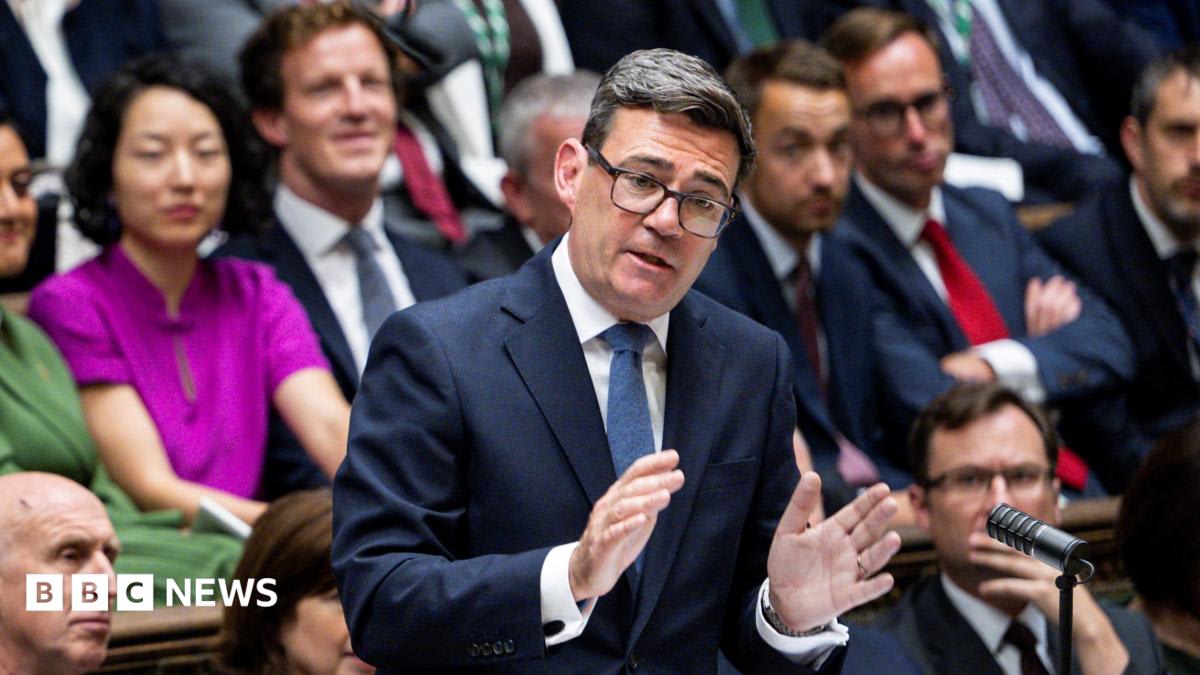
Andy Burnham faced his first Prime Minister's Questions, addressing concerns over rising UK borrowing costs and national debt. Conservative leader Kemi Badenoch challenged the government's fiscal strategy, while Burnham attributed current market instability to the previous administration's legacy.
The Debut of Andy Burnham at PMQs
Prime Minister Andy Burnham faced his inaugural Prime Minister’s Questions (PMQs) this week, a pivotal moment in the parliamentary calendar that defines the relationship between the leader of the government and the opposition. Taking over the premiership from Sir Keir Starmer just before the summer recess, Burnham’s debut marked his first direct confrontation with Conservative leader Kemi Badenoch in the House of Commons. This ritual, described by former Prime Minister Sir Tony Blair as a uniquely 'nerve wracking' and 'terror inspiring' experience, serves as the definitive test of a leader's ability to command the dispatch box.
The Fiscal Challenge and Market Pressure
The backdrop of this session was dominated by economic anxiety, specifically the rising cost of borrowing for the United Kingdom, which hit an 18-year high on Wednesday. Kemi Badenoch utilized her platform to press the Prime Minister on his long-term strategy for managing the national debt and requested clarity on where future spending cuts might be implemented. This line of questioning highlights the narrow fiscal path the new administration must navigate as it approaches the October budget.
Deflecting the Blame: The Legacy Argument
In response to the accusations of fiscal mismanagement, Burnham adopted a defensive posture, placing the responsibility squarely on the shoulders of the previous Conservative government. He argued that the current 'turbulence on global markets' is a direct result of the exposure left behind by his predecessors. By framing the current economic constraints as a inherited burden, Burnham sought to deflect criticism regarding his own government's immediate policy choices.
Policy Actions and Early Governance
Burnham defended his record by highlighting early legislative actions taken during his first few months in office. Specifically, he pointed to the reduction of VAT on energy bills and cuts to hospitality business rates as evidence of his commitment to easing the cost-of-living crisis. These measures are part of a broader, 'transformational' agenda that Burnham has promised to deliver, despite the significant constraints imposed by the global economic climate.
Future Trends and Political Risks
Looking ahead, the administration faces mounting pressure to address core issues such as defence spending, welfare, and social care. These areas represent significant 'pressure points' that the opposition is keen to exploit. As the government prepares for its end-of-October budget, the limited 'room for manoeuvre' for the Chancellor will likely become a recurring theme in future parliamentary debates. The tension between Burnham’s desire for a new style of politics and the reality of traditional, adversarial 'verbal jousting' suggests that the honeymoon period for the new Prime Minister may be short-lived as economic realities dictate the legislative agenda.