NASA's Anil Menon embarks on 8-month sojourn to International Space Station, with drawings made by Indian kids
Source Entity
Latest News: Today's Latest News Headlines from India & World | Hindustan Times | Hindustan Times
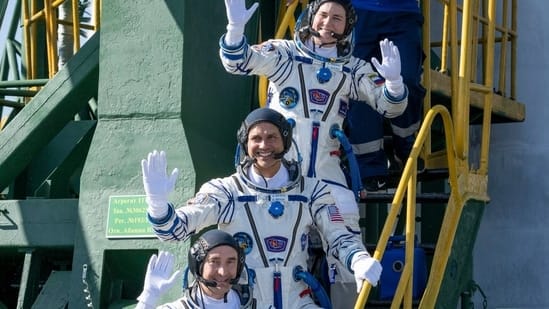
Anil Menon, a US Space Force colonel and emergency medicine physician of Indian and Ukrainian heritage, is embarking on an eight-month mission to the International Space Station (ISS). In a gesture of global inspiration, he will carry drawings created by children in India.
Bridging Earth and Orbit: The Mission of Anil Menon
The deployment of Anil Menon to the International Space Station (ISS) for an eight-month sojourn represents more than just a routine crew rotation; it is a confluence of medical expertise, military precision, and cultural diplomacy. As a US Space Force colonel and an emergency medicine physician, Menon embodies the multidisciplinary approach required for modern long-duration spaceflight. His mission is not only focused on the technical and scientific objectives of the ISS but also serves as a symbolic bridge between the United States and India, highlighted by the inclusion of artwork created by Indian children.
The Critical Role of Space Medicine
Menon's background as an emergency medicine physician is of paramount importance for a mission of this duration. In the isolated environment of the ISS, the ability to manage acute medical crises without immediate access to terrestrial hospitals is a critical safety requirement. Space medicine focuses on the physiological challenges of microgravity, including bone density loss, muscle atrophy, and fluid shifts. By having a qualified emergency physician on board, NASA ensures a higher tier of medical readiness, which is essential as the agency prepares for more ambitious journeys, such as the Artemis missions to the Moon and eventually crewed missions to Mars, where medical autonomy will be a necessity.
Cultural Diplomacy and the Power of Inspiration
One of the most poignant aspects of Menon's journey is the inclusion of drawings made by children in India. This gesture transcends the scientific nature of the mission, turning a technical voyage into a tool for global outreach. By carrying these artworks, Menon serves as a tangible link between the aspirations of youth in India and the reality of space exploration. This form of 'soft power' in science helps democratize the dream of space travel, encouraging a new generation of students in India to pursue STEM (Science, Technology, Engineering, and Mathematics) careers, thereby strengthening the global pipeline of scientific talent.
A Legacy of Diversity in Space Exploration
Anil Menon's personal heritage—born in Minneapolis to Ukrainian and Indian immigrants—mirrors the increasingly diverse composition of the modern astronaut corps. For decades, space exploration was the domain of a narrow demographic; however, the current era emphasizes the importance of diverse perspectives in solving complex problems. Menon's identity as a member of the Indian and Ukrainian diaspora allows him to represent a broader segment of humanity, reinforcing the idea that the ISS is a truly international laboratory where the collective knowledge of the human race is utilized for the benefit of all.
Strategic Integration of the US Space Force
Menon's rank as a colonel in the US Space Force highlights the evolving relationship between military space operations and civilian scientific research. The US Space Force is tasked with protecting US interests in space, but the synergy between military personnel and NASA's civilian goals is evident in missions like this. The discipline, leadership, and operational rigor provided by military officers are indispensable for the high-stakes environment of the ISS, where precision and adherence to protocol are the only safeguards against the vacuum of space.
Future Implications for International Collaboration
Looking forward, Menon's mission suggests a trend toward deeper integration between the US and Indian space interests. With India's own space agency, ISRO, making historic strides with the Chandrayaan and Gaganyaan programs, the cultural and professional ties fostered by individuals like Menon could pave the way for future bilateral agreements in crewed spaceflight. The eight-month duration of this mission also provides critical data on human endurance and psychological health, contributing to the broader goal of sustaining human life beyond Low Earth Orbit (LEO).
Conclusion
In summary, Anil Menon's mission to the ISS is a multifaceted achievement. It combines the rigorous demands of emergency medicine and military leadership with a heartfelt commitment to inspiring the next generation. By carrying the creativity of Indian children into the stars, Menon ensures that his journey is not just a leap for science, but a leap for global inspiration and inclusivity in the final frontier.
Verification Required?