Tyrannosaurus rex most expensive dinosaur ever sold
Source Entity
BBC News
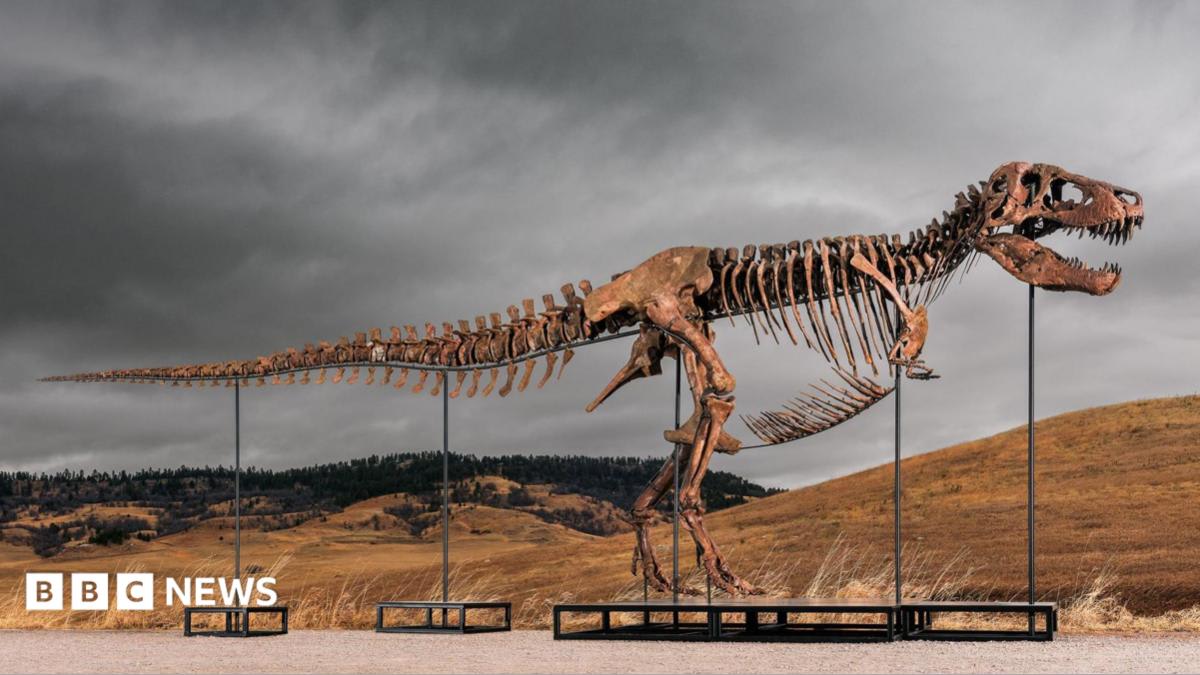
A Tyrannosaurus rex skeleton, dating back 67 million years, has set a new record as the most expensive dinosaur ever sold during an auction held by Sotheby's in New York.
A Prehistoric Record: The Landmark Sale of the T-Rex
In a stunning intersection of paleontology and high-finance, a Tyrannosaurus rex skeleton has officially become the most expensive dinosaur specimen ever sold. The auction, conducted by the prestigious Sotheby's in New York, highlights the growing demand for rare prehistoric remains among the world's wealthiest collectors. This event is not merely a financial transaction but a cultural moment that underscores the enduring fascination humanity holds for the 'King of the Tyrant Lizards,' combining scientific curiosity with the prestige of owning a piece of deep time.
The Specimen: A Glimpse into the Late Cretaceous
The skeleton in question dates back approximately 67 million years, placing its existence in the Late Cretaceous period. During this era, Tyrannosaurus rex was the apex predator of its ecosystem in what is now western North America. The sheer scale of the specimen and its state of preservation are likely what drove the bidding to record-breaking heights. For scientists, a specimen of this quality provides invaluable data regarding the biomechanics, growth patterns, and predatory habits of the species, making its transition into private hands a point of significant discussion within the academic community.
The Economics of Paleontology
This sale reflects a broader trend in the global art and collectibles market where fossils are increasingly viewed as 'trophy assets.' Much like a rare Picasso or a classic Ferrari, a high-quality T-rex skeleton is a finite resource with an inelastic supply. As the number of ultra-high-net-worth individuals grows, the competition for such iconic pieces intensifies. The involvement of Sotheby's—a house known for fine art and jewelry—signals that fossils have moved beyond the realm of natural history museums and into the stratosphere of luxury investments.
The Role of Auction Houses in Scientific Valuation
By facilitating this sale in New York, Sotheby's has applied a rigorous commercial framework to a scientific object. The process of auctioning such a specimen involves not only the valuation of the bones themselves but also the provenance and the 'story' of the find. The marketing of the T-rex as the 'most expensive' creates a feedback loop that further inflates the value of other theropod dinosaurs. This commercialization process often involves expert verification to ensure the skeleton is genuine and not a composite of multiple individuals, which is a common practice in the fossil trade.
The Ethical Tension: Private Ownership vs. Public Access
One of the most critical implications of this record-breaking sale is the ongoing tension between private ownership and scientific accessibility. When a specimen of this magnitude is sold to a private collector, there is a risk that it may be removed from public view and restricted from scholarly study. While some private owners allow researchers access to their collections, the lack of a mandate for public display can hinder the educational mission of paleontology. This sale reignites the debate over whether fossils of such significant scientific value should be protected as cultural heritage rather than sold as commodities.
Predicting Future Trends in Fossil Trading
Looking forward, this sale is likely to trigger an increase in the commercial exploration for high-profile dinosaur remains. As the market value for a T-rex reaches new peaks, the incentive for professional fossil hunters to seek out complete skeletons increases. We can expect to see more 'branded' dinosaurs emerging from the ground, with auction houses competing to host the next record-breaking sale. However, this may also lead to stricter regulations regarding the export and sale of fossils to prevent the loss of national geological heritage.
Conclusion: A Legacy Beyond the Price Tag
Ultimately, while the headline focuses on the staggering financial figure, the true value of the Tyrannosaurus rex lies in its role as a window into a world that vanished 67 million years ago. The Sotheby's auction has successfully bridged the gap between the prehistoric past and the modern capitalist present. Whether the skeleton eventually finds its way back into a museum or remains in a private gallery, its sale marks a milestone in how society values the remnants of prehistoric life.