Watch: Russia successfully launches Indian-origin Nasa astronaut Anil Menon to space
Source Entity
TOI SCIENCE DESK
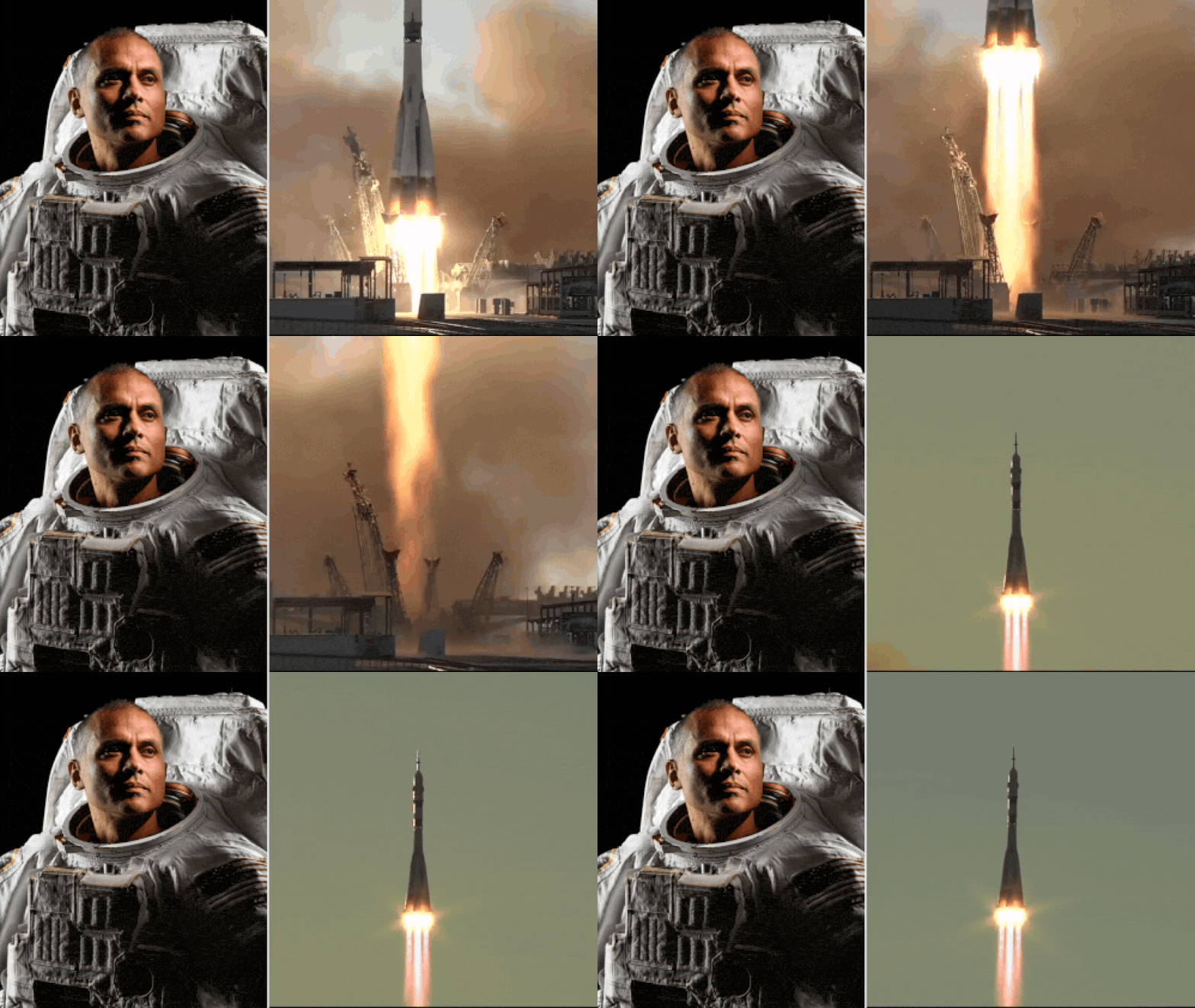
Indian-American NASA astronaut Anil Menon has successfully launched to the International Space Station (ISS) aboard Russia's Soyuz MS-29 spacecraft from Kazakhstan for an eight-month scientific research mission.
A New Milestone in Orbital Exploration: Anil Menon's Journey to the ISS
In a significant demonstration of international cooperation in space exploration, NASA astronaut Anil Menon, an Indian-American, has successfully launched to the International Space Station (ISS). Traveling aboard the Russian Soyuz MS-29 spacecraft from the Baikonur Cosmodrome in Kazakhstan, Menon's ascent marks his inaugural journey into the cosmos. This mission is not merely a personal milestone for Menon but a testament to the enduring partnership between global space agencies, ensuring that the orbiting laboratory remains a hub of continuous human presence and scientific inquiry.
The Technicality of the Soyuz MS-29 Launch
The use of the Soyuz MS-29 spacecraft highlights the critical role that Russian aerospace technology continues to play in the logistics of the ISS. Launched from the historic steppes of Kazakhstan, the Soyuz remains one of the most reliable crew transport vehicles in history. For Menon, the journey involves a complex series of orbital maneuvers to rendezvous and dock with the station. This specific flight profile underscores the logistical interdependence of NASA and Roscosmos, where the Soyuz serves as a vital conduit for crew rotations, ensuring that the station is always staffed with a diverse array of international experts.
Scientific Objectives and the Eight-Month Tenure
Menon is slated to spend approximately eight months aboard the ISS, a duration that allows for longitudinal studies that are impossible on Earth. While the specific experiments are often classified or highly specialized, the general scope of such missions typically includes microgravity research, human physiology studies, and materials science. By spending over half a year in orbit, Menon will contribute to critical data regarding how the human body adapts to long-term spaceflight—knowledge that is indispensable for future crewed missions to the Moon and Mars. His role as a primary researcher will involve coordinating with ground control to execute a rigorous schedule of scientific protocols.
The Legacy of the Indian Diaspora in Space
Anil Menon's launch adds another prestigious chapter to the history of Indian-origin astronauts in space. Following in the footsteps of pioneers like Kalpana Chawla and Sunita Williams, Menon represents the significant contribution of the Indian-American community to NASA's mission of exploration. This trend highlights a broader socio-technical shift where diverse perspectives and global talent are integrated into the highest levels of aerospace engineering and astronautics. Menon's presence on the ISS serves as an inspiration for aspiring scientists and engineers globally, emphasizing that the frontiers of space are open to those with the dedication and expertise to reach them.
Geopolitical Synergy Amidst Global Tension
Perhaps the most analytical aspect of this launch is the persistence of the ISS partnership despite volatile geopolitical climates on Earth. The collaboration between the United States and Russia in the Soyuz program exemplifies a 'science-first' diplomacy. By continuing to launch astronauts like Menon via Russian craft, the international community signals that the pursuit of knowledge and the safety of astronauts transcend terrestrial political disputes. This synergy is essential for the stability of the ISS, which operates as a shared sovereign territory dedicated to the betterment of humanity through cooperative research.
Future Trends in Crew Transportation
Looking forward, Menon's mission occurs during a transitional era of spaceflight. While the Soyuz MS-29 provides a proven path to the ISS, the rise of commercial crew programs, such as SpaceX's Crew Dragon, is diversifying the options for NASA astronauts. However, the strategic value of maintaining the Soyuz capability remains high, providing redundancy and ensuring that no single point of failure can isolate the ISS from Earth. Menon's journey is a bridge between the traditional era of state-led space exploration and the emerging era of commercialized orbital access.
Summary
Astronaut Anil Menon's launch to the ISS via the Soyuz MS-29 is a multifaceted event that blends personal achievement with international diplomacy and scientific progress. Over the next eight months, his research will contribute to our understanding of the universe and human biology, while his journey reinforces the vital importance of global cooperation in the pursuit of scientific discovery.