Indian-origin astronaut Anil Menon lifts-off to ISS: Inside Russia's eight-month mission
Source Entity
TOI SCIENCE DESK
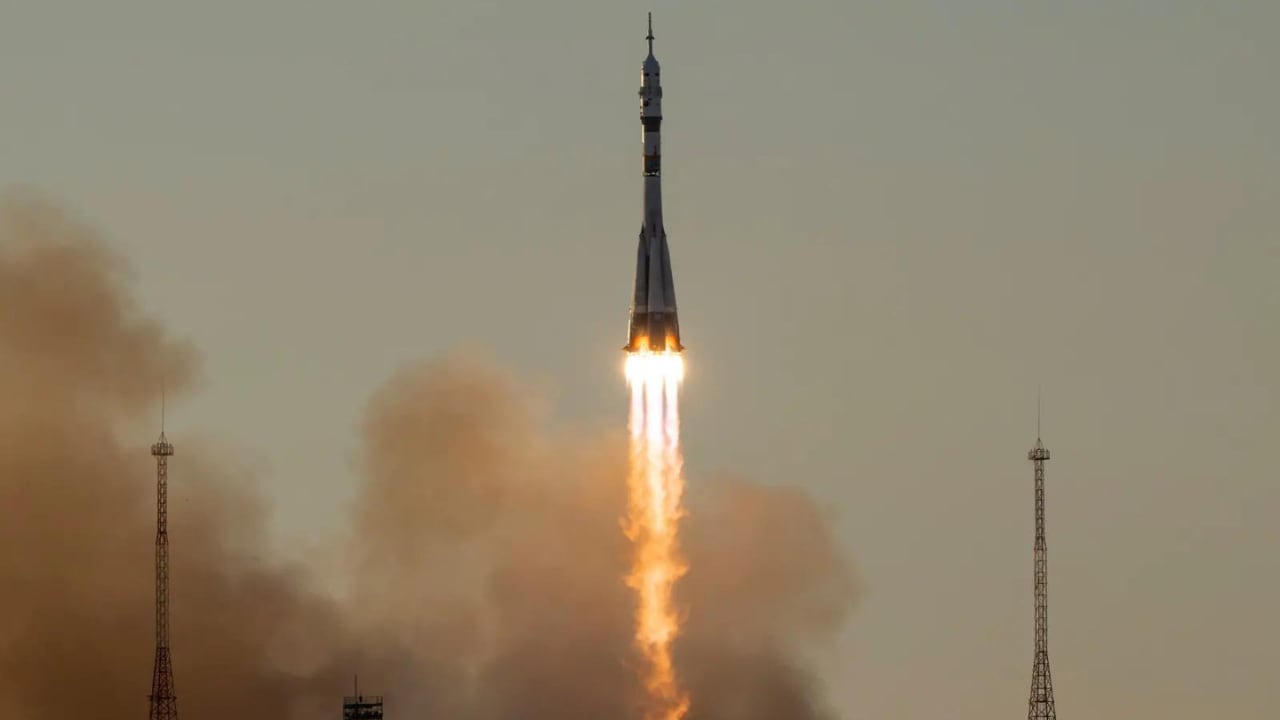
NASA astronaut Anil Menon, of Indian origin, has launched on an eight-month mission to the International Space Station (ISS) in collaboration with Roscosmos, where he will conduct research on human adaptation to microgravity and medical advancements.
Anil Menon's Journey to the ISS: A Convergence of Science and Diplomacy
In a significant milestone for international space exploration and representation, NASA astronaut Anil Menon has successfully launched for his first spaceflight mission. Menon, who is of Indian origin, is set to spend eight months aboard the International Space Station (ISS), a duration that underscores the intensity and scope of the scientific objectives he is tasked to achieve. This mission is not merely a personal achievement for Menon but a strategic deployment of expertise aimed at expanding our understanding of the human body's resilience in the vacuum of space.
Advancing Medical Frontiers in Microgravity
At the core of Menon's mission is a rigorous schedule of scientific experiments and technology demonstrations. His primary research focus—human adaptation to microgravity—is critical for the future of deep-space exploration. When the human body is removed from Earth's gravitational pull, it undergoes profound physiological changes, including bone density loss, muscle atrophy, and fluid shifts that affect vision and cardiovascular health. By conducting medical advancements and longitudinal studies during his eight-month stay, Menon will provide vital data that could lead to countermeasures for these conditions, which is essential for any future crewed missions to Mars or long-term lunar settlements.
The Geopolitical Nuance of NASA-Roscosmos Cooperation
One of the most compelling aspects of this mission is the continued operational partnership between NASA and Roscosmos. Despite the prevailing global tensions and geopolitical frictions between the United States and Russia, the ISS remains a sanctuary of international cooperation. Menon's launch via a Russian vehicle highlights the interdependence of the two space agencies. This mission serves as a testament to the "space diplomacy" model, where scientific pursuit and the shared goal of human survival in space override terrestrial political disputes, ensuring that the ISS continues to function as a global laboratory.
Representation and the Indian Diaspora in Space
Anil Menon's ascent to the ISS adds another prestigious chapter to the history of the Indian diaspora in space exploration. Following the legacies of pioneers like Kalpana Chawla and Sunita Williams, Menon's role as a NASA astronaut exemplifies the global nature of modern scientific talent. His presence on the ISS is likely to inspire a new generation of STEM students across India and the global South, reinforcing the idea that the frontiers of space are accessible to those with the intellectual rigor and determination to pursue them, regardless of their origin.
Technology Demonstrations and Future Infrastructure
Beyond biological research, the mission involves critical technology demonstrations. These tests often involve new life-support systems, waste management technologies, or communication arrays that must be proven in the harsh environment of Low Earth Orbit (LEO) before they can be deployed on more distant voyages. By refining these technologies, Menon and his crew are essentially building the blueprint for the next generation of space habitats. These demonstrations are pivotal as the world transitions from the ISS era toward commercial space stations and the Artemis program's lunar gateway.
Conclusion: A Bridge to the Future
Anil Menon's eight-month mission is a multifaceted endeavor that blends high-stakes medical research with delicate international diplomacy. By studying how humans adapt to the void and testing the tools required to survive there, this mission paves the way for the next giant leap in human exploration. As Menon conducts his experiments aboard the ISS, he is not only contributing to the scientific archives of NASA but is also maintaining a critical bridge of cooperation between world powers in the pursuit of universal knowledge.