T. rex sells for $50 million, becoming the most expensive dinosaur fossil ever auctioned
Source Entity
US Top News and Analysis
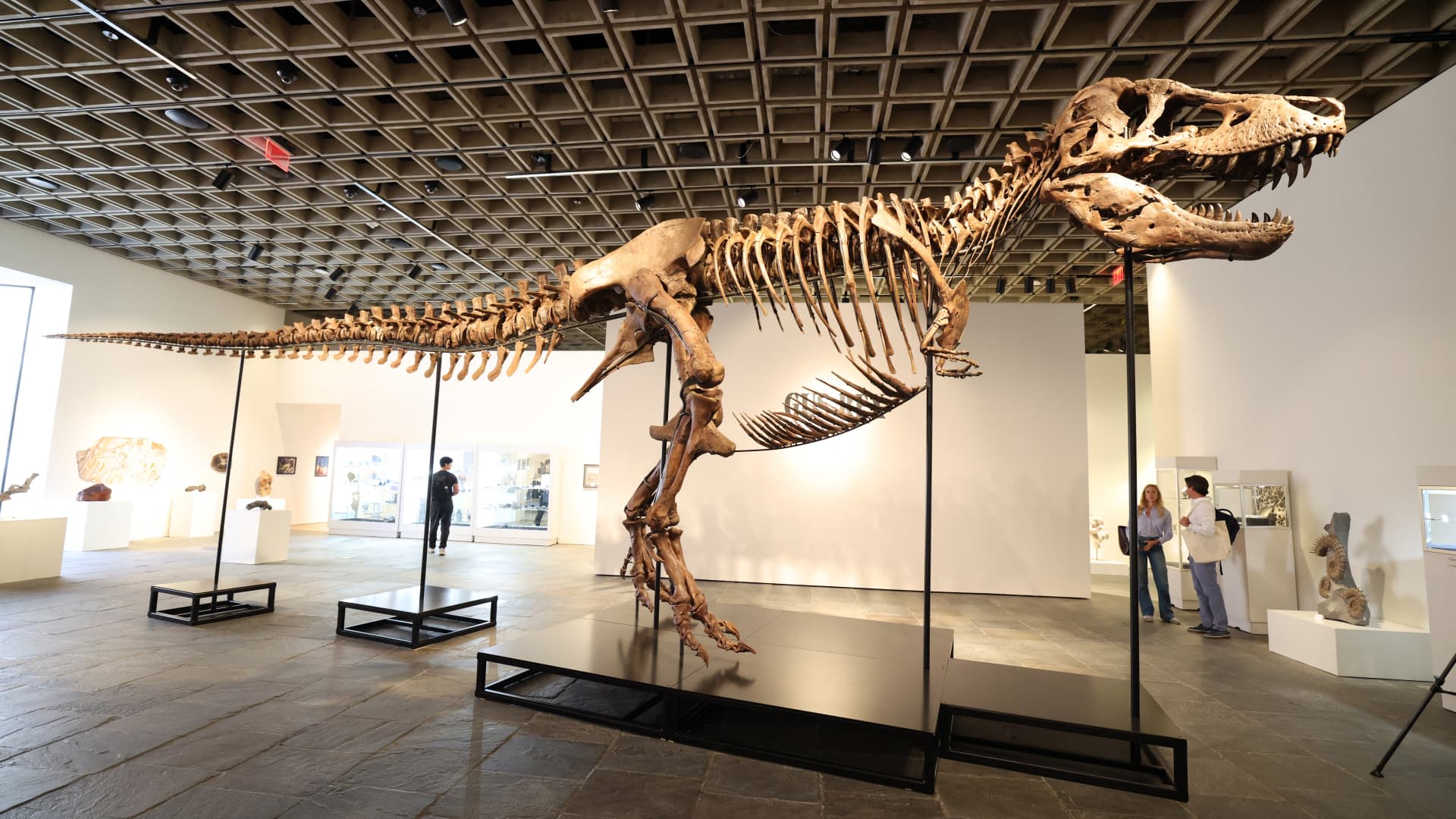
A Tyrannosaurus rex skeleton has set a new world record as the most expensive dinosaur fossil ever auctioned, selling for $50 million and surpassing the previous record held by a Stegosaurus skeleton.
The Dawn of the Ultra-Luxury Fossil Market
In a stunning display of the intersection between natural history and high-finance, a Tyrannosaurus rex skeleton has been auctioned for a record-breaking $50 million. This sale marks a pivotal moment in the valuation of paleontological specimens, establishing the T. rex as the ultimate 'trophy asset' for the world's wealthiest collectors. By surpassing the previous record—a Stegosaurus skeleton purchased by hedge fund billionaire Ken Griffin for $44.6 million in 2024—this transaction signals a rapid escalation in the market value of prehistoric remains, transforming scientific treasures into high-yield alternative investments.
The Allure of the Apex Predator
The T. rex's ability to command such a staggering price is not merely a result of rarity, but a byproduct of its status in global popular culture. As the most recognized carnivorous dinosaur, the Tyrannosaurus rex represents the pinnacle of prehistoric power and evolutionary dominance. This 'celebrity status' creates a unique demand curve where the specimen is valued not just for its anatomical completeness or scientific merit, but as a piece of natural art. The $50 million price tag reflects a premium placed on the prestige associated with owning the 'King of the Dinosaurs,' mirroring the way elite collectors bid on iconic works by artists like Da Vinci or Picasso.
Comparative Analysis: T. rex vs. Stegosaurus
The previous benchmark, set by Ken Griffin's $44.6 million acquisition of a Stegosaurus, highlighted a growing trend of Ultra-High-Net-Worth Individuals (UHNWIs) diversifying their portfolios with natural history assets. However, the jump to $50 million for the T. rex suggests that the market is now differentiating between 'rare' and 'iconic.' While the Stegosaurus is a marvel of biological engineering, the T. rex occupies a psychological space in the public imagination that allows it to break price ceilings. This competition between billionaire collectors creates a feedback loop that continues to drive the valuation of high-quality skeletons upward.
The Tension Between Private Wealth and Public Science
This record-breaking sale brings to the forefront a long-standing debate within the scientific community regarding the commercialization of fossils. When a specimen sells for $50 million to a private entity, there is an inherent risk that the fossil will be removed from the public eye and restricted from academic study. Paleontologists often argue that such specimens belong in museums where they can be analyzed to unlock secrets of evolution and extinction. The shift toward private ownership means that the 'gatekeepers' of scientific data are increasingly private collectors rather than institutional curators, potentially slowing the pace of peer-reviewed discovery.
The Financialization of Natural History
We are witnessing the 'financialization' of paleontology, where fossils are treated as non-correlated assets. In an era of volatile stock markets, tangible assets with absolute scarcity—such as a complete T. rex—become attractive hedges. The fact that this sale happened so shortly after the Stegosaurus record indicates a maturing market with established liquidity among a small circle of global elites. This trend suggests that as more billionaires enter the fray, we may see a standardized 'grading system' for fossils, similar to how gemstones or rare coins are appraised, to justify increasingly astronomical price points.
Future Trends and Market Predictions
Looking ahead, it is highly probable that the $50 million mark is not the ceiling. As the number of high-quality, well-preserved T. rex specimens remains finite, the scarcity will only intensify. We can expect future auctions to push toward the $75 million or $100 million range, especially if specimens with proven provenance or exceptional completeness emerge. Furthermore, this trend may encourage more commercial fossil hunting, which could lead to a surge in discoveries but also increase the risk of 'looting' in fossil-rich regions, necessitating stricter international regulations on the trade of prehistoric remains.
Conclusion
The $50 million sale of the T. rex is more than a curiosity of the auction world; it is a reflection of a broader shift in how humanity values the remnants of the deep past. While the financial milestone is historic, it underscores the delicate balance between the prestige of private ownership and the necessity of scientific accessibility. As the T. rex officially claims the title of the most expensive dinosaur ever auctioned, it cements its legacy not only as a prehistoric predator but as a modern symbol of extreme wealth and exclusivity.