Who is Anil Menon? Indian-origin Nasa astronaut's journey from Kerala to the Stars
Source Entity
etimes.in
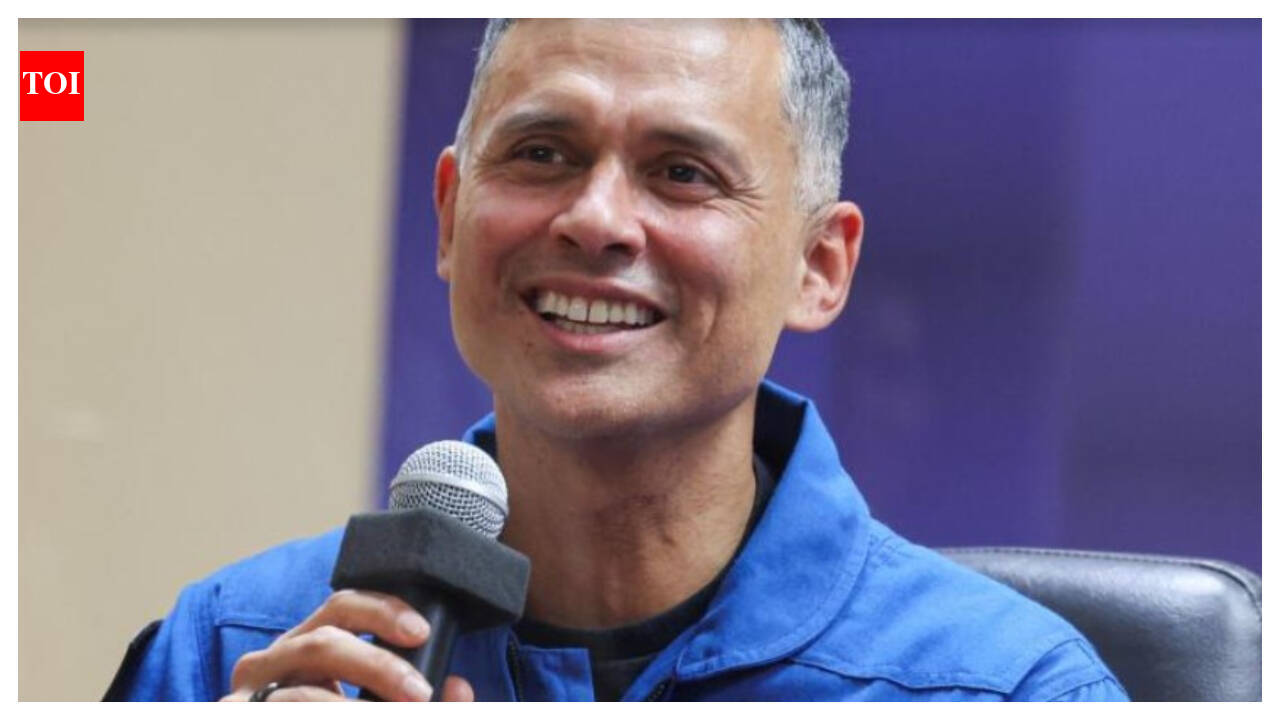
Anil Menon, a U.S. Space Force Colonel and the first astronaut of Malayali descent, is embarking on an eight-month mission to the International Space Station (ISS) to conduct vital research on microgravity, human health, and space-based manufacturing.
A New Frontier: The Ascent of Colonel Anil Menon
The appointment of Colonel Anil Menon, a U.S. Space Force officer, to a long-duration mission on the International Space Station (ISS) represents a landmark moment in both aerospace history and cultural representation. As the first astronaut of Malayali descent to travel into space, Menon's journey from the coastal state of Kerala, India, to the vacuum of space serves as a powerful testament to the global nature of modern scientific exploration. This mission is not merely a voyage of endurance but a targeted scientific expedition designed to push the boundaries of how humans survive and operate beyond Earth's atmosphere.
The Strategic Synergy of NASA and the U.S. Space Force
Colonel Menon's role highlights the increasingly blurred lines between civilian scientific research and military strategic operations in space. The U.S. Space Force's involvement in NASA missions underscores the importance of space domain awareness and the necessity of training high-level military personnel in the complexities of orbital living. By integrating Space Force expertise into the ISS environment, the mission ensures that the operational logistics of space travel are refined, providing critical data that will be essential for future national security interests and international collaborations in the cislunar economy.
Advancing Human Health in Microgravity
One of the core objectives of Menon's eight-month tenure is the study of microgravity's effects on human physiology. Spaceflight induces significant biological stress, including bone density loss and fluid shifts that affect vision and cardiovascular health. Menon's specific focus on testing new technologies for producing IV fluids and performing ultrasounds is critical. In the isolation of space, traditional medical infrastructure is unavailable; therefore, developing autonomous, space-ready medical diagnostic tools like advanced ultrasounds is a prerequisite for any future crewed missions to Mars or the establishment of permanent lunar bases under the Artemis program.
The Future of Orbital Manufacturing
Beyond health, the mission delves into the burgeoning field of space-based manufacturing. The unique environment of microgravity allows for the creation of materials and pharmaceuticals that are impossible to produce on Earth due to sedimentation and convection. By studying manufacturing processes in orbit, Menon's mission contributes to a broader economic shift toward 'In-Space Manufacturing' (ISM). This could lead to the production of high-purity crystals or specialized organs via 3D bioprinting, potentially revolutionizing medicine and materials science back on Earth.
Cultural Impact and the Global STEM Pipeline
From a sociological perspective, Menon's mission is a watershed moment for the Indian diaspora, particularly the Malayali community. Kerala has a long-standing reputation for high literacy rates and a strong emphasis on education; seeing a son of the soil reach the ISS provides an unprecedented catalyst for STEM (Science, Technology, Engineering, and Mathematics) aspirations among youth in the region. This visibility reinforces the idea that the frontiers of space are open to diverse backgrounds, encouraging a more inclusive global pipeline of talent for the next generation of space explorers.
Conclusion: Paving the Way for Deep Space
In summary, Colonel Anil Menon's mission is a multifaceted endeavor that blends personal achievement with critical scientific advancement. By tackling the challenges of medical autonomy and orbital manufacturing, this expedition provides the empirical data necessary to sustain human life during long-term interplanetary travel. As the ISS enters its final decade of operation, missions like Menon's ensure that the legacy of the station is a comprehensive blueprint for the future of human civilization among the stars.