Argentina to stop Falklands exploiting offshore oilfields, country’s foreign minister says
Source Entity
Daniel Boffey Chief reporter
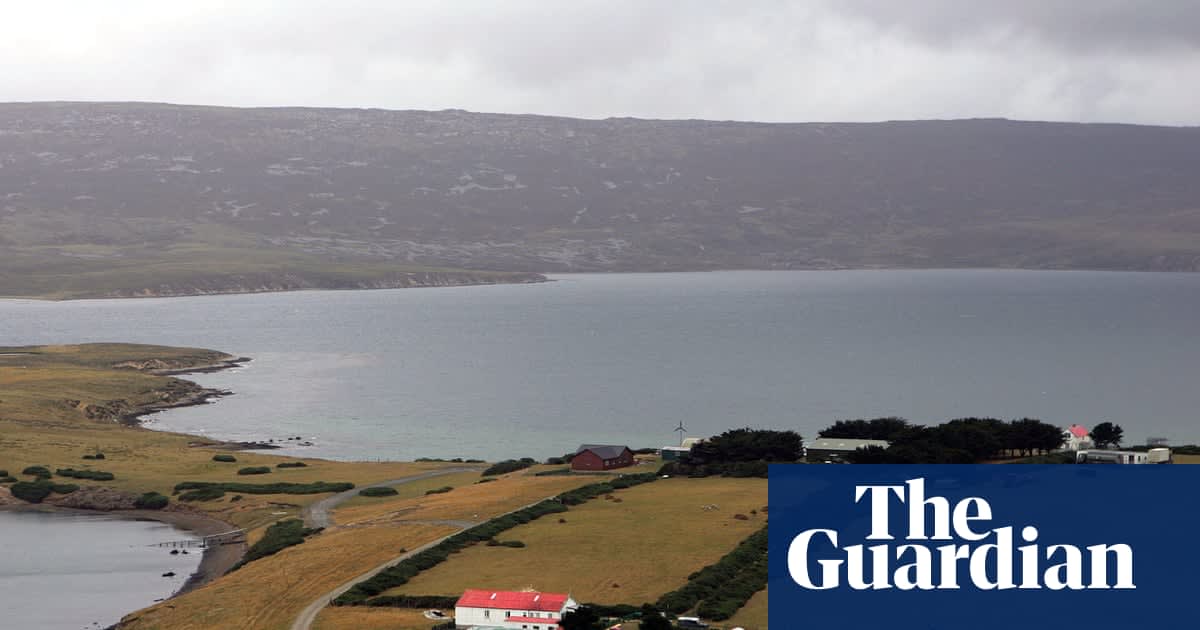
Argentina has declared a firm strategy to block the Falkland Islands from developing offshore oilfields as part of its ongoing sovereignty claim. This move escalates diplomatic tensions with the United Kingdom, directly challenging British administration in the region.
Tensions Escalate Over Falklands Energy Sovereignty
Argentina has formally signaled a shift in its diplomatic and economic strategy regarding the Falkland Islands, with the foreign minister announcing a plan to halt the territory's efforts to exploit offshore oilfields. This declaration, delivered during a high-profile event at the Argentine Council for International Relations, represents a calculated attempt by the administration of President Javier Milei to exert pressure on the United Kingdom regarding the long-standing sovereignty dispute over the islands.
The Diplomatic Confrontation
The delivery of this message was particularly notable for its setting, as the event was attended by the British ambassador to Argentina, David Cairns. By articulating this policy shift in the presence of a senior UK diplomat, the Argentine government effectively transformed a policy statement into a direct diplomatic challenge. The subsequent departure of Ambassador Cairns from the event underscores the cooling of bilateral relations and the sensitivity surrounding the issue of resource exploitation in the South Atlantic.
Economic Strategy as Political Leverage
At the core of this policy is the belief that restricting the development of offshore oil projects is a viable mechanism to weaken the Falklands' economic autonomy and, by extension, the British claim to sovereignty. Argentina maintains that the waters surrounding the islands are part of its national territory, and therefore, any extraction of natural resources without its consent is an infringement upon its sovereign rights. This strategy aims to deter international investment in the region by creating a climate of legal and political uncertainty.
Historical Context and Modern Friction
The dispute over the Falkland Islands—known in Argentina as the Islas Malvinas—is rooted in decades of historical grievance, punctuated by the 1982 conflict. The current administration under Javier Milei appears to be signaling a pivot toward more assertive diplomatic posturing. By focusing on the economic potential of the seabed, Argentina is attempting to modernize its claim, moving beyond historical arguments to address the contemporary reality of energy security and resource management.
Broader Implications and Future Trends
This development suggests that the future of the Falklands will be increasingly defined by the intersection of energy policy and international law. If Argentina successfully complicates the logistics of offshore exploration, it could force the UK into a defensive position regarding its regional infrastructure. Conversely, this may lead to increased international scrutiny over the maritime boundaries of the South Atlantic, potentially drawing in other regional actors and global energy firms with interests in the area.
Conclusion
As the situation evolves, the standoff highlights the fragility of the status quo in the South Atlantic. By placing the exploitation of oilfields at the center of the sovereignty debate, the Argentine government has effectively raised the stakes for both London and the local administration on the islands. Whether this leads to a formal negotiation process or a period of protracted economic and diplomatic friction remains a critical question for international relations in the coming years.