Arunachal group wants government policy to recruit 20% non-residents scrapped
Source Entity
India Latest News: Top National Headlines Today & Breaking News | The Hindu
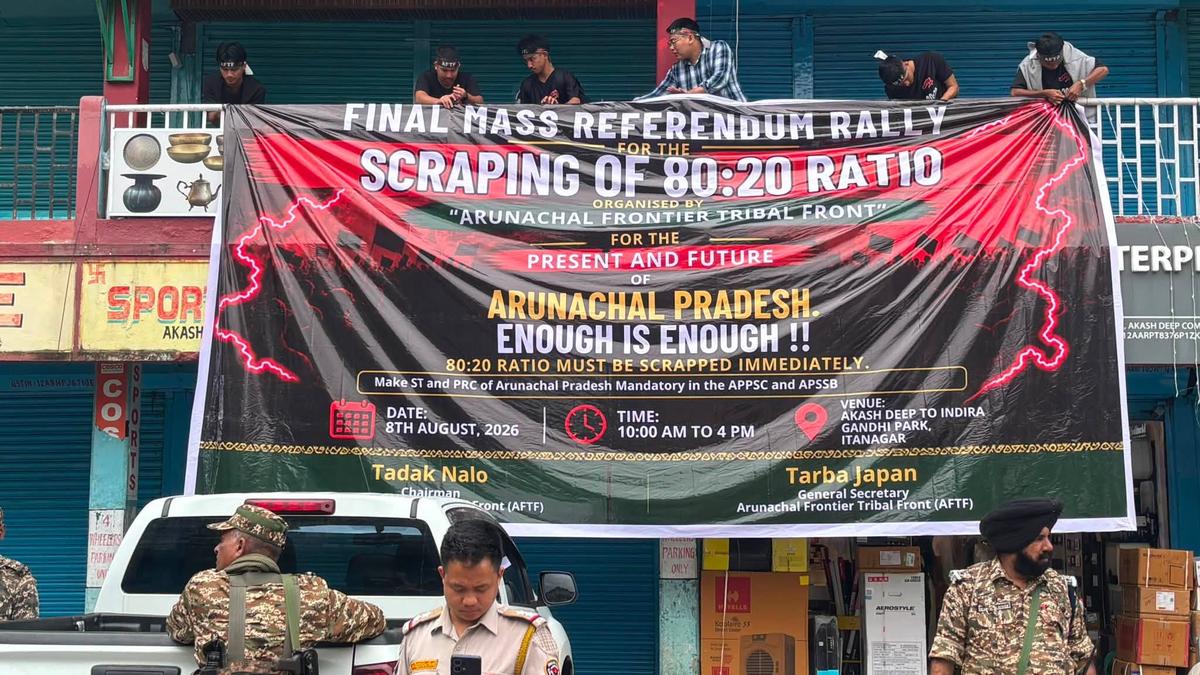
The Arunachal Frontier Tribal Front has demanded the state government scrap a 20% non-resident recruitment quota by August 15, 2026. The group is pushing for mandatory ST status and Permanent Resident Certificates for all government job applicants.
Tensions Rise Over Recruitment Policy in Arunachal Pradesh
Recent developments in Arunachal Pradesh have brought the long-standing debate over state employment policies to the forefront. The Arunachal Frontier Tribal Front (AFTF), representing a coalition of 38 organizations, has issued a formal ultimatum to the state government, demanding the immediate repeal of a policy that allocates 20% of government job openings to non-residents. This demand was solidified during a mass referendum rally held in Itanagar on August 8, 2026.
The Core Demands and Policy Shifts
The AFTF’s primary contention is that the current recruitment structure undermines the interests of the local indigenous population. By setting a deadline of August 15, 2026, the organization is pushing for a legislative overhaul that would make Scheduled Tribe (ST) status and the possession of a Permanent Resident Certificate (PRC) mandatory prerequisites for all recruitment examinations. These exams are currently administered by the Arunachal Pradesh Public Service Commission and the Arunachal Pradesh Staff Selection Board.
Historical Context of the 80:20 Policy
The 80:20 recruitment ratio is a legacy policy that has existed for decades, intended to balance the needs of administrative expansion with the limited availability of specialized local talent during the state's early developmental years. However, as the local workforce has grown and educational attainment within the state has increased, indigenous groups increasingly view this quota as an outdated mechanism that restricts opportunities for the local youth, leading to the current push for protectionist labor reforms.
Socio-Political Implications
The ultimatum issued by AFTF chairperson Tadak Nalo indicates a hardening stance from civil society organizations. By framing the demand as a "final mass referendum," the coalition is signaling that the policy is no longer viewed as a mere administrative issue, but rather a fundamental matter of tribal identity and economic security. The government now faces the complex challenge of balancing regional inclusivity requirements with the mounting pressure to prioritize its own citizens for public sector roles.
Future Outlook and Government Response
As the August 15 deadline approaches, the state government finds itself in a precarious position. The potential for civil unrest, as hinted at by the AFTF’s warning regarding the state's responsibility for future developments, suggests that the administration must engage in high-level dialogue to address these grievances. The outcome of this dispute will likely dictate the future of employment regulations in the region and will serve as a bellwether for how the state manages the intersection of tribal rights and administrative governance.
Verification Required?