Assam citizens’ forum calls for scientific solution to flood problem
Source Entity
India Latest News: Top National Headlines Today & Breaking News | The Hindu
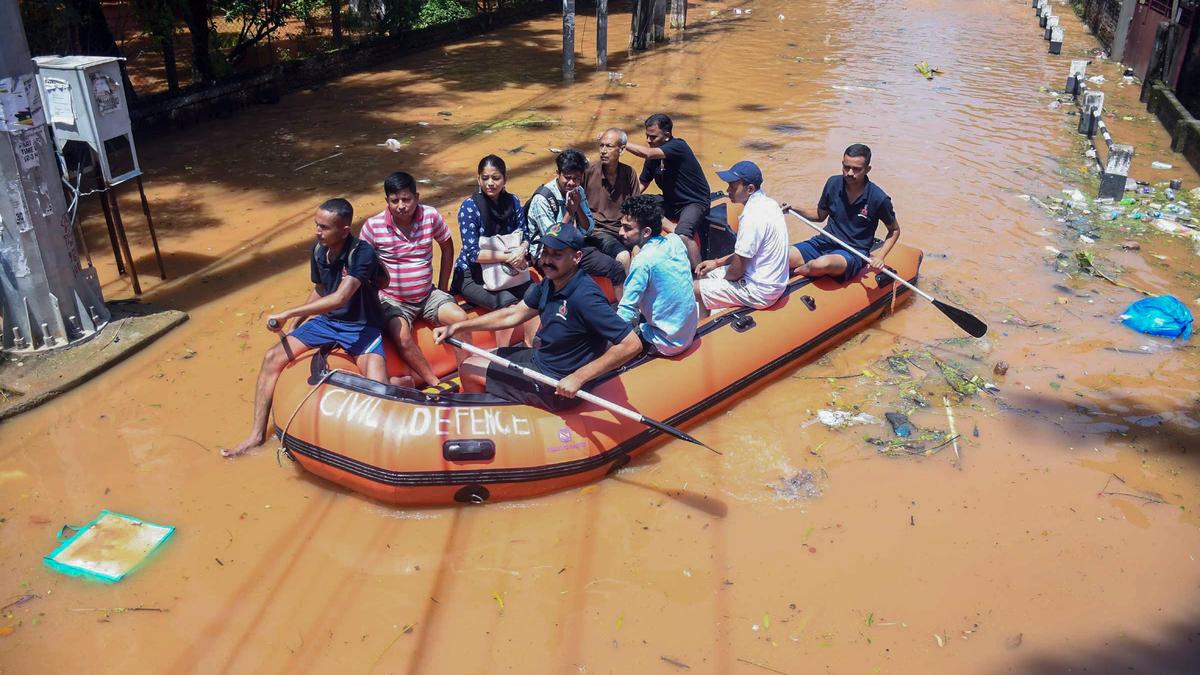
Civil society and opposition leaders in Assam are demanding a national disaster status for the state's annual floods. Allegations of illegal mining syndicates exacerbating the crisis have further intensified the political discourse surrounding flood management.
The Persistent Crisis: Assam’s Flood Management Dilemma
Assam’s annual deluge has once again become a flashpoint for political and social activism, as citizens' forums and opposition leaders demand a fundamental shift in how the state addresses its recurring flood crisis. On August 21 and 22, 2026, the discourse moved beyond standard relief operations, with the Assam Nagorik Sammilan—a forum led by prominent figures Hiren Gohain and Harekrishna Deka—calling for a scientific, holistic approach to river management that transcends the traditional reliance on temporary embankments.
The Demand for National Disaster Status
The Communist Party of India (Marxist) (CPI(M)) observed a 'demand day' to pressure the government into declaring the floods a national disaster. This status is highly coveted as it would unlock federal resources and long-term funding strategies essential for mitigating the loss of life and property. The party’s demands include substantial financial compensation, specifically ₹20 lakh for the families of flood victims, immediate relief of ₹1 lakh per family, and up to ₹10 lakh for housing reconstruction, reflecting the severe economic impact of the seasonal devastation.
Allegations of Ecological Mismanagement
Parallel to the call for better policy, Sivasagar MLA and Raijor Dal president Akhil Gogoi has leveled serious allegations against members of the ruling BJP. Mr. Gogoi explicitly linked the intensity of the flooding in eastern Assam to a 'syndicate' allegedly controlled by Water Resources Minister Sushanta Borgohain, Sonari MLA Dharmeswar Konwar, and Nazira MLA Mayur Borgohain. By pointing to illegal coal and stone mining activities along the Assam-Nagaland border—specifically near the Dikhow River—Mr. Gogoi suggests that human-induced ecological degradation is a primary driver of the current crisis.
The Intersection of Mining and Hydrology
The Dikhow River, which serves as a critical water artery flowing from Nagaland into Assam, is at the heart of these accusations. When mining syndicates destabilize riverbanks or alter water courses, the natural flood-mitigation capacity of the landscape is severely compromised. If these allegations are substantiated, it would imply that the current administration is not merely failing to manage natural disasters but is actively complicit in exacerbating them through the neglect of environmental oversight in mining zones.
Future Implications for Policy and Governance
These developments signify a growing impatience with traditional bureaucratic responses. The call for a 'scientific solution' suggests that the public is increasingly aware that embankment-centric engineering is inadequate for the ecological realities of the Brahmaputra valley. Moving forward, the government will face mounting pressure to reconcile its mining policies with its disaster management strategies. The demand for transparency regarding the alleged syndicates will likely become a central theme in future legislative sessions, forcing a difficult debate on the intersection of state-sanctioned economic activity and public safety.
Conclusion
Assam stands at a critical juncture where the demand for immediate financial relief meets the urgent need for structural and systemic reform. Whether the state moves toward a comprehensive, scientific flood policy or remains locked in a cycle of political blame and temporary fixes remains to be seen. The convergence of civil society advocacy and pointed legislative scrutiny indicates that the status quo of annual catastrophe is becoming politically unsustainable.
Verification Required?