Astronauts may grow Medicines: UC San Diego tests space pharma
Source Entity
TOI TECH DESK
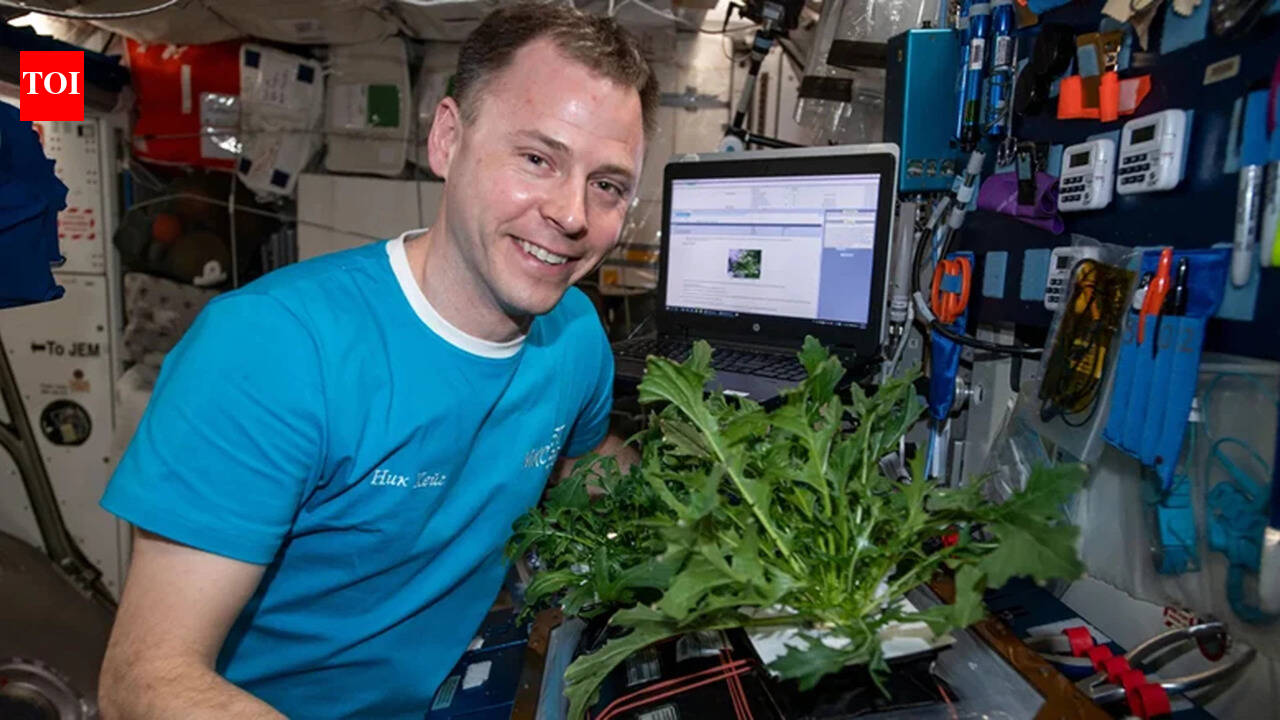
University of California San Diego researchers have demonstrated the feasibility of growing medicinal compounds in microgravity using plants. This breakthrough could resolve critical medication expiration issues for long-duration space missions like a journey to Mars.
The Future of Space Medicine: Cultivating Cures in Orbit
As humanity sets its sights on the Red Planet, the logistical challenges of deep-space travel are becoming increasingly apparent. A critical concern for mission planners is the stability of pharmaceutical supplies. Current data indicates that more than half of the medicines stocked on the International Space Station (ISS) expire within three years. For a projected Mars mission, which would span roughly 400 days, this poses a significant risk to crew health and mission success, necessitating a more sustainable, self-sufficient approach to medical care.
Breaking the Supply Chain Dependence
Researchers at the University of California San Diego have proposed a transformative solution: shifting from a supply-based model to an in-situ cultivation model. By utilizing the principles of space-based botany, the team is exploring the possibility of growing pharmaceuticals directly on board spacecraft. This shift would fundamentally change the way we approach long-term human presence in space, moving away from relying on finite, earth-bound stockpiles that degrade over time.
The Role of Plant-Based Biofactories
At the heart of this study is the cultivation of the cowpea mosaic virus, which has shown promise as a cancer-fighting agent. The researchers successfully grew these viral particles within tobacco-relative plants and black-eyed peas under conditions simulating microgravity. This process is particularly innovative because the researchers were able to extract the required medicinal compounds without destroying the host plant, effectively turning the plants into living, renewable biofactories capable of producing medication on demand.
Historical Context and Technological Evolution
NASA has a long and storied history of cultivating plants in space, beginning with basic experiments to understand plant physiology in low-gravity environments. While these early efforts focused on food production and environmental life support, the transition toward pharmaceutical production represents the next logical step in space-based biotechnology. Integrating molecular farming with established space-agriculture techniques marks a significant leap in our capability to support human life in extreme environments.
Broader Implications for Deep-Space Exploration
If successfully scaled, this technology could mitigate the 'expiration problem' that currently threatens the viability of prolonged missions. By producing medicine as needed, mission crews would no longer be tethered to the constraints of terrestrial supply chains. Furthermore, the ability to synthesize drugs in transit offers a psychological and physical safety net, ensuring that therapeutic options remain potent and available throughout the duration of a mission to Mars and beyond.
Conclusion: A New Frontier in Biotechnology
The research conducted by UC San Diego underscores the necessity of interdisciplinary innovation in space exploration. By combining botany, pharmacology, and aerospace engineering, scientists are laying the groundwork for a more resilient future in the cosmos. While further testing is required to transition from simulated environments to the realities of the ISS, this study provides a clear, actionable pathway toward ensuring the health and safety of future interplanetary pioneers.