Moving grass led Australian caver to discover one of Victoria’s longest caves
Source Entity
TOI WORLD DESK
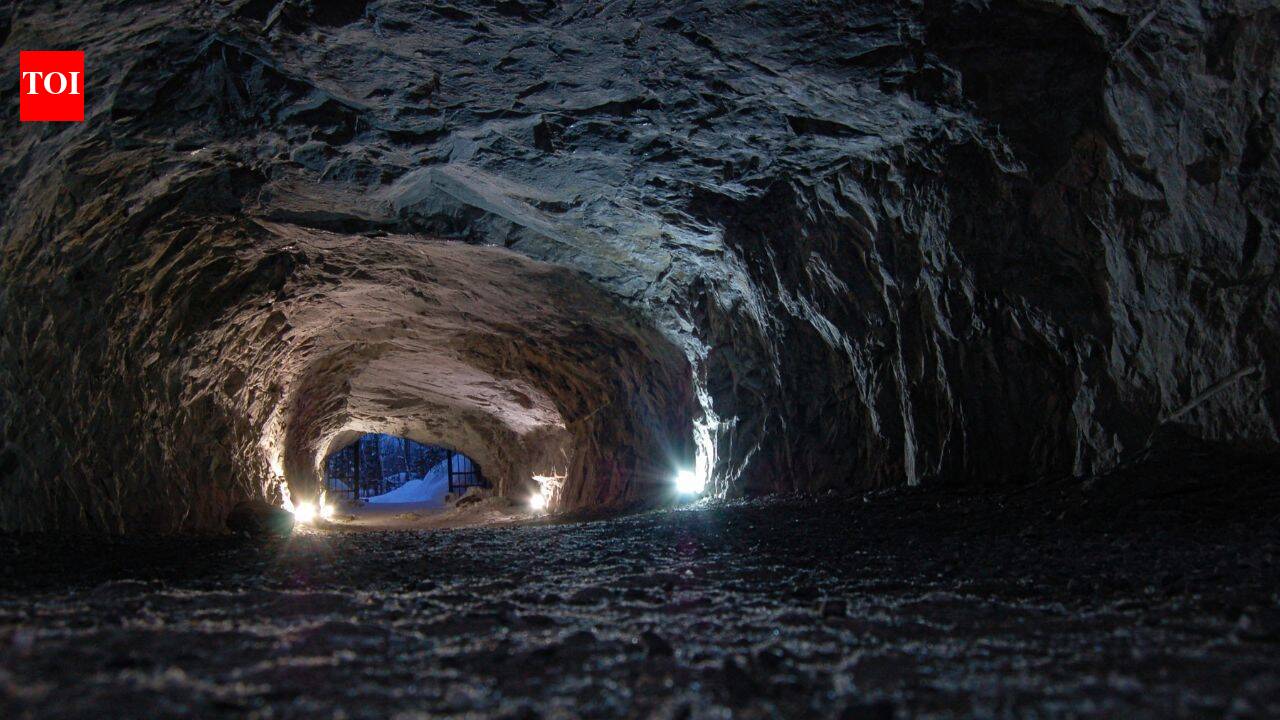
An Australian caver discovered one of Victoria's longest cave systems in 2006 after observing anomalous grass movement. This chance finding led to the exploration of the Elk River cave, significantly expanding the region's known subterranean geography.
The Accidental Discovery of Victoria's Subterranean Wonder
In 2006, a seemingly mundane observation by an Australian caver transformed the geographical understanding of the Victorian landscape. While traversing a remote area, the caver noticed grass moving in the absence of wind, a phenomenon known in speleology as a "blowhole" effect. This subtle clue, indicating air exchange between the surface and a large underground void, prompted the caver to investigate the source of the airflow.
Unearthing the Elk River Cave
Upon digging beneath the disturbed vegetation, the explorer revealed an entrance to what would become known as the Elk River cave. This discovery was not merely an addition to a list of local landmarks; it marked the emergence of one of Victoria’s longest cave systems. The process of cave discovery often relies on such surface-level indicators, as the earth hides its most expansive features behind deceptive, unassuming topsoil.
The Science of Cave Discovery
Speleology, the scientific study of caves, frequently relies on the identification of micro-climatic anomalies like those observed in 2006. When air pressure differences exist between the exterior environment and a deep cavern, air is forced through small cracks or surface openings, causing the movement of grasses or debris. This discovery serves as a prime example of how attentive field observation can yield significant geological insights.
Geographical Significance
The Elk River cave system provides invaluable data regarding the karst topography of Victoria. Long cave systems are rare and offer a window into the hydrological and geological history of a region. By mapping these subterranean networks, scientists are better able to understand how water tables function and how the landscape has evolved over millennia through erosion and mineral deposition.
Broader Implications and Future Exploration
Discoveries like the Elk River cave continue to highlight how much of the Australian wilderness remains unexplored. The identification of such a significant system in 2006 reminds the scientific community that the potential for new discoveries is high, provided there is continued dedication to exploration. As mapping technology improves, it is likely that further connections or extensions to this system will be identified, cementing its status as a vital component of Victoria’s natural heritage.
Conclusion
The 2006 discovery of the Elk River cave remains a landmark event in Australian speleology. By following a simple, natural indicator—moving grass—a caver unlocked a vast underground environment. This serves as a testament to the importance of field observation and the ongoing mystery of the earth's hidden subterranean structures.