Rahul Gandhi attempts to spread anarchy in the country: Babulal Marandi
Source Entity
India Latest News: Top National Headlines Today & Breaking News | The Hindu
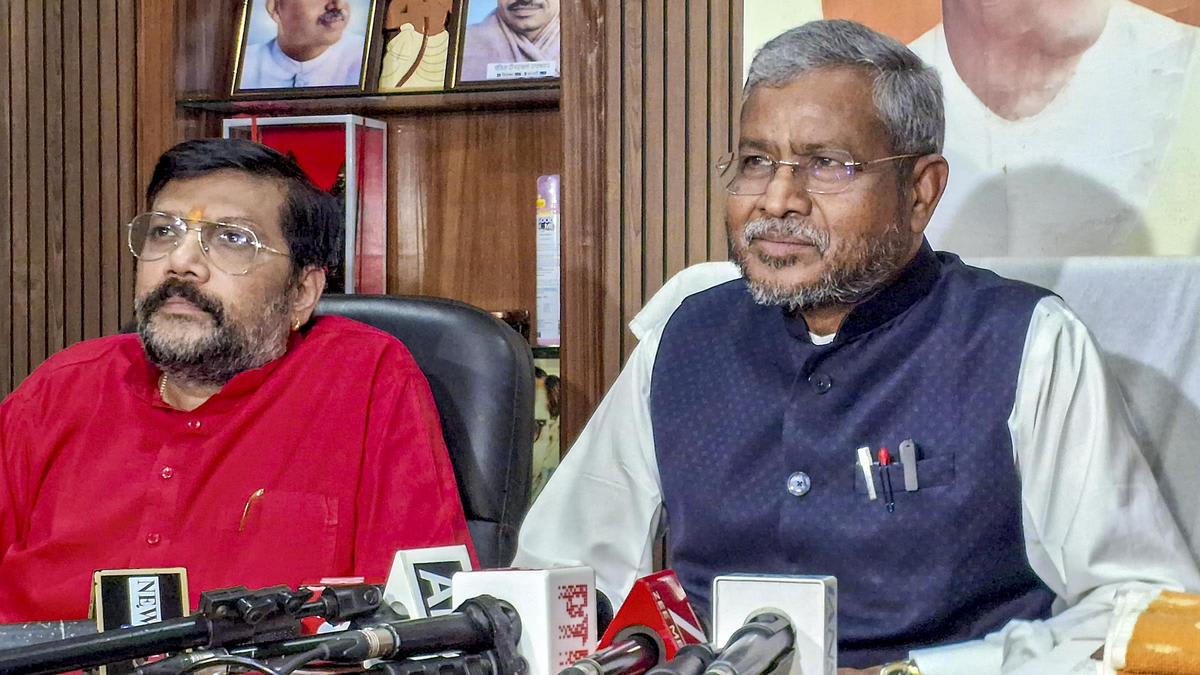
Jharkhand BJP leader Babulal Marandi has accused Rahul Gandhi of fostering anarchy by questioning Chief Election Commissioner Gyanesh Kumar. The remarks highlight the ongoing friction between the BJP and the Opposition regarding institutional integrity and political rhetoric.
Political Tensions Escalate in Jharkhand: The Marandi-Gandhi Conflict
The Core Allegation
In a sharp political rebuke, Babulal Marandi, the Leader of the Opposition in the Jharkhand Assembly, has publicly accused Congress leader Rahul Gandhi of attempting to incite anarchy within the nation. This confrontation stems from recent criticisms leveled by the Congress party against Chief Election Commissioner (CEC) Gyanesh Kumar, which were reportedly triggered by an investigative report published by the Indian Express. Marandi’s comments, delivered at a press conference in Giridih, reflect a broader ideological battle over the perceived neutrality of constitutional institutions in India.
The Pattern of Accusation
Marandi argues that the current controversy is not an isolated event but rather part of a sustained strategy by the Congress party. He contends that since their electoral defeat in 2014, the Congress and other Opposition factions have consistently sought to malign the Narendra Modi-led government. By framing these allegations as a recurring pattern, Marandi attempts to delegitimize the Opposition's critique by characterizing it as a desperate, habitual response to their loss of political power.
Institutional Integrity vs. Political Rhetoric
The conflict underscores the delicate balance between the right to political dissent and the preservation of faith in constitutional bodies. By questioning the CEC, the Congress is positioning itself as a watchdog for democratic processes. Conversely, the BJP, through figures like Marandi, views these challenges as direct attacks on the stability of the state, suggesting that questioning the integrity of the Election Commission is a catalyst for national disorder.
The Rhetorical Shift
Beyond the policy debate, the discourse has taken a deeply personal turn. Marandi’s suggestion that the Congress should focus on its own internal affairs and ensure Rahul Gandhi receives treatment at a 'good hospital' marks a significant escalation in the harshness of political rhetoric. This type of language signals a move away from substantive policy debate toward ad hominem attacks, which has become an increasingly common feature of the Indian political landscape.
Historical Context and Future Implications
Looking back at the political climate since 2014, this episode represents the latest in a series of institutional clashes. As the political landscape in Jharkhand and the national stage remains highly polarized, the reliance on such confrontational narratives is likely to continue. For the electorate, this creates a confusing environment where the credibility of constitutional referees becomes a primary battleground for political survival.
Conclusion
The confrontation between Babulal Marandi and Rahul Gandhi highlights the deep-seated mistrust currently defining Indian politics. As both parties continue to leverage institutional controversies for political gain, the potential for further social and political instability remains a significant concern for the democratic health of the country.
Verification Required?