6 months and 4 states later, Belgian mega machine on 240 wheels rolls into Kheri
Source Entity
Latest News: Todays Latest News Headlines from India & World | Hindustan Times | Hindustan Times
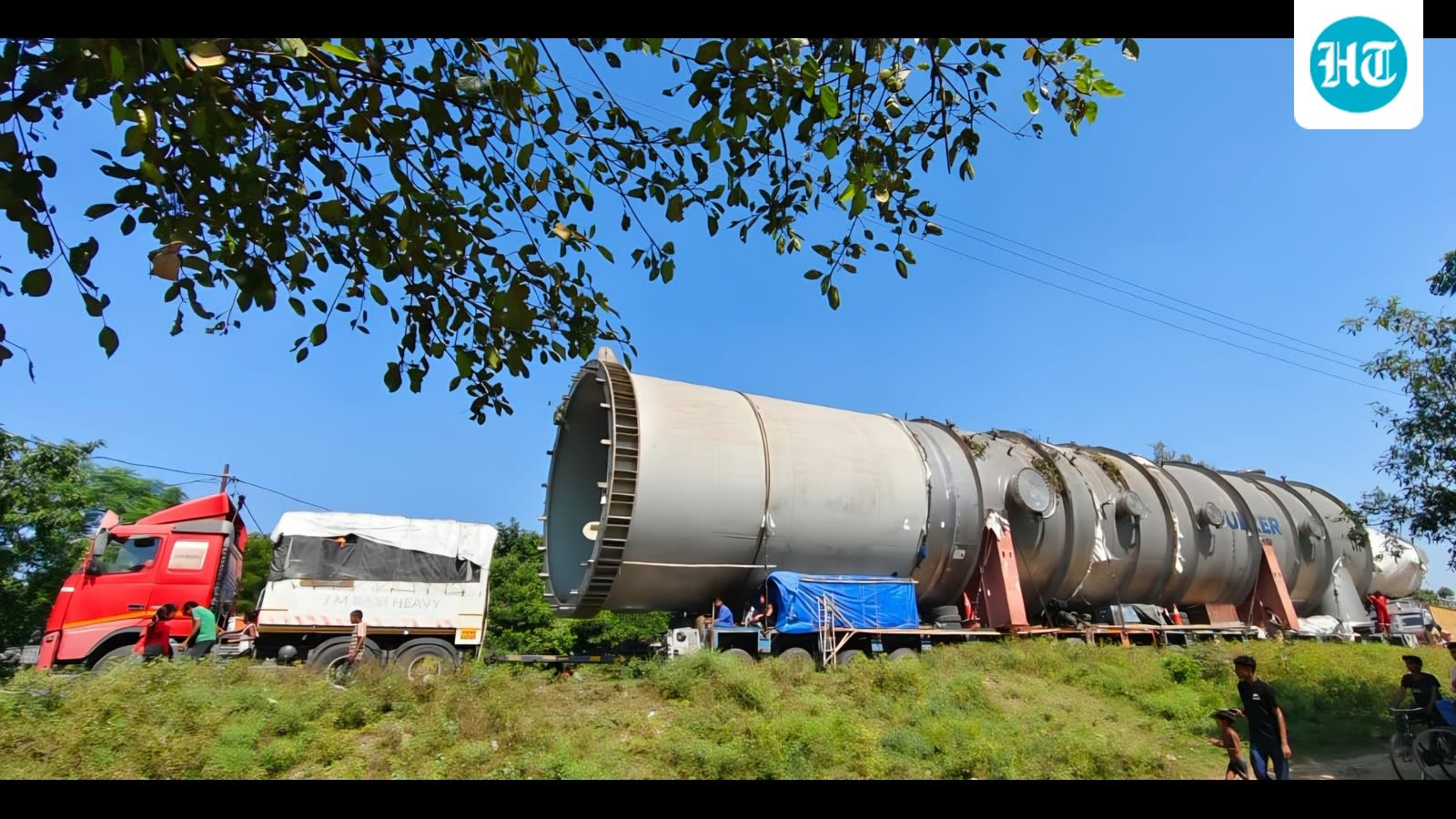
A massive 240-wheel trailer has arrived in Uttar Pradesh after a six-month journey to deliver a critical reactor for India's first sugar-to-bioplastic plant. This engineering feat marks a significant milestone in the country's transition toward sustainable industrial manufacturing.
A Landmark Engineering Feat for Indian Sustainability
In a remarkable display of logistical coordination and engineering precision, a massive 240-wheel trailer has reached Lakhimpur Kheri, Uttar Pradesh, concluding a grueling six-month journey across four states. The convoy, carrying a 110-foot-long, 26-foot-wide cyclisation reactor imported from Belgium, represents a pivotal moment for Balrampur Chini Mills. This specialized vessel is the core component of India's inaugural integrated sugar-to-bioplastic facility located in Kumbhi village.
The Logistics of Heavy-Haul Transport
The transportation of such an oversized load required meticulous planning and execution. A 40-member technical crew accompanied the convoy, tasked with the constant maintenance of the transit path, which included lifting overhead electrical lines and pruning trees to clear a passage for the gargantuan reactor. Supported by police escorts and pilot vehicles, the operation highlights the complexities of moving specialized industrial machinery through India’s diverse and often constrained roadway infrastructure.
Advancing the Bio-Economy
The arrival of this cyclisation reactor signals a shift in the Indian industrial landscape toward sustainable production. By converting sugar—a staple of the regional agricultural economy—into Polylactic Acid (PLA), Balrampur Chini Mills is positioning itself at the forefront of the bioplastics revolution. This transition is essential for reducing dependency on traditional petroleum-based plastics, aligning India's manufacturing sector with global environmental standards and circular economy principles.
Socio-Economic Implications for Kheri
For the residents of Lakhimpur Kheri, the establishment of this plant represents a significant technological and economic upgrade. By integrating high-tech bioplastic manufacturing with local sugar production, the project creates a bridge between traditional agricultural output and modern green chemistry. This facility is expected to catalyze local development and provide a blueprint for how sugarcane-producing regions can pivot toward high-value, sustainable exports.
Future Trends in Green Manufacturing
Looking ahead, the success of this project could trigger a wave of investment in similar bio-refineries across India. As global demand for biodegradable materials surges, the ability to manufacture PLA domestically will be a crucial competitive advantage. This project serves as a pilot for large-scale industrial decarbonization, demonstrating that even the most complex global supply chains can be bridged through persistent engineering and a commitment to green technology.
Conclusion
The successful delivery of the cyclisation reactor is more than just a logistical triumph; it is a testament to the evolving scope of India’s industrial capabilities. As the vessel makes its final approach to the Kumbhi plant, it brings with it the promise of a more sustainable future, marking a definitive step toward integrating advanced bioplastic production into the heart of India’s sugar belt.
Verification Required?