Benchmarking Vector Indexes
Source Entity
Hacker News
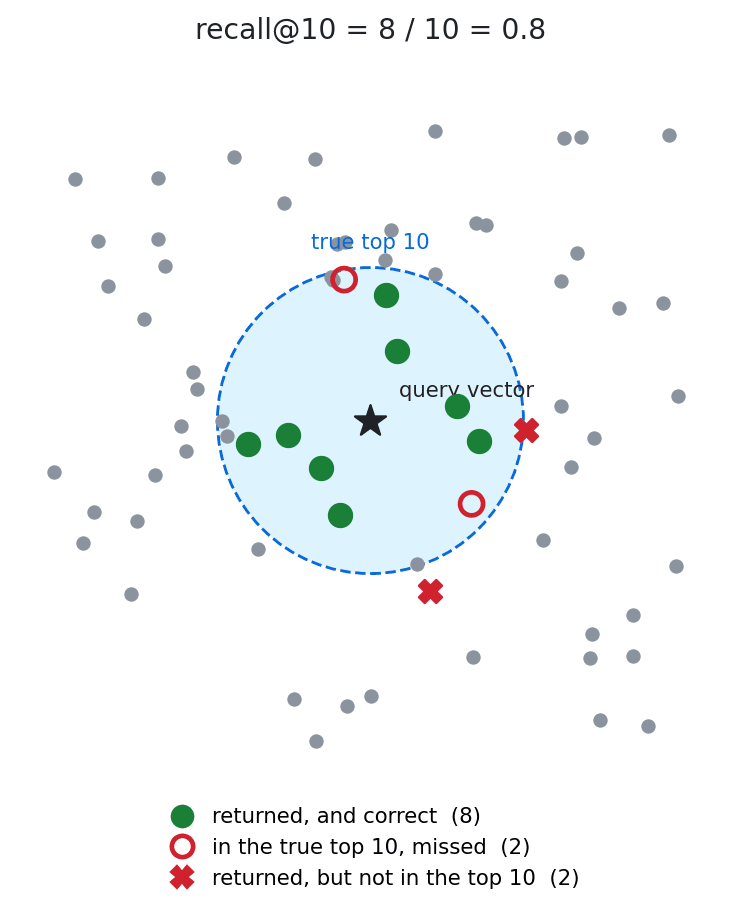
Industry experts are pushing for standardized benchmarking in vector search databases and LLM inference to address misleading performance claims. These initiatives aim to provide transparent trade-off analysis between cost, speed, and intelligence.
The Quest for Rigorous Benchmarking in AI Infrastructure
In the rapidly maturing landscape of artificial intelligence, the proliferation of 'big number' marketing has created a crisis of credibility. Nearly every modern database now includes vector search capabilities, yet these features are often accompanied by performance claims that lack verifiable methodology. By failing to disclose the parameters—such as the specific container environments, core allocation, or pinned versions used during testing—vendors often provide metrics that are contextually hollow, making it nearly impossible for engineers to make informed procurement decisions.
Standardizing Vector Search Evaluations
The introduction of standardized benchmarking tools, such as 'vector-bench,' represents a significant shift toward empirical accountability. By ensuring that competing engines are evaluated within identical containerized environments and on the same hardware, these tools isolate the performance of the database engine from the noise of infrastructure variance. This is essential for the industry, as embeddings—fixed-length arrays of floats representing semantic proximity—are the backbone of modern retrieval-augmented generation (RAG) systems. Without rigorous measurement, the semantic utility of these vectors remains theoretical rather than operational.
Defining the Efficient Frontier in Inference
The concept of the 'efficient frontier,' borrowed from classical economics, has become a vital framework for navigating LLM inference. In this context, it describes the optimal balance between competing constraints: latency, throughput, and model intelligence. As organizations deploy AI, they must navigate the reality that increasing model capability often comes at the expense of higher operational costs or slower response times. Understanding where a specific model sits on this frontier is no longer a luxury; it is a core requirement for sustainable AI engineering.
Trade-offs: Quality, Speed, and Cost
Modern inference engineering is fundamentally an exercise in managing these trade-offs. Techniques such as quantization, distillation, and pruning allow developers to exchange raw model quality for increased throughput, directly impacting the cost-per-query. Alternatively, adjusting reasoning levels allows for a shift between intelligence and speed, catering to different application requirements—from real-time chat interfaces to complex, asynchronous analytical tasks. These engineering decisions define the viability of AI products in resource-constrained environments.
Broader Implications for the AI Ecosystem
The convergence of standardized vector benchmarking and the application of efficient frontier theory marks a shift toward professionalization in the AI sector. As the 'hype cycle' gives way to production-grade requirements, the ability to quantify performance becomes the primary differentiator between experimental tools and robust enterprise infrastructure. Moving forward, we can expect increased demand for third-party, verifiable benchmarks that strip away marketing obfuscation, allowing engineers to focus on the technical realities of latency, cost, and semantic accuracy.
Conclusion
The move toward transparent, reproducible benchmarking is a necessary evolution for the AI industry. By focusing on the underlying mechanics of vector search and the economic trade-offs of LLM inference, developers can move past the limitations of anecdotal performance data. Establishing these rigorous standards will ultimately foster a more efficient, reliable, and predictable ecosystem for deploying intelligent applications at scale.
Multiple Citing Sources