Bangalore International Airport Limited confident that Bengaluru airport will be second largest in India
Source Entity
India Latest News: Top National Headlines Today & Breaking News | The Hindu
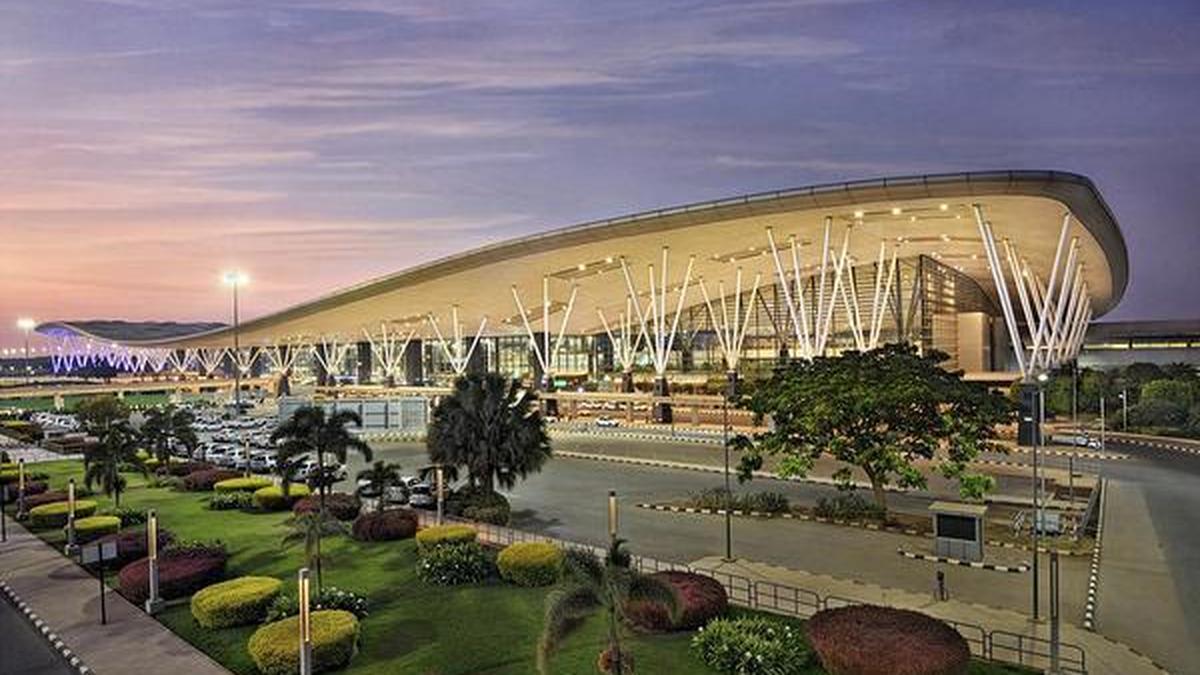
Bangalore International Airport Limited (BIAL) has expressed confidence that Kempegowda International Airport (KIA) will cement its position as the second-largest airport in India, noting that it already holds this rank in terms of overall domestic traffic.
Bengaluru's Aviation Ascent: Analyzing KIA's Path to Becoming India's Second Largest Hub
Bangalore International Airport Limited (BIAL) has recently signaled a strong strategic confidence in the trajectory of Kempegowda International Airport (KIA), asserting that the facility is poised to be the second-largest airport in India. This claim is not merely aspirational but is grounded in current operational data, as KIA already holds the position of the second-largest airport in the country when measured by overall domestic traffic. This milestone reflects the explosive growth of Bengaluru as a global economic center and the corresponding surge in air travel demand.
The Driver of Domestic Dominance
The primary catalyst for KIA's rise is Bengaluru's status as the "Silicon Valley of India." The city's concentration of technology giants, startups, and research institutions creates a perpetual flow of high-frequency business travel. Unlike leisure-heavy destinations, Bengaluru's traffic is driven by corporate necessity, leading to a robust and consistent volume of domestic flights connecting the city to other major Indian metros like Delhi, Mumbai, and Hyderabad. This consistent demand has allowed KIA to outpace other regional hubs and solidify its standing as a critical node in India's domestic aviation network.
Infrastructure Expansion and Capacity Scaling
To sustain this growth and officially transition from "second-largest by traffic" to "second-largest by overall scale," BIAL has been aggressively expanding its infrastructure. The development of Terminal 2 (T2), often described as a "terminal in a garden," represents a massive leap in passenger handling capacity. By integrating sustainable architecture with high-efficiency processing systems, KIA is preparing for a future where passenger throughput increases exponentially. The expansion is a direct response to the domestic traffic surge, ensuring that the airport does not become a bottleneck for the city's economic ambitions.
Broader Economic Implications
The elevation of KIA to the second-largest airport in India carries significant implications for the regional economy. A high-capacity, high-traffic airport acts as a magnet for international airlines, which typically prioritize hubs with strong domestic feeder networks. As KIA strengthens its domestic lead, it becomes an increasingly attractive destination for new long-haul international routes. This creates a virtuous cycle: increased domestic connectivity attracts more international carriers, which in turn boosts tourism and foreign direct investment (FDI) into Karnataka's industrial and tech sectors.
Competitive Landscape: The Race with Delhi and Mumbai
Historically, the Indian aviation landscape has been dominated by the Indira Gandhi International Airport (DEL) in Delhi and Chhatrapati Shivaji Maharaj International Airport (BOM) in Mumbai. For years, these two have functioned as the primary gateways to the country. However, the shift in economic gravity toward South India is evident in KIA's current performance. While Delhi remains the dominant hub due to its political status and geography, Bengaluru is challenging the traditional duopoly by leveraging its unique position as a tech hub, effectively redefining how "size" and "importance" are measured in Indian aviation.
Future Trends and Predictive Outlook
Looking forward, it is expected that KIA will further integrate digital transformation and sustainable aviation fuels (SAF) to maintain its competitive edge. As India's middle class grows and regional connectivity schemes like UDAN continue to expand, the volume of first-time flyers will likely increase, further boosting KIA's domestic numbers. We can predict a trend where KIA evolves into a primary transit hub for Southeast Asia, utilizing its domestic strength to bridge the gap between Western markets and the emerging economies of the East.
Conclusion
In summary, BIAL's confidence is backed by the tangible reality of domestic traffic leadership. By aligning infrastructure growth with the city's economic trajectory, Kempegowda International Airport is not just growing in size but in strategic importance. As it continues to scale, KIA is set to reshape the aviation map of India, transitioning from a regional powerhouse to a global aviation leader.
Verification Required?