Bengaluru’s GBA launches phase 2 of ‘Ward One’
Source Entity
India Latest News: Top National Headlines Today & Breaking News | The Hindu
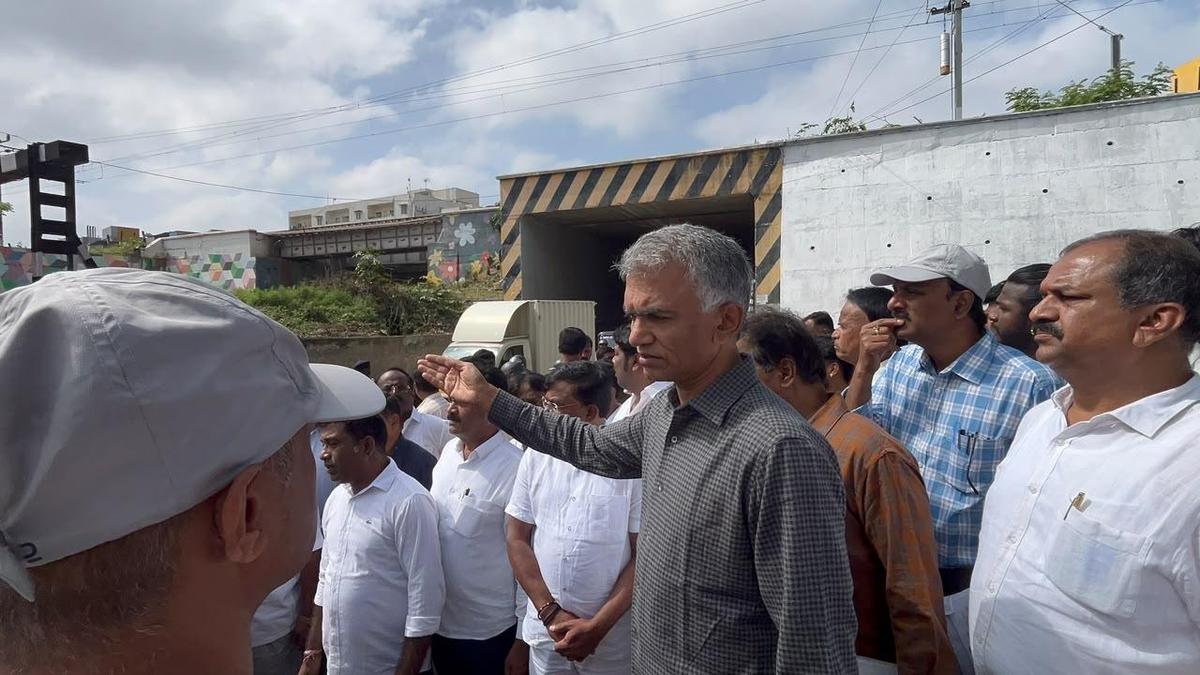
Greater Bengaluru Development Minister Krishna Byre Gowda has launched the second phase of the 'Ward One' campaign across 40 wards. Simultaneously, officials have been tasked with redeveloping the K.R. Puram-Tin Factory Junction to improve traffic and pedestrian safety.
Enhancing Bengaluru's Urban Infrastructure: The Ward One Campaign and K.R. Puram Revamp
Expanding the 'Ward One' Initiative
The Greater Bengaluru Development Minister, Krishna Byre Gowda, has officially inaugurated the second phase of the 'Ward One' campaign, a strategic governance initiative aimed at hyper-local urban improvement. Following the successful completion of 90% of identified tasks in the initial phase—which encompassed 43 wards—this second phase extends the mission to approximately 40 additional wards. This systematic approach reflects a shift toward decentralized urban management, allowing for targeted interventions that address the specific infrastructural needs of individual neighborhoods within the city.
Addressing the K.R. Puram-Tin Factory Junction Bottleneck
Central to the Minister’s recent directives is the comprehensive redevelopment plan for the K.R. Puram-Tin Factory Junction. This location has long been a critical pain point for Bengaluru’s commuters, serving as a convergence point for heavy transit and ongoing large-scale infrastructure projects. Byre Gowda’s site inspection, which focused on the logistical challenges posed by metro construction and K-RIDE (Rail Infrastructure Development Company) works, underscores the government's intent to harmonize transit projects with the immediate needs of the public.
Prioritizing Multimodal Integration and Safety
The proposed redevelopment plan is not merely a cosmetic upgrade but a functional necessity. The Minister has explicitly mandated that the plan must prioritize pedestrian safety, seamless public transport integration, and the optimization of traffic flow. By integrating these three pillars, the GBA aims to mitigate the congestion that currently plagues this junction, ensuring that the intersection of metro, rail, and road traffic is managed with a human-centric approach.
Synergistic Urban Planning
The collaborative nature of this project—to be prepared jointly by the relevant authorities—highlights a movement toward inter-departmental synergy in Bengaluru. Historically, siloed planning has often led to fragmented infrastructure delivery. By bringing the GBA and other stakeholders into a unified planning framework, the state government hopes to reduce the friction often caused by overlapping transit projects, such as those currently underway at the K.R. Puram junction.
Future Trends and Urban Mobility
Looking ahead, this initiative signals a broader trend in Bengaluru’s urban development policy: moving from reactive fixes to proactive, integrated infrastructure design. As the city continues to grapple with rapid urbanization, the success of the 'Ward One' campaign and the K.R. Puram project will likely serve as a blueprint for future transit-oriented development. The focus on pedestrian-friendly infrastructure suggests a long-term goal of reducing reliance on private vehicles, thereby aligning the city with sustainable urban mobility standards.
Conclusion
The launch of the second phase of the 'Ward One' campaign, combined with the rigorous oversight of the K.R. Puram redevelopment, marks a significant step in the administrative efforts to streamline Bengaluru’s growth. By addressing both granular neighborhood issues and major transit bottlenecks, the GBA is attempting to create a more cohesive and efficient urban environment for the city's residents.
Verification Required?