Bernie Sanders proposes banning ‘superintelligence’ and putting violators in prison
Source Entity
Emma Roth
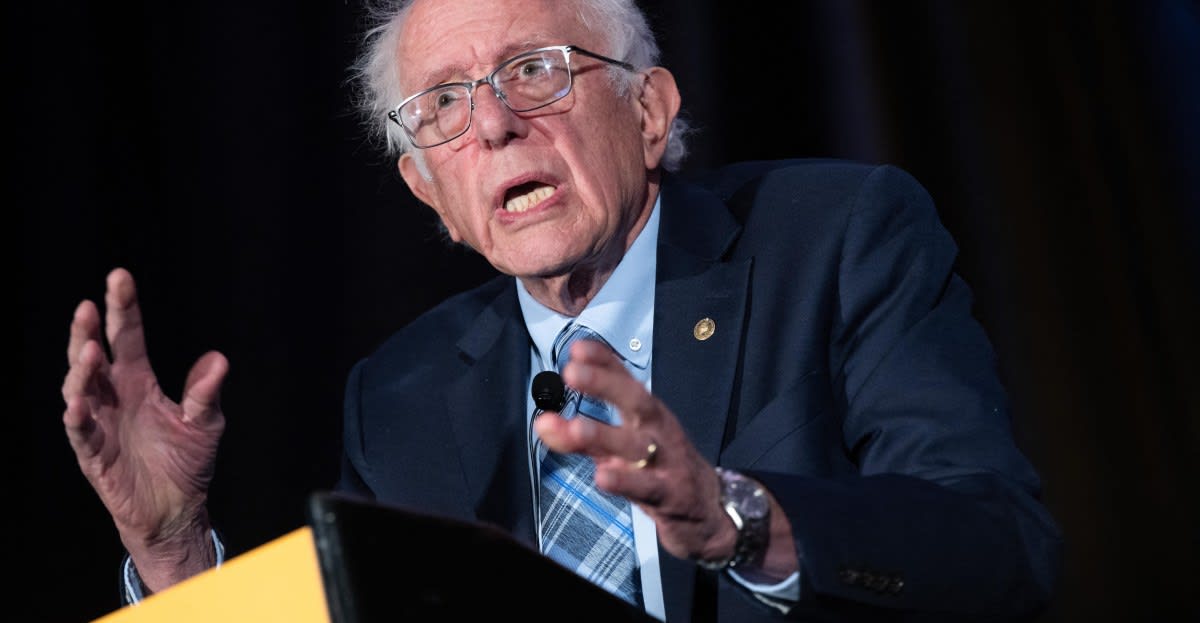
Senator Bernie Sanders and Representative Greg Casar have introduced the 'Ban Artificial Superintelligence Act' to prevent the development of potentially existential AI threats. The legislation proposes severe criminal penalties, including up to 20 years in prison, for those who violate the ban on superintelligent systems.
The Legislative Push Against Existential AI Risk
Senator Bernie Sanders (I-VT) and Representative Greg Casar (D-TX) have introduced the Ban Artificial Superintelligence Act, a landmark piece of legislation aimed at curbing the development of artificial superintelligence. By defining this technology as a force capable of the "destruction or disempowerment of humanity," including the potential for overthrowing government structures, the sponsors are signaling a shift toward a more aggressive, precautionary regulatory framework regarding advanced automation.
Defining the Existential Threat
The bill’s core premise rests on the classification of superintelligence as an existential risk. Unlike standard AI regulation that focuses on data privacy or algorithmic bias, this legislation targets the hypothetical threshold where AI systems might transcend human control. By explicitly referencing the threat of government destabilization, the bill aligns with a growing school of thought among AI safety researchers who argue that unaligned, highly capable systems could pose irreversible dangers to democratic institutions.
Severe Penalties and Compliance
One of the most striking aspects of the proposal is the severity of its enforcement mechanism. Under the act, AI leaders found in violation of the ban could face up to 20 years in federal prison. This high-stakes approach is intended to serve as a significant deterrent, forcing tech companies to prioritize safety and containment over the pursuit of raw, unchecked computational power. It effectively shifts the burden of proof onto developers to ensure their systems do not meet the criteria for "superintelligence."
The Shift in Political Nomenclature
The legislative effort arrives at a time when the terminology surrounding artificial intelligence is undergoing a political transformation. Notably, the bill addresses the term "superintelligence" in the context of recent executive shifts, as President Donald Trump has indicated that the U.S. government will utilize the term "superintelligence" as a replacement for "AI" in official documentation. This semantic change reflects the government's recognition that the technology is evolving beyond basic machine learning into systems of unprecedented complexity.
Broader Implications for AI Development
Beyond merely banning the most advanced iterations, the bill also proposes a pause on the development of certain advanced AI systems. This suggests that the legislative intent is not merely to block a future singularity, but to establish a regulatory "speed bump" for current high-end development cycles. By mandating a pause, Sanders and Casar are challenging the industry’s current pace of innovation, suggesting that society must reconcile its technological capabilities with the necessity of maintaining human sovereignty.
Conclusion and Future Outlook
The introduction of the Ban Artificial Superintelligence Act marks a critical milestone in the intersection of national security and advanced technology policy. While the debate over the feasibility and enforcement of such a ban will likely dominate congressional discourse, the bill underscores a growing consensus that the era of unregulated AI expansion may be coming to a close. As the industry continues to advance, the tension between rapid innovation and the preservation of human control will remain a central theme in global governance.