Probe ordered into police action against protesting Bhopal intern doctors
Source Entity
India Latest News: Top National Headlines Today & Breaking News | The Hindu
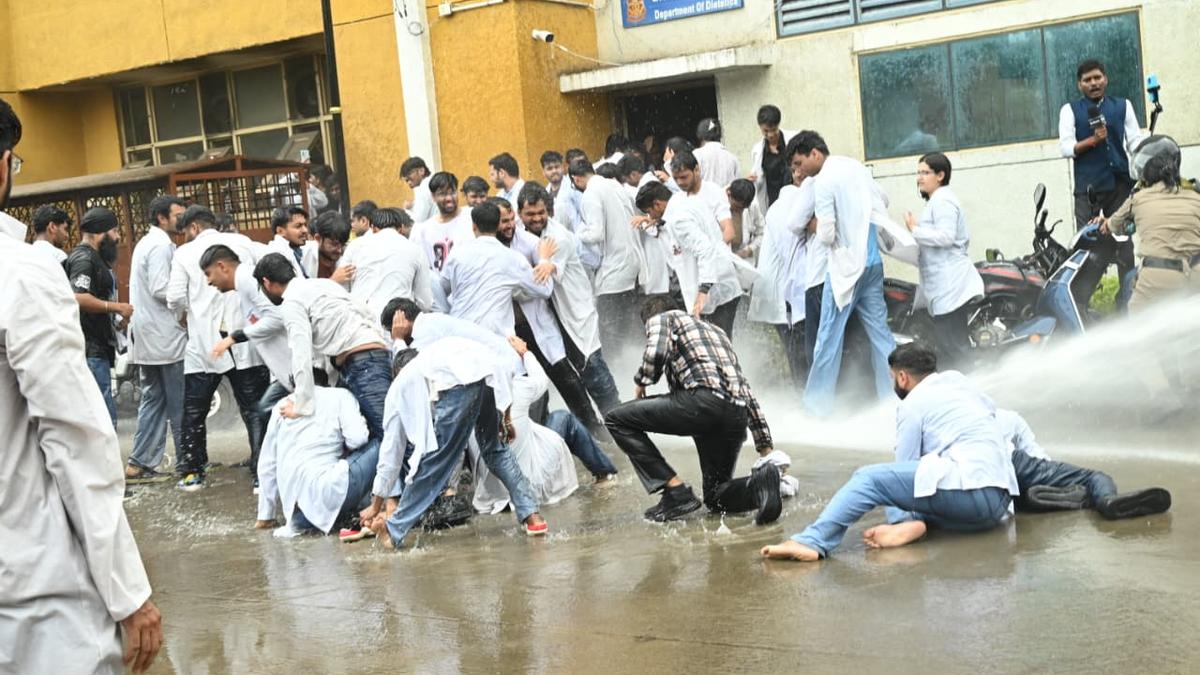
Bhopal police have launched an investigation following the use of water cannons and alleged baton charges against Gandhi Medical College interns protesting for a stipend hike. The incident occurred as medical students attempted to march to the Chief Minister's residence to demand an increase from ₹14,437 to ₹30,000.
Tensions Escalate at Gandhi Medical College Over Stipend Demands
The medical community in Bhopal is currently facing a period of intense unrest following a confrontation between intern doctors at the Gandhi Medical College (GMC) and local law enforcement. On Monday, September 7, 2026, hundreds of MBBS interns initiated a protest to voice their long-standing grievance regarding their monthly stipend, which currently stands at ₹14,437. The students are advocating for a significant upward revision to ₹30,000, a demand they argue is necessary to align with the rising cost of living and the grueling nature of their professional responsibilities.
The Use of Force and Subsequent Probe
The situation took a volatile turn when protestors attempted to march toward the Chief Minister’s residence to escalate their demands. In an effort to disperse the crowd, Bhopal police deployed water cannons within the campus vicinity, an action that resulted in physical injuries to at least four intern doctors. Following the circulation of visuals depicting the police action on social media, Bhopal Police Commissioner Sanjay Kumar officially ordered a formal probe into the incident to determine the circumstances surrounding the use of force and the alleged baton charges reported by students.
The Economic Plight of Medical Interns
At the heart of this conflict lies the economic disparity faced by medical graduates in public institutions. For many interns, the current stipend of ₹14,437 is viewed as inadequate, failing to account for the inflation-adjusted costs of their daily sustenance and professional materials. This protest reflects a broader trend of medical student activism across India, where interns often feel that their critical role in the public healthcare infrastructure is undervalued by state-run administrative bodies.
Historical Context of Student Protest
Student-led protests in the medical sector often stem from a disconnect between institutional policy and the ground reality of clinical work. By choosing to march on the Chief Minister's residence, the GMC interns were employing a classic strategy of political pressure, signaling that their internal grievances had reached a breaking point. The government's decision to order an inquiry suggests a recognition of the optics and the severity of the incident, yet it also highlights the ongoing struggle to balance public order with the rights of professionals to peacefully assemble and petition for better working conditions.
Broader Implications and Future Outlook
The outcome of the ordered probe will likely set a precedent for how future protests by medical professionals are handled in Madhya Pradesh. If the inquiry finds excessive force was used, it could lead to significant administrative accountability; conversely, it may also lead to a formal dialogue regarding the stipend hike. As the situation develops, the focus will remain on whether the state government chooses to address the underlying financial demands or if the focus remains strictly on the legal ramifications of the police intervention. The resolution of this dispute is crucial for maintaining morale within the state's public healthcare system, which relies heavily on the labor of these interns.
Verification Required?