Bill Gates Says ‘We Need Time to Prepare’ for an Economic Upheaval — Especially the $20-an-Hour Workers Being Replaced by $10-an-Hour Robots
Source Entity
Yahoo Finance
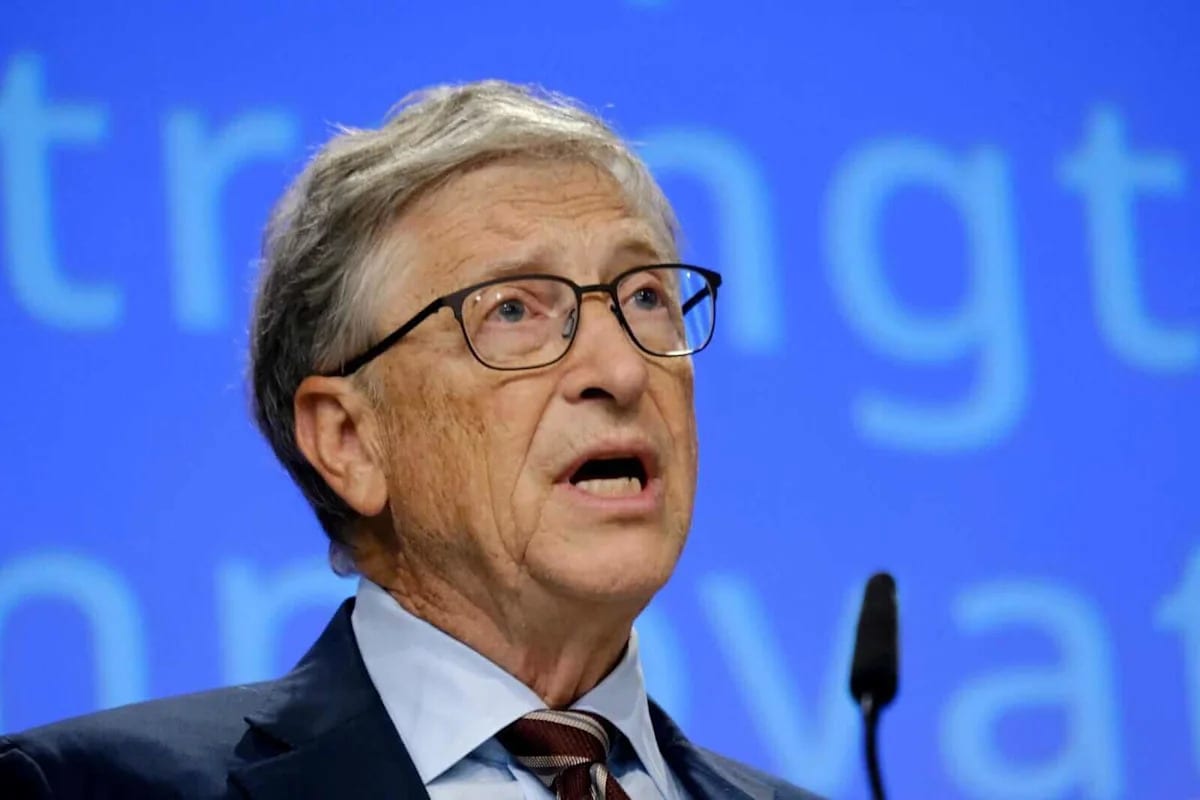
Bill Gates warns of significant economic upheaval as AI and robotics replace entry-level labor. He advocates for proactive policy measures, including robot taxes and 'Human Reserved' job categories, to mitigate the transition.
The Impending Economic Shift: Insights from Bill Gates
Microsoft co-founder Bill Gates has issued a stark warning regarding the rapid acceleration of artificial intelligence and robotics in the modern workforce. In his latest Gates Notes post, he highlights that the dual nature of AI—offering immense benefits while simultaneously causing significant disruption—is arriving at a pace that society is currently ill-equipped to manage. This transition marks a critical turning point where the economic efficiency of automation begins to clash with the stability of the traditional labor market.
The Economics of Automation
The fundamental tension described by Gates lies in the shifting cost of labor. As AI systems and robotic hardware become more sophisticated, the cost of labor provided by a machine is beginning to undercut the wages of human workers, specifically those in entry-level and mid-level roles. When a robot can perform a task for $10 an hour, it creates an inevitable market pressure to replace $20-an-hour human employees. This dynamic forces a competitive race where businesses must adopt automation to survive, potentially triggering widespread job displacement.
Vulnerability of the Younger Workforce
Data cited from Stanford research underscores the severity of this trend, revealing that workers between the ages of 22 and 25 in AI-exposed fields have already seen a 16% relative decline in employment. This suggests that the current wave of technological integration is disproportionately impacting those just entering the workforce. While experienced workers appear to hold more stable positions, the long-term career pipeline for younger generations is facing a significant bottleneck as entry-level roles are increasingly automated.
Proposed Policy Interventions
To address this potential for social and political upheaval, Gates advocates for a series of systemic safety nets. His proposals include the implementation of taxes on AI and robotic labor, which could serve to slow the rate of displacement while generating revenue for social programs. Furthermore, he emphasizes the necessity of robust retraining initiatives, ensuring that the workforce can pivot toward new roles that are less susceptible to immediate automation.
The Concept of 'Human Reserved' Roles
Beyond financial intervention, Gates suggests a cultural and social shift by designating specific sectors as 'Human Reserved.' By intentionally choosing to keep certain roles in human hands, society can preserve the value of human interaction and empathy, which machines cannot replicate. This approach acknowledges that not every economic task should be surrendered to efficiency, and that maintaining a human element in the workforce is essential for societal health.
Preparing for a Turbulent Future
The conclusion drawn from Gates' analysis is that the window to prepare for this transition is rapidly closing. As market forces compel companies to adopt AI rapidly, the ripple effects on employment will likely spread across sectors. Proactive policy choices made today—ranging from education reform to corporate regulation—will determine whether this era of technological advancement leads to widespread prosperity or deep-seated economic instability.