'Meeting all about new ideas & perspectives': PM Modi after engaging with 'team Nabin'
Source Entity
KANCHAN YADAV
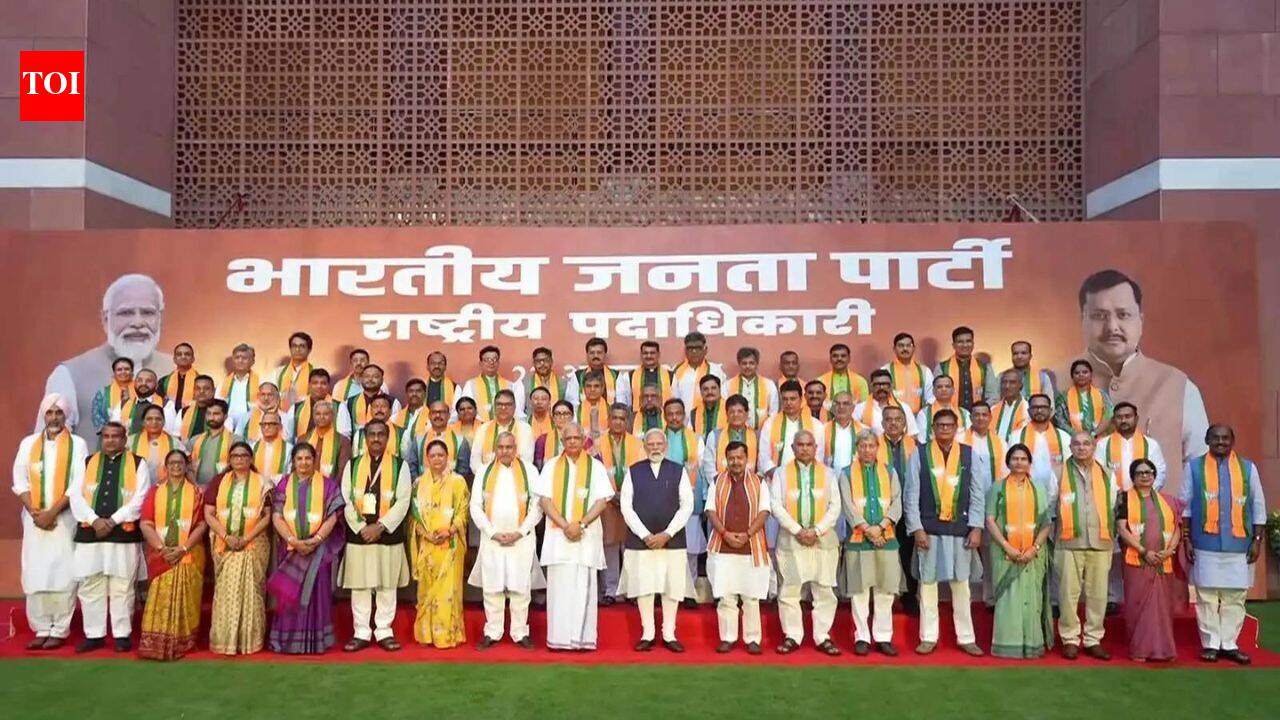
The BJP has passed a formal resolution condemning the Congress party's decision to restrict the singing of Vande Mataram to its first two stanzas. The ruling party argues this move undermines national heritage, while simultaneously intensifying political friction following recent opposition-led protests.
The Vande Mataram Controversy: A New Front in India's Political Discourse
On August 22, 2026, the Bharatiya Janata Party (BJP) formally adopted a 10-point resolution aimed at upholding the "honour, dignity, legacy, and national status" of the complete version of Vande Mataram. This move follows a direct confrontation with the Indian National Congress regarding the latter's policy of limiting the recitation of the song to its first two stanzas during party functions. For the BJP, this is not merely a procedural difference but a fundamental ideological stand, with the party asserting that the song serves as a "mantra of the freedom struggle" and an "immortal symbol of India’s national consciousness."
Ideological Divergence and Political Messaging
The BJP’s resolution, spearheaded by party president Nitin Nabin and supported by senior leaders including Union Home Minister Amit Shah, characterizes the Congress's stance as an act of "political convenience or appeasement." By framing the issue as an affront to national character, the BJP is effectively utilizing the song's historical weight to challenge the Congress party's nationalist credentials. The party has declared that it will launch a nationwide campaign to promote the "glorious heritage" of the full version of the song, signaling a sustained effort to keep this issue at the forefront of public debate.
Contextualizing the Tensions
The timing of this resolution is significant, occurring amidst heightened parliamentary and street-level friction. Just a day prior to the resolution, the Leader of the Opposition, Rahul Gandhi, led a sit-in protest at the Parliament Street police station. The protest centered on demands for an FIR regarding an alleged pellet gun attack on a student during demonstrations at Jantar Mantar. The intersection of these two events suggests a dual-track strategy by the opposition to challenge the government on both law-and-order issues and civil rights, while the BJP is simultaneously countering by shifting the narrative toward cultural and nationalist themes.
Historical and Cultural Significance
Vande Mataram, penned by Bankim Chandra Chatterjee, has historically served as a rallying cry during the Indian independence movement. The debate over whether to sing the full text or an abbreviated version has surfaced periodically throughout India's post-independence history. While the first two stanzas are widely recognized, the full text contains verses that have historically sparked debate due to their religious and cultural imagery. By demanding the singing of the full version, the BJP is asserting a specific interpretation of national identity that emphasizes the song's entirety as an expression of reverence for Bharat Mata.
Future Implications for Indian Politics
The BJP’s decision to elevate this issue via a formal resolution suggests that the party intends to leverage cultural nationalism as a key component of its political strategy moving forward. With the newly announced national team of 65 office-bearers—comprising 51 new faces—the party appears to be streamlining its organization to execute such campaigns effectively. As both the BJP and Congress continue to lock horns over both policy-based protests and symbolic national issues, the political landscape is likely to remain polarized, with cultural symbols becoming increasingly central to electoral and ideological mobilization.
Multiple Citing Sources