'Will rise for it, won't sing it': Congress MP Masood explains stand on Vande Mataram
Source Entity
TOI NEWS DESK
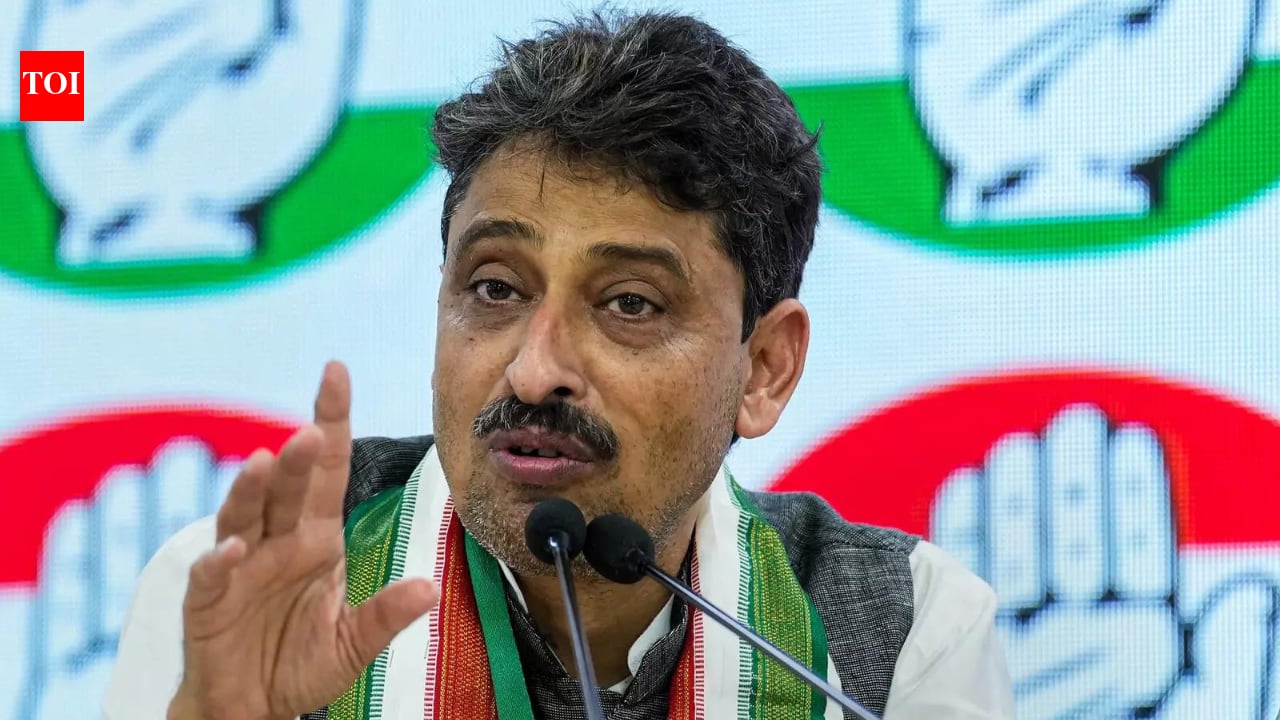
A political controversy has emerged after the BJP accused Sonia Gandhi of interrupting the national song 'Vande Mataram' during an Independence Day event. The Congress party has categorically denied the claim, stating that Gandhi was merely requesting a chair for party president Mallikarjun Kharge.
Political Firestorm Over Vande Mataram Rendition
On August 15, 2026, a significant political controversy emerged following an Independence Day event hosted by the Congress party at Indira Bhawan. The Bharatiya Janata Party (BJP) leveled serious allegations against former Congress chief Sonia Gandhi, claiming she objected to the singing of the full version of Vande Mataram. This accusation was bolstered by BJP national general secretary (organisation) B.L. Santhosh, who shared video footage on social media platform X, suggesting that the party leadership appeared visibly upset during the national song's rendition.
The BJP's Stance and Ideological Critique
The BJP’s critique extends beyond the immediate incident, framing the alleged behavior of the Congress leadership as indicative of a persistent ideological mindset. By invoking the timeline of "pre-1947 to post-1947," the BJP leadership is attempting to position the Congress as being detached from nationalistic fervor. This rhetoric is consistent with the BJP’s broader political strategy of questioning the nationalist credentials of its primary opposition, using symbolic events like the singing of Vande Mataram to galvanize its base and challenge the Congress's public image.
Congress Defense: A Matter of Protocol
In response, the Congress party has firmly rejected the BJP’s allegations as false and politically motivated. According to the party's official stance, there was no intention to stifle or shorten the rendition of the national song. Instead, they contend that Sonia Gandhi’s actions were misinterpreted; she was reportedly attempting to secure a chair for Congress president Mallikarjun Kharge, who had been standing for a prolonged period during the function. The party asserts that this was a matter of basic courtesy and protocol for the party president rather than an act of disrespect toward the national song.
The Role of Media and Digital Narrative
The rapid escalation of this row highlights the power of social media in modern Indian politics. By sharing specific video snippets, the BJP successfully forced a public debate, compelling the Congress to issue a formal denial. This incident serves as a case study in how visual clips—often subject to varying interpretations—are leveraged in the digital sphere to drive political narratives. Both parties are utilizing the event to solidify their respective bases: the BJP by highlighting perceived lapses in patriotism, and the Congress by portraying the allegations as a diversionary tactic.
Broader Political Implications
This incident underscores the high-stakes environment of Indian political discourse, where ceremonial events are frequently scrutinized for symbolic meaning. Independence Day, being the most significant national occasion, becomes a stage for ideological contestation. As both parties continue to trade barbs, the discourse reflects the deepening polarization between the ruling party and the opposition. The disagreement over the interpretation of a single video clip serves as a microcosm of the larger, ongoing struggle for ideological dominance in the Indian political landscape.
Conclusion
The controversy surrounding the rendition of Vande Mataram at the Congress event remains a point of contention with two distinct narratives. While the BJP views the incident as a reflection of the opposition's ideological stance, the Congress maintains that the event was a simple misunderstanding involving the physical comfort of their party president. As the debate continues, it serves as a reminder of how symbolic gestures during national events remain central to the political narrative in India.
Multiple Citing Sources