'Uncouth, Foul-Mouthed': BJP On Rahul Gandhi's "Maa" Remarks With Comic
Source Entity
NDTV News Search Records Found 1000
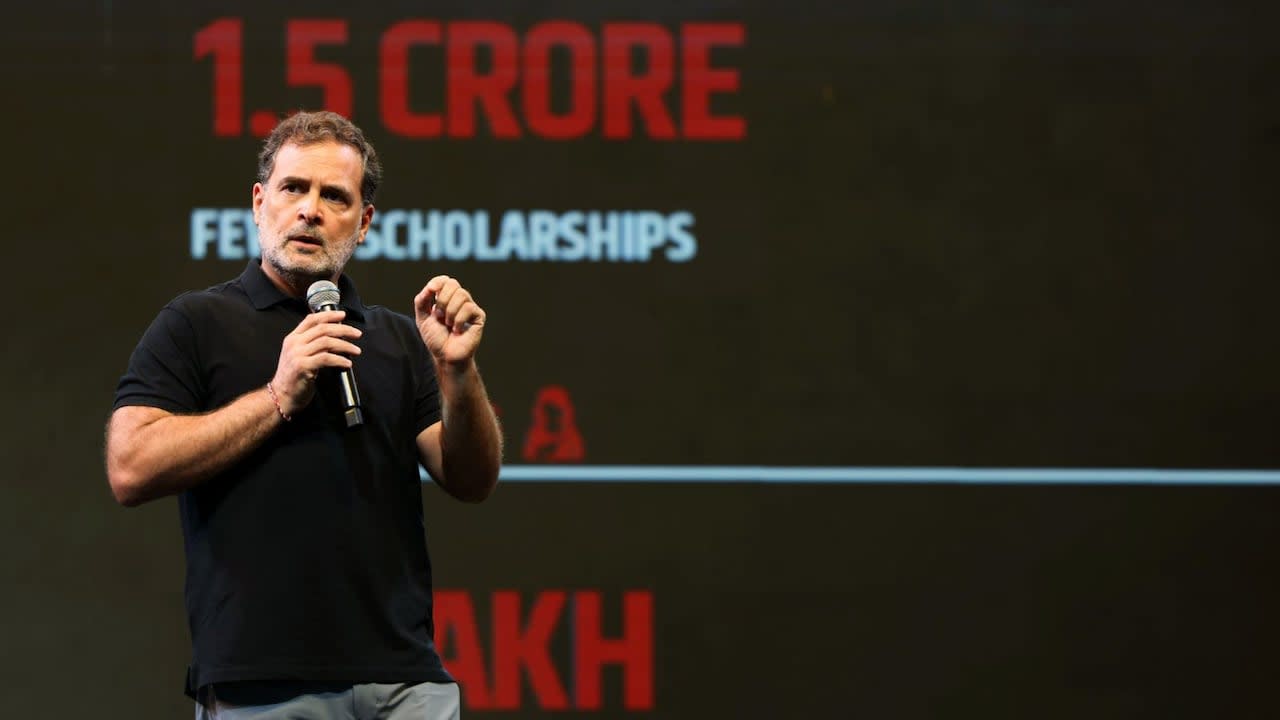
The BJP has strongly criticized Rahul Gandhi for his remarks regarding 'Maa' made during the 'Chhatron Ki Goonj' event. The ruling party condemned the language used by the Congress leader, labeling it as uncouth and foul-mouthed.
Political Controversy Erupts Over Rahul Gandhi's Recent Remarks
The political landscape in India has witnessed a fresh round of heated exchanges following comments made by Congress leader Rahul Gandhi during the 'Chhatron Ki Goonj' event. The remarks, which referenced the concept of 'Maa' (mother), have become the focal point of a sharp rebuke from the Bharatiya Janata Party (BJP), which has characterized the language used by the opposition leader as "uncouth" and "foul-mouthed."
The BJP's Response and Rhetorical Strategy
The BJP’s swift condemnation is consistent with its established strategy of scrutinizing the rhetoric of opposition leaders to highlight perceived lapses in decorum. By labeling the comments as inappropriate, the party aims to challenge Gandhi’s public image and shift the narrative away from the substance of the 'Chhatron Ki Goonj' event—which was ostensibly aimed at engaging with the student community—toward a debate on political civility.
Contextualizing the 'Chhatron Ki Goonj' Event
The 'Chhatron Ki Goonj' event was designed as a platform for Rahul Gandhi to connect with India's youth and address their concerns regarding education and employment. However, the controversy surrounding his specific choice of words has overshadowed the intended messaging of the gathering. This highlights the ongoing challenge for political figures in balancing spontaneous, populist speech with the heightened sensitivity of a polarized media and political environment.
Historical Precedents in Political Discourse
Indian politics has a long history of volatile exchanges where personal remarks or metaphorical references to family figures are weaponized by opposing factions. The reaction to Gandhi's remarks is reflective of a broader trend where political discourse is increasingly defined by the immediate reaction to soundbites. This cycle often prioritizes the performative aspect of political conflict over the nuanced discussion of policy issues that the event initially sought to address.
Broader Implications for Future Interactions
As the political climate in India intensifies ahead of upcoming electoral cycles, the scrutiny of every public statement by major party leaders is expected to escalate. The backlash against Gandhi’s remarks serves as a reminder to political leaders that their public utterances are subject to rigorous dissection. This event will likely influence how political communication is crafted in the future, as parties become more wary of the potential for their words to be repurposed by rivals to damage their reputation.
Concluding Summary
In conclusion, the friction between the BJP and Rahul Gandhi over the 'Maa' remarks underscores the fragile nature of political civility in the current climate. While the original intent of the 'Chhatron Ki Goonj' event was to foster dialogue with the youth, the subsequent controversy has demonstrated how quickly rhetoric can derail intended policy discussions, leaving the public to navigate a discourse defined more by personal conflict than by substantive debate.
Verification Required?