After Pune building collapse, BMC orders safety audit of Mumbai’s landfills
Source Entity
The Indian Express
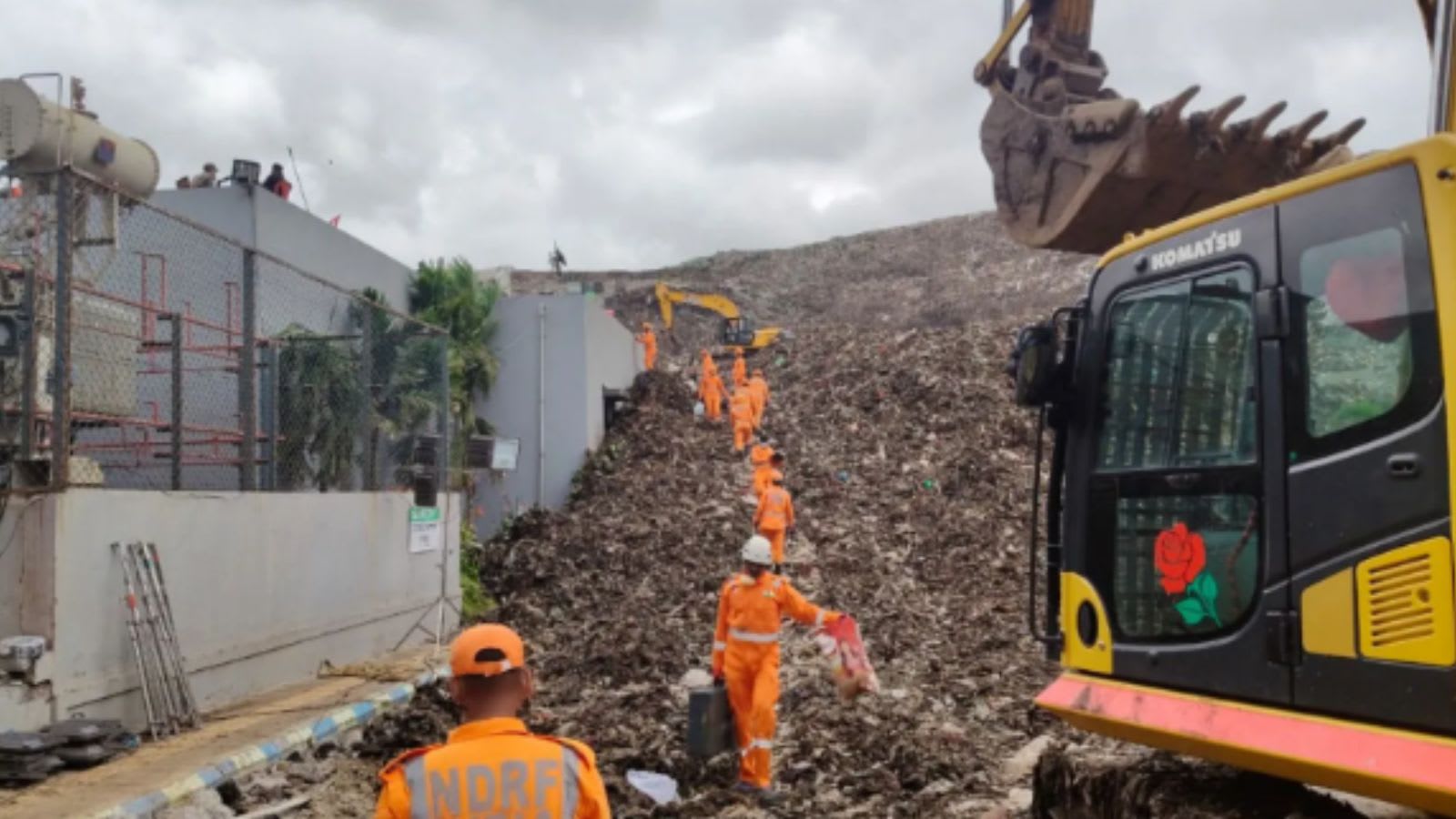
Following a building collapse in Pune, the Brihanmumbai Municipal Corporation (BMC) has ordered comprehensive safety audits of Mumbai's landfills, including the active sites at Kanjurmarg and Deonar and the closed site at Mulund where bio-mining is underway.
Precautionary Governance: BMC's Strategic Shift Toward Landfill Safety
In a swift response to a tragic building collapse in Pune, the Brihanmumbai Municipal Corporation (BMC) has announced a comprehensive safety audit of Mumbai's landfill infrastructure. This move highlights a critical intersection between urban structural stability and waste management. The decision to audit the active dumping grounds at Kanjurmarg and Deonar, as well as the closed site at Mulund, suggests that the civic body is recognizing the potential for catastrophic slope failures or structural collapses within massive waste heaps, mirroring the instability that often leads to building collapses in densely populated urban centers.
The Catalyst: Learning from the Pune Tragedy
The trigger for this administrative action was the recent building collapse in Pune, an event that underscored the dangers of structural negligence and the unpredictability of unstable foundations. While a residential building and a waste landfill are vastly different in composition, both share the risk of "slope failure" or "mass wasting" when internal stability is compromised. By ordering these audits, the BMC is employing a precautionary governance model, attempting to identify potential risk zones before a similar disaster occurs in Mumbai. This proactive approach is essential given the sheer volume of waste accumulated over decades in the city's dumping grounds, which can become volatile under certain weather conditions or due to internal decomposition.
Assessing the Risk: Deonar and Kanjurmarg
The focus on Kanjurmarg and Deonar is particularly significant. Deonar, one of Asia's largest and oldest landfills, has a historical legacy of instability, including frequent fires caused by methane buildup and concerns over the stability of its towering waste mounds. The audit will likely examine the compaction levels, the angle of repose of the waste slopes, and the integrity of the perimeter walls. In an era of intensifying monsoon seasons and unpredictable rainfall, the risk of landslides within these landfills increases, potentially threatening nearby settlements and disrupting the city's waste logistics. The Kanjurmarg site, being newer, will be audited to ensure that its modern engineering standards are being maintained and that no systemic failures are developing.
The Mulund Case: Bio-mining and Structural Integrity
The inclusion of the closed Mulund landfill in the audit is a nuanced decision. Currently, the BMC is undertaking "bio-mining" at this site—a process of excavating old waste and treating it to reclaim land. While bio-mining is a positive step toward environmental restoration, the process of digging into decades-old waste can inadvertently destabilize the remaining mounds. The audit at Mulund is therefore crucial to ensure that the bio-mining activities are not compromising the structural integrity of the site, which could lead to localized collapses or hazardous landslides during the reclamation process.
Broader Implications for Urban Waste Management
This event brings to light the systemic fragility of the "landfill model" of waste disposal. For too long, urban centers have relied on the vertical accumulation of waste, creating artificial mountains that are fundamentally unstable. The necessity of these audits signals a growing realization that landfills are not static repositories but dynamic, hazardous structures that require constant engineering oversight. This shift in perspective may accelerate Mumbai's transition toward a more sustainable, circular economy where waste is processed at the source, reducing the reliance on massive dumping grounds that pose a constant risk to public safety.
Future Trends and Safety Protocols
Looking forward, it is expected that the BMC will move beyond periodic audits toward real-time monitoring. The integration of geotechnical sensors and satellite imagery (InSAR) to monitor slope deformation in real-time could become the new standard for landfill management in India. Furthermore, this event will likely lead to stricter zoning laws around dumping grounds to create "buffer zones," ensuring that no residential or commercial structures are built within the potential "run-out" zone of a landfill collapse. The outcome of these audits will likely dictate the pace of bio-mining across the city, prioritizing the most unstable sites for urgent reclamation.
Summary
The BMC's decision to audit the Kanjurmarg, Deonar, and Mulund landfills is a critical safety intervention triggered by the Pune building collapse. By analyzing the structural stability of these waste sites, the city aims to prevent landslides and environmental disasters. This move reflects a broader transition from passive waste disposal to active, engineered waste management, emphasizing the need for rigorous safety protocols in the face of urban growth and climatic challenges.