BMW is taking on Tesla’s FSD with urban driver assist starting in 2027
Source Entity
Andrew J. Hawkins
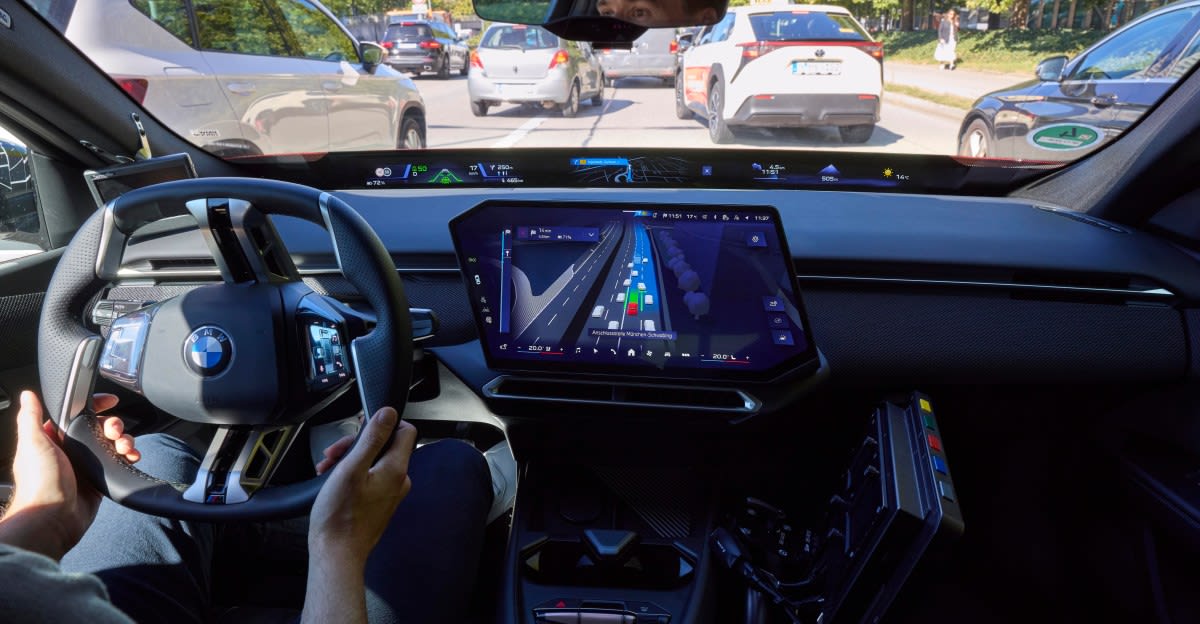
BMW plans to launch a Level 2 urban driver assistance system in 2027, starting in Germany. The technology will handle complex city maneuvers like turning and navigating roundabouts while requiring constant driver supervision.
BMW Challenges Tesla with Urban Driver Assist
BMW has officially announced a significant expansion of its automated driving capabilities, signaling a strategic move to compete directly with Tesla’s Full Self-Driving (FSD) technology. Starting in 2027, the German automaker plans to roll out navigation-guided, partially automated driving features designed specifically for urban environments. This launch will debut in Germany before expanding to other global markets, marking a pivotal shift from traditional highway-centric driver assistance to complex city navigation.
Expanding Capabilities Beyond the Highway
Unlike previous iterations of driver assist technology that were largely confined to controlled highway settings, BMW’s new system is engineered to handle the unpredictability of city streets. The technology integrates directly with the vehicle's built-in GPS navigation to manage steering, acceleration, and braking. This allows the vehicle to assist with intricate maneuvers such as changing lanes, executing turns, yielding to other traffic, and navigating through roundabouts, effectively bridging the gap between highway cruise control and true autonomous driving.
The Reality of Level 2 Automation
It is critical for consumers to understand that this system remains classified as a Level 2 driver assistance feature. Despite the advanced capability to navigate urban intersections, the driver remains legally and operationally responsible for the vehicle at all times. The system mandates that drivers keep their eyes on the road and remain prepared to take control instantly. This distinction is vital for safety, as it separates driver-assist tools from fully autonomous systems that do not require human intervention.
Strategic Market Positioning
By targeting a 2027 launch, BMW is positioning itself to capture a significant share of the premium EV and luxury vehicle market that values both performance and technological integration. The decision to launch in Germany first suggests a methodical approach to regulatory compliance and mapping data collection. As urban density increases, the demand for vehicles that can alleviate the stress of stop-and-go traffic and complex city junctions will likely grow, providing a strong incentive for BMW to refine this software architecture.
Future Trends and Industry Implications
This move by BMW underscores a broader industry trend where legacy automakers are pivoting toward software-defined vehicles. As Tesla continues to iterate on its FSD platform, competitors are being forced to accelerate their R&D cycles to keep pace. The success of BMW’s urban assist will likely depend on the precision of its sensor fusion and navigation data. If the system proves reliable, it could set a new standard for luxury vehicle expectations, forcing other manufacturers to integrate similar urban-focused automation into their upcoming lineups.
Conclusion
BMW’s commitment to bringing navigation-guided urban driving assistance to the masses by 2027 represents a major technological milestone. By focusing on the nuanced demands of city driving—such as roundabouts and yielding—BMW is addressing the most challenging aspects of the commute. While it remains a supervised system, the integration of these features signifies that the future of personal mobility is becoming increasingly automated, with legacy brands successfully modernizing their fleet for the next generation of transportation.