Opinion: Opinion | China, Russia, UAE: What Each Country Wants From BRICS
Source Entity
NDTV News Search Records Found 1000
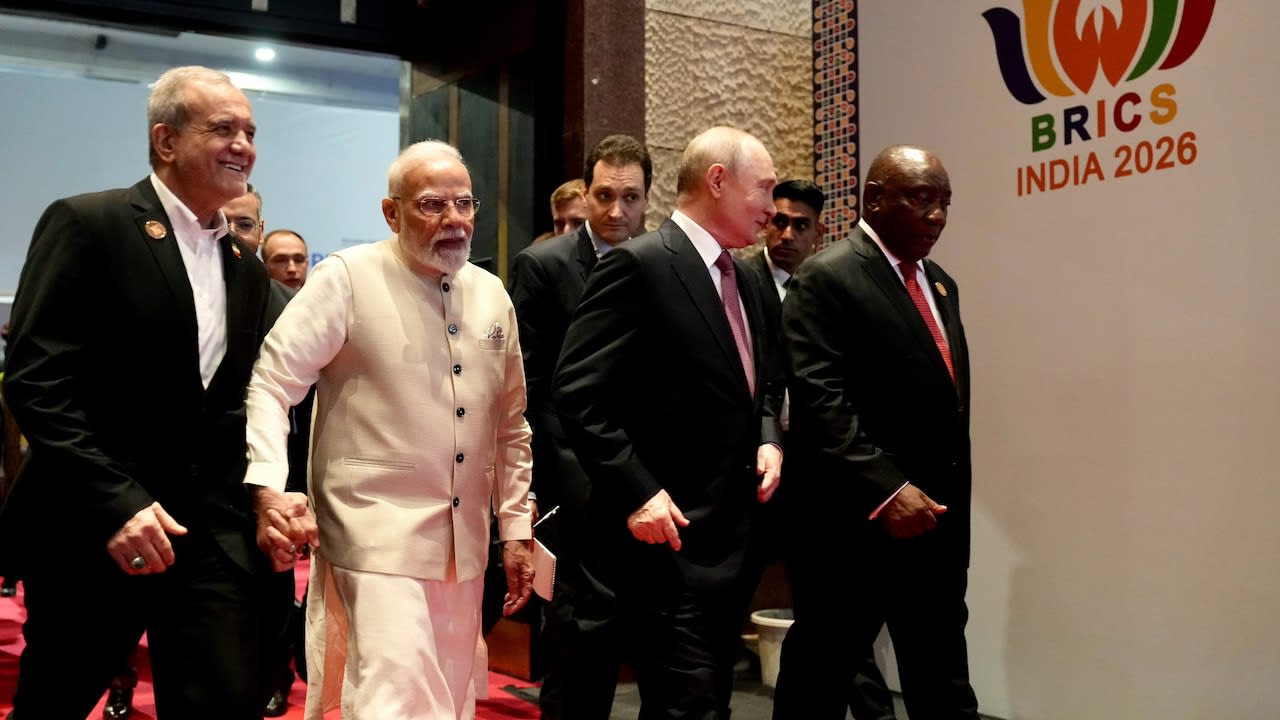
As the BRICS summit approaches, geopolitical analysts are urging a tempered view of the bloc's expansion. The diverse strategic interests of members like China, Russia, and the UAE, alongside regional rivalries, present complex challenges for the group's cohesion.
The Strategic Calculus of BRICS Expansion
As the international community turns its attention toward the upcoming BRICS summit, the discourse surrounding the bloc’s expansion has intensified. While proponents view the inclusion of new members as a shift toward a multipolar global order, a critical reality check reveals that the motivations driving these nations are as varied as they are complex. The coalition is not a monolithic entity, but rather a collection of sovereign states seeking to leverage the platform to advance distinct national interests that occasionally overlap but frequently diverge.
The Divergent Agendas of Key Players
China and Russia approach the BRICS framework with a focus on challenging Western economic and diplomatic hegemony. For Beijing, the bloc serves as a vehicle for expanding its influence in the Global South, while Moscow views the group as a vital lifeline to circumvent international isolation. Conversely, the United Arab Emirates (UAE) views participation through the lens of economic diversification and strategic hedging. The UAE’s interest lies in securing access to emerging markets and ensuring energy security, demonstrating that not all members share the same adversarial stance toward the existing global financial architecture.
Regional Rivalries and Internal Cohesion
One of the most significant challenges to BRICS is the importation of regional friction into the bloc’s inner circle. The long-standing Iran-UAE rivalry complicates the group's ability to act as a unified geopolitical force. When nations with deep-seated historical and security grievances share a table, the potential for policy paralysis increases. These tensions suggest that the 'BRICS+' model may struggle to achieve consensus on sensitive geopolitical issues, potentially limiting the bloc to a forum for economic cooperation rather than a cohesive political alliance.
Managing Global Expectations
There is a growing consensus among analysts that expectations for the summit must be anchored in realism. The narrative that BRICS will immediately replace the G7 or establish a unified currency is largely aspirational. In reality, the group is navigating the difficult task of balancing the nationalist agendas of its members with the collective desire for a stronger voice in global governance. The friction between individual state goals and group objectives remains the primary hurdle for the bloc’s long-term sustainability.
Future Trends and Strategic Outlook
Looking ahead, the evolution of BRICS will likely be defined by a shift toward project-based collaboration rather than ideological alignment. By focusing on trade facilitation, sustainable development, and infrastructure investment, the bloc may find a more stable footing. However, until the internal rivalries between key members are effectively managed, the group will likely remain a platform for consultative dialogue rather than a centralized decision-making body. The upcoming summit will be a litmus test for whether the bloc can maintain its expansion trajectory while addressing the underlying fissures within its membership.
Multiple Citing Sources
Verification Required?