Building bridges for India’s wildlife
Source Entity
India Latest News: Top National Headlines Today & Breaking News | The Hindu
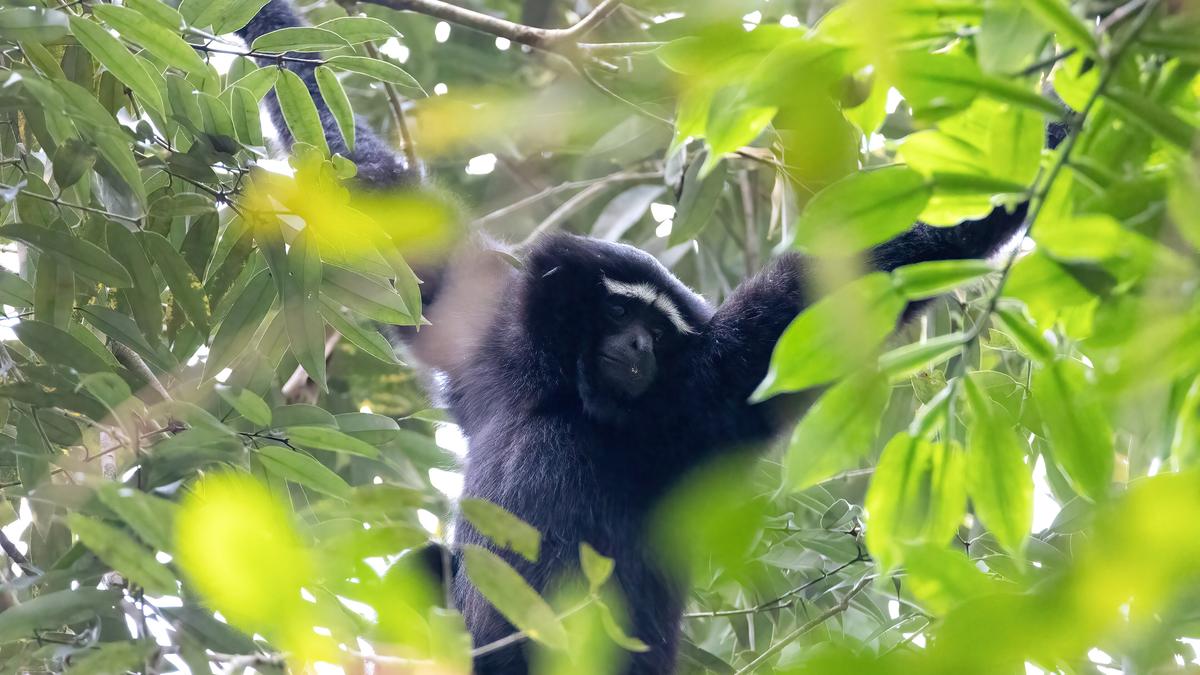
India is addressing the severe decline of the Hoolock gibbon population by implementing wildlife overpasses to combat habitat fragmentation. These infrastructure projects are critical for protecting the arboreal ape as roads and railways continue to isolate their natural forest ranges.
The Crisis of Connectivity: Protecting India’s Hoolock Gibbon
India’s ecological landscape is currently facing a silent crisis: the rapid fragmentation of vital habitats due to expanding infrastructure. The Hoolock gibbon, India’s only native ape species, is at the epicenter of this struggle. With populations declining by 90% in recent decades, the species is struggling to navigate a landscape increasingly crisscrossed by highways and railway lines. This decline is not merely a regional issue but a significant indicator of the broader challenges facing biodiversity in Northeast India.
The Arboreal Dilemma
The Hoolock gibbon is uniquely adapted to an arboreal lifestyle, relying on the natural spring action of tree branches to navigate through the forest canopy. Their biological structure, characterized by three-foot-tall frames equipped with five-foot-long arms, is perfectly suited for life in the trees but becomes a dangerous liability on the ground. When forced to descend to the forest floor to cross human-made barriers, their awkward, slow gait makes them highly susceptible to predators such as wild dogs and leopards, turning simple migration into a life-or-death encounter.
Infrastructure as an Ecological Barrier
The primary culprit behind this habitat fragmentation is the relentless expansion of roads, railways, and other industrial developments. In the region south of the Brahmaputra river, these barriers have effectively sliced through established territories, preventing the gibbons from foraging, mating, and maintaining genetic diversity. When an animal's natural range is severed, the resulting isolation often leads to local extinctions, as small, disconnected groups cannot sustain themselves over the long term.
Engineering Solutions for Biodiversity
To mitigate these risks, there is an urgent push for wildlife overpasses—innovative engineering solutions that allow animals to bypass dangerous corridors. The concept of a kilometre-long overpass spanning highways, rail yards, and golf courses represents a critical shift in how India approaches infrastructure development. By providing a continuous, safe path across human-dominated landscapes, these structures serve as essential bridges that restore connectivity to fragmented ecosystems.
Implications and Future Trends
If India continues to prioritize such facilitators for wildlife, it could set a global precedent for balancing economic growth with environmental conservation. The future of the Hoolock gibbon depends on whether these overpasses can be scaled and integrated into all future transportation projects. Without such intervention, the fragmentation of the Northeast Indian forests will likely continue to drive this unique primate toward the brink of extinction.
Conclusion
The survival of the Hoolock gibbon is a testament to the need for human-centric infrastructure to evolve into wildlife-inclusive design. By recognizing that roads and railways function as lethal barriers, India has the opportunity to lead by example. Protecting the mobility of these arboreal apes is not just about saving a single species; it is about maintaining the integrity of the entire forest ecosystem that supports them.
Verification Required?