Burnham to tell MPs 'landmark' EU deal could make next decade 'much better'
Source Entity
BBC News
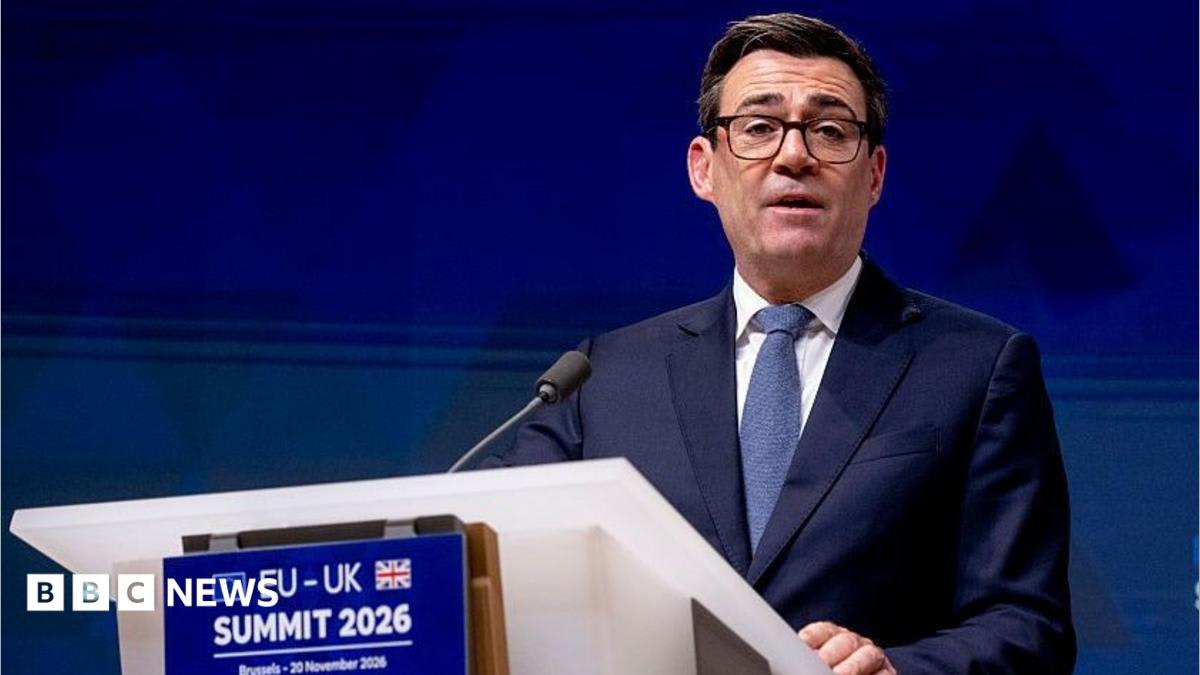
Prime Minister Andy Burnham is set to present a new landmark EU deal to Parliament, framing it as a vital alternative to the current economic stagnation. Despite facing criticism from political opponents, he asserts the agreement will drive significant growth and improve British trade.
A New Chapter for UK-EU Relations
Prime Minister Andy Burnham is set to address Parliament this Monday to defend what he characterizes as a 'landmark' agreement with the European Union. This deal, finalized this past Friday, represents a pivotal moment in the ongoing post-Brexit landscape. By framing the agreement as a binary 'choice between a broken status quo or change,' Burnham is attempting to shift the national narrative away from the persistent deadlock that has characterized much of the last decade.
The Economic Argument for Growth
Central to the Prime Minister’s pitch is the assertion that this deal is the 'single biggest growth measure' to be delivered during the current parliamentary term. Burnham has projected that the agreement could inject approximately £17 billion into the British economy. This figure is significant, as it addresses the core anxieties of a public weary of slow growth and fiscal uncertainty. By focusing on tangible economic outcomes, the government hopes to build a bridge toward a more prosperous future, explicitly contrasting it with the perceived failures of the previous decade.
Core Pillars of the Agreement
The deal encompasses several critical sectors, most notably British food exports, emissions trading, and a new youth experience scheme. These areas have been significant pain points for businesses and citizens alike since the initial Brexit transition. By addressing these specific frictions, the administration aims to demonstrate a pragmatic, 'win-win' approach that prioritizes functional cooperation over ideological purity. This strategy reflects a desire to normalize trade relations while maintaining the sovereignty that was at the heart of the original leave mandate.
Facing Political Headwinds
Despite the administration’s optimism, the proposal has encountered immediate and vocal opposition. The political landscape remains deeply divided, with various figures questioning the extent and necessity of the deal. Notably, a former prime minister has publicly urged the current government to 'move on' from the Brexit debate entirely. This criticism highlights the persistent volatility surrounding UK-EU relations, where any attempt at realignment is often scrutinized through the lens of historical political tribalism.
Navigating the Future
Burnham’s insistence that the agreement holds the 'very real prospect' of a brighter decade suggests a government attempting to strike a balance between necessary reform and political survival. The challenge lies in convincing both a skeptical Parliament and a cautious public that this deal is not merely a temporary patch, but a sustainable pathway for growth. As the debate moves to the floor of the House of Commons, the focus will remain on whether this framework can deliver the promised £17 billion and truly reset the trajectory of the British economy.