BWSSB expands jurisdiction to cover entire Bengaluru Urban district
Source Entity
India Latest News: Top National Headlines Today & Breaking News | The Hindu
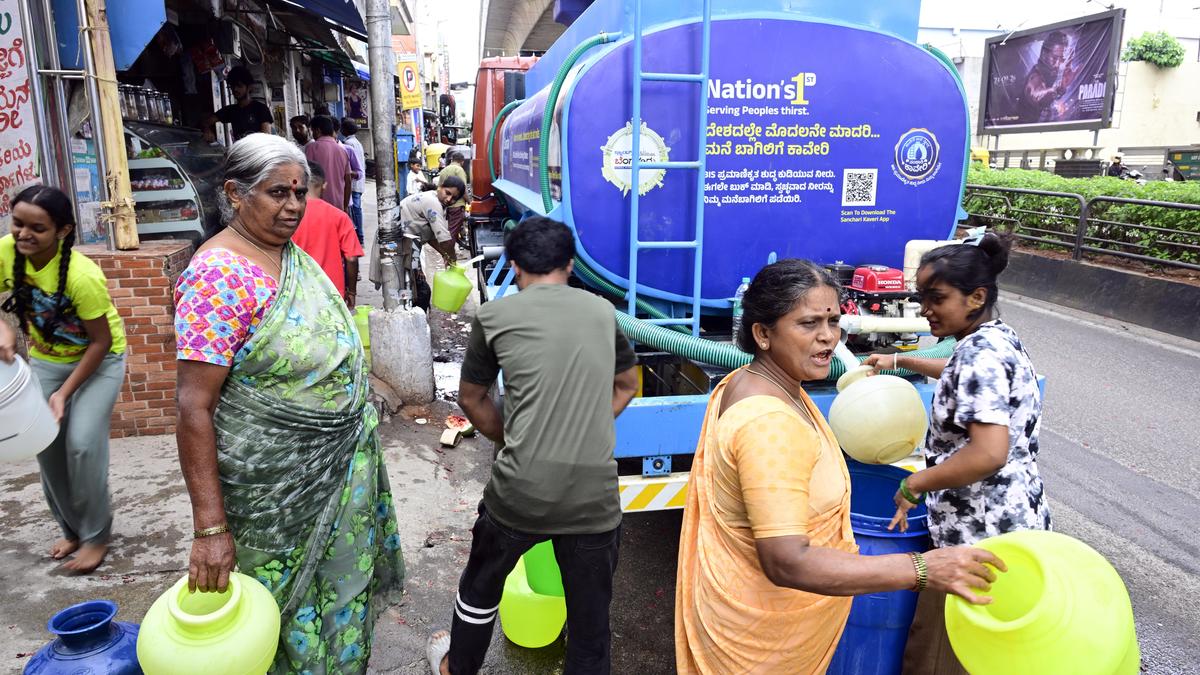
The Bengaluru Water Supply and Sewerage Board (BWSSB) has officially expanded its jurisdiction to cover the entire Bengaluru Urban District. This move aims to standardize water and sewage management across all five taluks, replacing previous fragmented administrative boundaries.
BWSSB Jurisdiction Expansion: A Strategic Shift for Bengaluru
The Urban Development Department (UDD) of Karnataka has issued a significant notification that fundamentally alters the administrative landscape of water and sewage management in the region. By extending the jurisdiction of the Bengaluru Water Supply and Sewerage Board (BWSSB) to encompass the entirety of the Bengaluru Urban District, the government has signaled a move toward centralized utility governance. This transition marks the end of a fragmented system that previously limited the board's operational reach to the core city area, the seven erstwhile City Municipal Councils (CMCs), one Town Municipal Council (TMC), and 110 surrounding villages.
Overcoming Historical Administrative Fragmentation
Historically, the BWSSB’s scope was confined to roughly 800 square kilometers, leaving the peripheral regions of Bengaluru Urban District to rely on disparate local arrangements for water and drainage. This historical limitation often resulted in inconsistent service delivery, varying infrastructure standards, and challenges in long-term urban planning. By incorporating the five taluks—North, East, South, Yelahanka, and Anekal—in their entirety, the state government is attempting to synchronize the development of utility infrastructure across the rapidly growing metropolitan periphery.
The Scope of New Responsibilities
Under the new notification, the BWSSB assumes comprehensive responsibility for the planning, implementation, operation, and maintenance of essential services. This includes not just the supply of drinking water, but also the management of underground drainage systems and safe sewage disposal. The sheer scale of this expansion requires a massive logistical undertaking, as the board must now integrate diverse terrains and existing, albeit localized, infrastructure into a unified grid that aligns with the needs of a district-wide population.
Broader Implications for Urbanization
This policy shift is a direct response to the explosive, often unplanned, growth of Bengaluru’s suburban zones. As the city expands, the demand for sustainable water management has outpaced the capability of local village councils or decentralized municipal bodies. Centralizing control under the BWSSB provides a clearer regulatory framework, which is essential for attracting investment and ensuring that new real estate developments in the five taluks adhere to standardized environmental and sanitary codes.
Future Trends and Challenges
Looking ahead, the success of this expansion will depend on the BWSSB’s ability to scale its human resources and capital expenditure to match its widened mandate. The integration of the five taluks will likely involve a phased rollout of water pipelines and sewage treatment plants, which will be critical in mitigating the groundwater depletion issues frequently reported in these peripheral areas. While the administrative centralization is a milestone, the challenge remains in balancing the immediate needs of newly added villages with the maintenance of the core city’s aging infrastructure.
Conclusion
The expansion of the BWSSB to cover the entire Bengaluru Urban District is a pivotal step toward modernizing the capital's utility sector. By consolidating authority, the government aims to rectify years of unequal utility access and provide a robust foundation for future urban sustainability. As the board begins its expanded operations, the focus will undoubtedly shift to how effectively it can bridge the gap between the core city and the newly integrated rural-urban fringes.
Verification Required?