Cambridge Heavy Industries has been quietly building a desktop fusion device
Source Entity
Tim De Chant
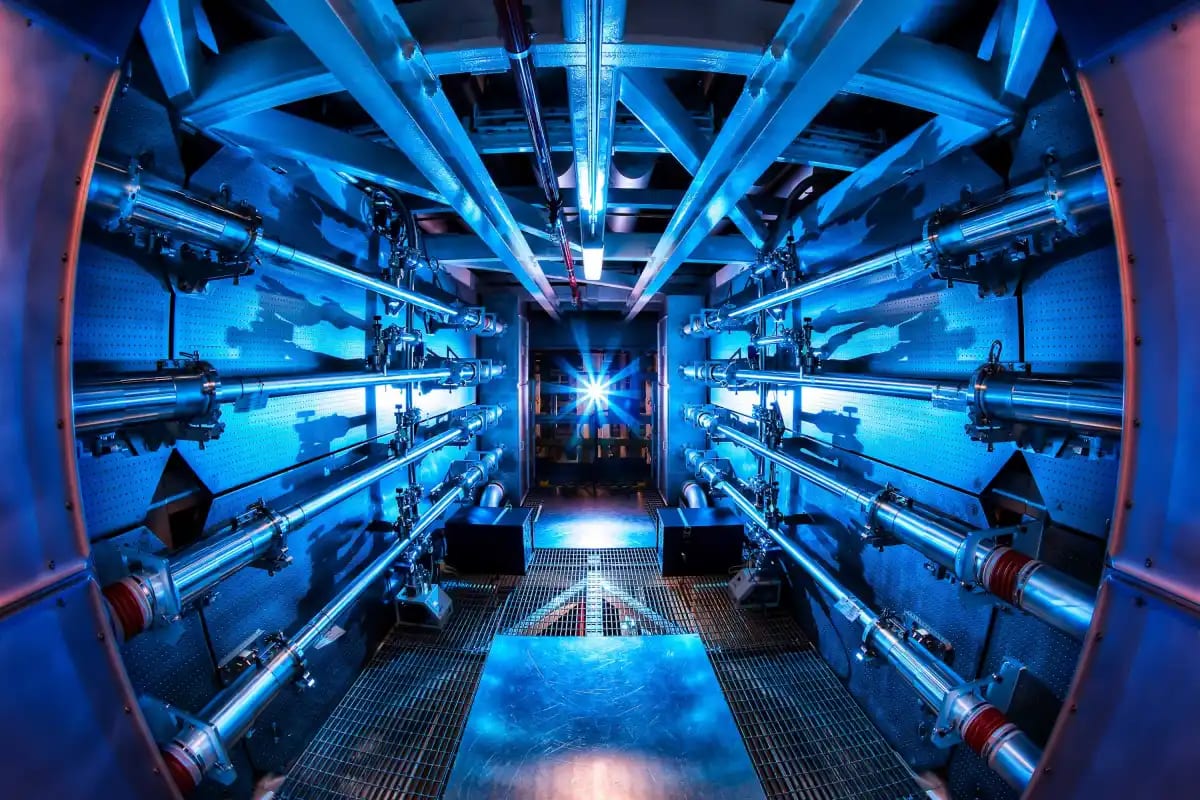
Cambridge Heavy Industries is developing a compact, benchtop laser-powered fusion reactor to revolutionize energy production. By focusing on modularity, the startup aims to accelerate the iteration process and overcome traditional scaling challenges in the fusion sector.
The Shift Toward Desktop Fusion
For decades, the pursuit of commercial fusion power has been synonymous with gargantuan infrastructure—massive tokamak reactors, multi-story magnetic containment systems, and facilities that span several city blocks. However, a nascent shift is underway in Cambridge, Massachusetts, where Cambridge Heavy Industries is challenging the status quo. By developing a desktop-sized, laser-powered fusion device, the company is moving away from the industrial-scale paradigm that has historically characterized the field.
Why Miniaturization Matters
According to CEO and co-founder Yun Kai, the decision to build a small, modular reactor was a strategic choice designed to solve the inherent friction of fusion research. Traditional fusion projects often suffer from long lead times and high capital expenditure, making each experiment a high-stakes, once-in-a-year event. By shrinking the footprint of the reactor to a benchtop scale, Cambridge Heavy Industries is fundamentally changing the physics of innovation, allowing for rapid, iterative testing cycles that were previously impossible.
Accelerating the Iteration Cycle
One of the most significant barriers to fusion energy has been the inability to perform high-frequency testing. The ability to conduct 50 to 80 experiments in a compressed timeframe represents a massive leap forward in the company's development roadmap. By failing fast and learning quickly in a controlled, small-scale environment, the startup can optimize its optics and laser delivery systems with a precision that massive, immovable reactors simply cannot replicate.
The Strategic Advantage of Stealth
Operating in stealth mode near MIT has allowed the startup to refine its core technology away from the pressures of public scrutiny. This approach is common among deep-tech firms that require significant technological maturation before entering the competitive market. The proximity to elite research institutions like MIT likely provides a unique ecosystem of talent and intellectual resources, which is essential for solving the complex plasma physics problems inherent in laser-driven fusion.
Broader Implications for Energy Infrastructure
If successful, the modular nature of this technology could decentralize the fusion power market. Instead of relying solely on massive power plants, smaller, modular fusion devices could potentially be deployed in a variety of industrial or research settings. This paradigm shift could accelerate the integration of fusion power into the global energy mix, moving the technology from the realm of theoretical physics into practical, scalable applications.
Future Trends and Outlook
Looking ahead, the success of Cambridge Heavy Industries will likely depend on their ability to prove that their benchtop results can scale without losing efficiency. While the industry has seen many 'breakthroughs' falter at the scaling stage, the focus on modularity offers a pragmatic path forward. If the company maintains its current pace of iteration, it may well become a key supplier of the underlying technology needed to fuel the next generation of fusion power plants, cementing its role in the global energy transition.