CBI conducts raid at Punjab CM Mann’s camp office, FIR filed against OSD
Source Entity
PRACHI KUMAWAT
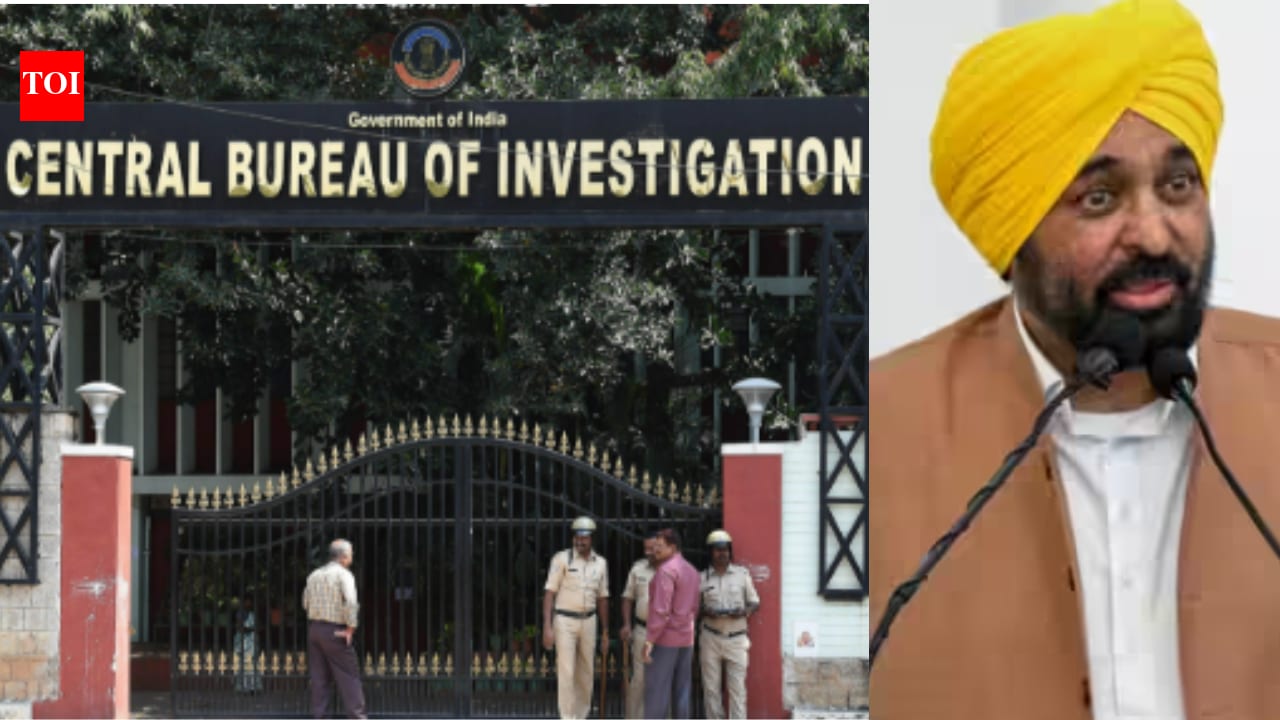
The CBI has raided Punjab CM Bhagwant Mann's office and his OSD's home following a High Court directive to investigate corruption allegations. The Punjab government has challenged this order in the Supreme Court, citing political interference ahead of state elections.
CBI Raids Target Punjab Chief Minister’s Office Amid High Court Directive
In a significant escalation of political and legal tensions in Punjab, the Central Bureau of Investigation (CBI) conducted coordinated raids on Tuesday at the camp office of Chief Minister Bhagwant Mann and the residence of his Officer on Special Duty (OSD), Rajbir Singh Ghuman, in Chandigarh. These searches were initiated following a specific directive from the Punjab and Haryana High Court, which ordered the federal agency to register a case and conduct a thorough probe into allegations of systemic corruption linked to the Chief Minister’s Office.
The Nature of Allegations
The corruption allegations under scrutiny are wide-ranging and serious, as outlined by the Enforcement Directorate (ED) and subsequently incorporated into the judicial process. The charges involve alleged irregularities in administrative functions, including the manipulation of government policies, corruption in the process of civil service transfers and postings, and illicit practices surrounding 'cash for tenders.' These allegations suggest a potential breach of public trust and administrative protocols, warranting the judicial intervention that eventually led to the CBI's involvement.
Political Backlash and Allegations of Misuse
Chief Minister Bhagwant Mann has responded to the raids with sharp criticism, framing the actions of the CBI as a politically motivated maneuver orchestrated by the Bharatiya Janata Party (BJP). Through his official social media channels, Mann argued that the federal government is weaponizing investigative agencies like the CBI and the ED to defame his administration and undermine the Aam Aadmi Party (AAP) ahead of the impending state elections. He maintains that the timing of these raids, occurring so close to the electoral cycle, is a calculated attempt to disrupt his government’s functioning.
Legal Challenges at the Supreme Court
The Punjab government has moved quickly to challenge the High Court’s order, seeking urgent relief from the Supreme Court of India. Representing the State, senior advocates Vikas Singh and Shadan Farasat argued before Chief Justice of India Surya Kant that the High Court’s directive poses a direct threat to the principles of federalism. The state maintains that the allegations, which primarily concern administrative matters such as internal transfers, do not warrant the registration of a criminal case by a central agency, especially during an active pre-election period.
Broader Implications for Federalism
This case highlights the ongoing friction between state administrations and federal investigative bodies in India. By questioning the legitimacy of a central probe into what the state defines as routine administrative affairs, the Punjab government is testing the boundaries of federal jurisdiction. The Supreme Court's decision to hear the matter urgently underscores the gravity of the situation, as the outcome will likely set a significant precedent for how and when central agencies can intervene in the internal administrative governance of states, particularly when political stakes are high.
Future Outlook
As the Supreme Court begins its deliberation, the political environment in Punjab remains volatile. The outcome of this legal challenge will not only determine the trajectory of the corruption investigation but will also serve as a barometer for the political climate in the state. If the court upholds the High Court's directive, the investigation could significantly impact the AAP's standing in the upcoming polls. Conversely, any stay or relief granted by the Supreme Court would provide a major political victory for Chief Minister Mann, allowing him to frame the narrative around federal overreach.
Multiple Citing Sources