New survey shows central banks are starting to ditch the dollar and buy more gold instead — should you do the same?
Source Entity
Yahoo Finance
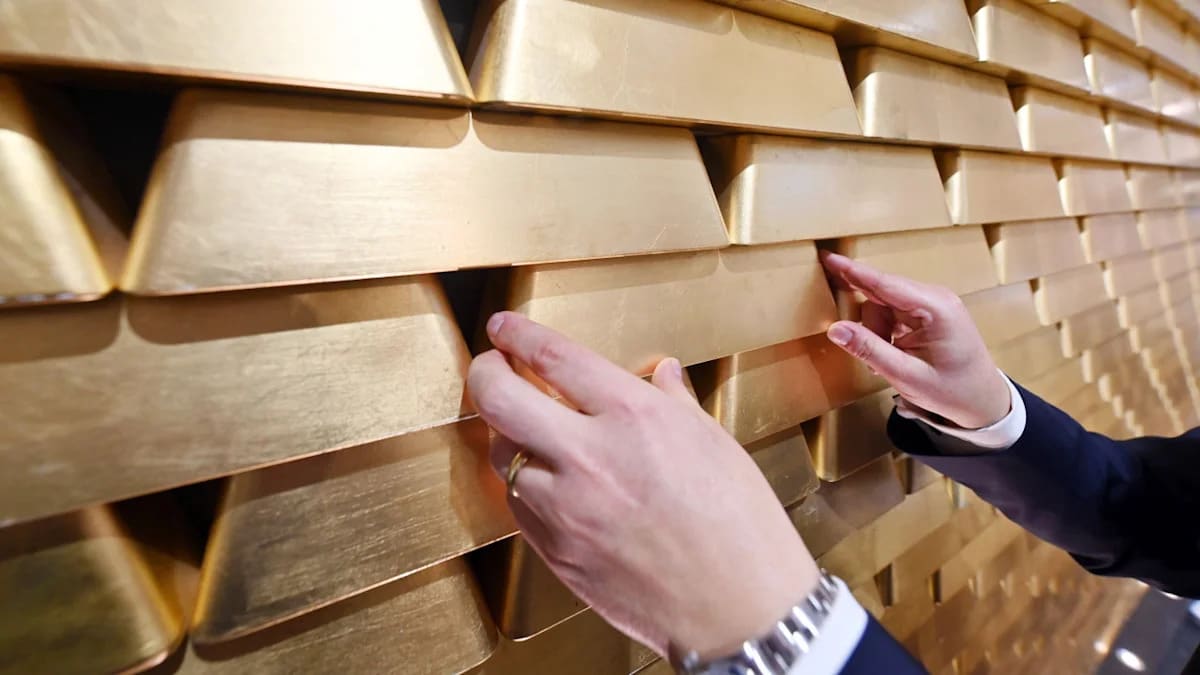
Recent reports and surveys indicate a strategic shift among global central banks, which are increasingly diversifying their reserves by reducing US dollar holdings and increasing gold acquisitions. This trend is echoed by Bridgewater Associates founder Ray Dalio, who advocates for gold as a stable asset least susceptible to devaluation in an era of monetary instability.
The Great Pivot: Central Banks, Gold, and the Eroding Dollar Hegemony
In a significant shift in global monetary strategy, recent data reveals that central banks worldwide are increasingly diversifying their reserve portfolios by reducing their reliance on the US dollar and aggressively accumulating gold. This movement signals a fundamental change in how sovereign nations perceive risk and stability in the international financial system. The trend is not merely a tactical adjustment but a strategic pivot away from the hegemony of a single reserve currency, reflecting a growing desire for assets that possess intrinsic value independent of government decree.
The Logic of De-dollarization
The drive to "ditch the dollar" is rooted in a combination of geopolitical risk and economic volatility. For decades, the US dollar has served as the primary global reserve currency, providing the United States with significant "exorbitant privilege." However, the increasing use of the dollar as a tool for geopolitical leverage—specifically through sanctions—has prompted other nations to seek alternatives. By increasing gold reserves, central banks are effectively insulating themselves from the risk of having their assets frozen or devalued by US policy shifts. This shift represents a move toward a more multipolar financial world where gold acts as the ultimate neutral reserve asset.
Ray Dalio and the Mechanics of Devaluation
Bridgewater Associates founder Ray Dalio has provided a critical theoretical framework for this trend, asserting that "gold is a money" that is "least at risk of being devalued." Dalio's perspective focuses on the long-term cycle of empire and currency. He argues that when major reserve currencies undergo excessive printing to fund government deficits, the resulting inflation erodes the purchasing power of that currency. In this context, gold serves as a hedge because it cannot be printed by a central authority. For Dalio, the current accumulation of gold by central banks is a rational response to the perceived instability of fiat currencies and the rising debt levels of the US government.
Historical Context: The Ghost of Bretton Woods
To understand the current trend, one must look back to the Bretton Woods system, which pegged global currencies to the US dollar, which in turn was pegged to gold. The "Nixon Shock" of 1971, which ended the direct convertibility of the dollar to gold, ushered in the era of pure fiat currency. For fifty years, the world operated on trust in the US economy. However, the current surge in gold buying suggests that this trust is fraying. Central banks are essentially returning to a pre-1971 mindset, recognizing that while the dollar is convenient for trade, gold is the only asset that provides a true store of value across centuries, regardless of the political climate.
Broader Implications for Global Finance
The transition toward gold has profound implications for the global economy. If central banks continue to sell US Treasuries to buy gold, it could lead to higher borrowing costs for the United States, as demand for its debt decreases. Furthermore, this trend encourages private investors to mirror the behavior of sovereign states. As central banks signal that gold is the safest haven, retail and institutional investors are likely to increase their gold allocations to protect their wealth from systemic currency collapses or hyperinflationary events.
Future Trends: Toward a Multipolar Reserve System
Looking forward, it is unlikely that the US dollar will vanish overnight, but its role as the sole dominant reserve is clearly under threat. We are likely entering an era of "currency baskets," where central banks hold a diversified mix of gold, multiple sovereign currencies, and perhaps eventually digital assets. Gold will likely remain the anchor of this system due to its lack of counterparty risk. As more nations align their reserves with the logic presented by Dalio and the data in recent surveys, gold will transition from being seen as a "barbarous relic" to the cornerstone of a new, more resilient global financial architecture.
Summary: The shift from the US dollar to gold by central banks is a systemic response to geopolitical instability and the risk of currency devaluation. Supported by the analysis of figures like Ray Dalio, this trend marks a return to tangible assets as the primary safeguard against the volatility of modern fiat monetary policy.