Chandrayaan-3 finds 3 distinct layers in Moon’s soil
Source Entity
CHETHAN KUMAR
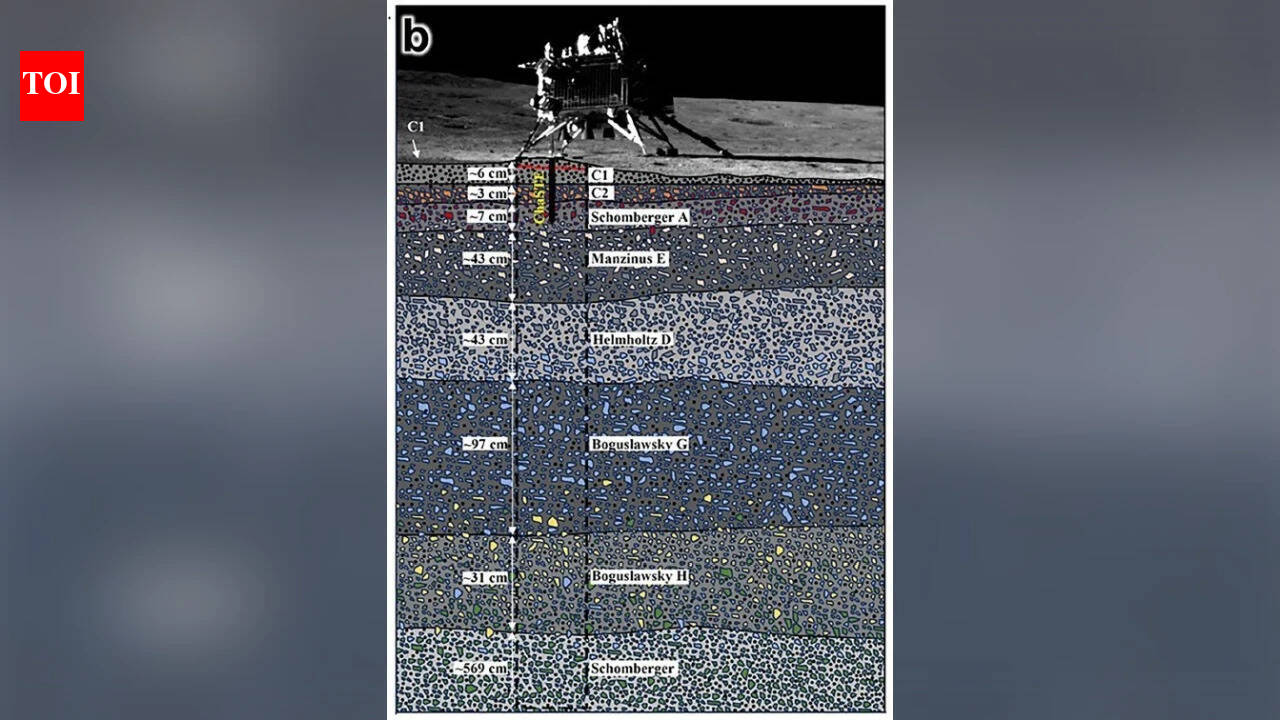
Chandrayaan-3 has identified three distinct layers in the lunar soil at Shiv Shakti Point. These findings provide critical data for future water-ice exploration and the development of lunar habitats.
Unveiling the Lunar Subsurface: Chandrayaan-3's Latest Discovery
The recent data transmitted by India’s Chandrayaan-3 mission has revealed a significant geological finding: the presence of three distinct layers within the Moon’s soil at the designated 'Shiv Shakti Point.' This discovery, achieved through rigorous in-situ analysis, marks a pivotal moment in our understanding of lunar regolith composition. By identifying these stratification patterns, scientists are gaining a clearer picture of the processes that have shaped the lunar surface over billions of years.
The Role of Impact Ejecta
One of the most compelling aspects of this research is the identification of craters whose ejecta likely contributed to these layered soil formations. The layering suggests a complex history of impact events, where debris from nearby celestial collisions has been deposited over time, creating a chronological record buried beneath the surface. Understanding these depositional patterns is essential for mapping the geological timeline of the Moon's southern pole.
Implications for Water-Ice Exploration
This discovery has profound implications for the search for lunar water-ice. By analyzing the physical properties of these distinct layers, researchers can better predict where volatile substances might be trapped. The soil stratification acts as a guide for future exploration, allowing mission planners to target specific depths and regions where ice or other resources are most likely to exist, thereby optimizing the search for life-sustaining materials.
Engineering Future Lunar Habitats
Beyond scientific curiosity, the findings are vital for the practical engineering of future lunar habitats. Construction on the Moon requires a deep understanding of soil mechanics, load-bearing capacity, and thermal insulation properties. Knowing that the regolith is not a uniform mass, but rather a structured, layered environment, allows engineers to design foundations and structures that can withstand the unique challenges of the lunar environment.
A Foundation for Sustainable Exploration
As global interest in lunar colonization grows, the data from Shiv Shakti Point serves as a cornerstone for sustainable exploration. The ability to identify and utilize local materials, informed by the knowledge of soil composition, reduces the need to transport heavy supplies from Earth. This discovery by Chandrayaan-3 is not merely a localized observation; it is a critical step toward establishing a permanent human presence on the lunar surface.