350 years ago, this man discovered that light has a finite speed
Source Entity
Hacker News
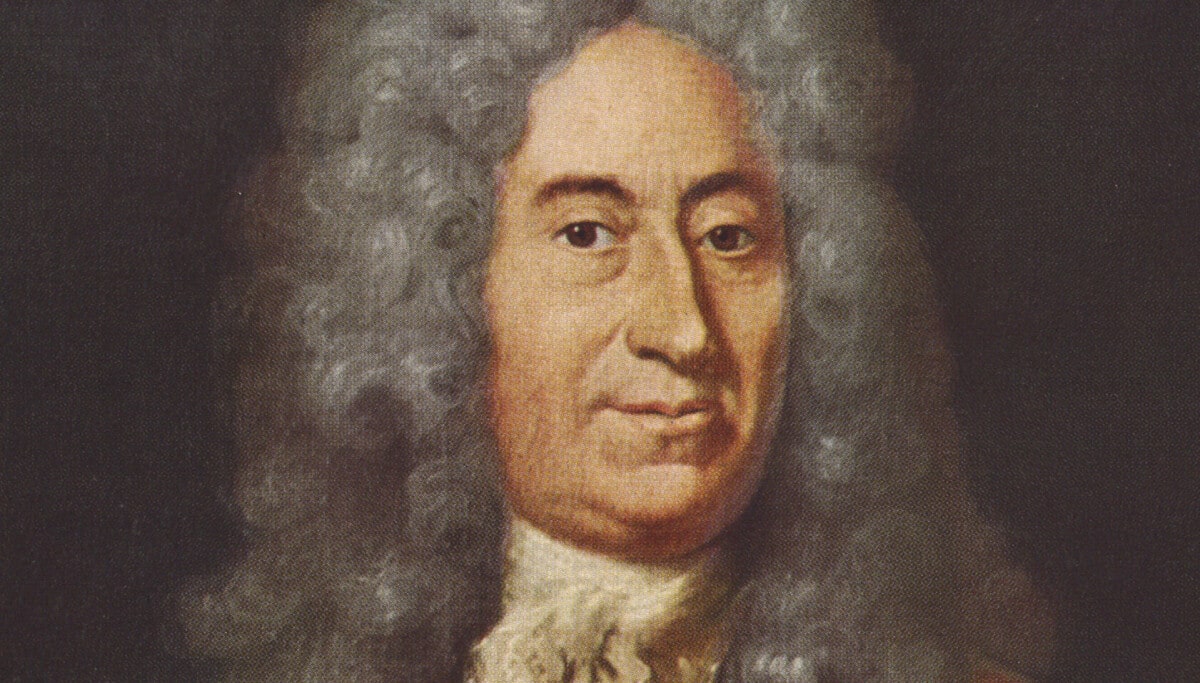
Danish astronomer Ole Rømer revolutionized physics 350 years ago by proving that light travels at a finite speed. By observing the timing of Jupiter's moon Io, he dismantled the long-held belief that light was instantaneous.
The Landmark Discovery of Light's Finite Velocity
Three and a half centuries ago, the scientific landscape was irrevocably altered by the work of Danish astronomer and physicist Ole Rømer. Before his groundbreaking observations, the prevailing consensus among scholars was that light traveled instantaneously across space. Rømer’s work challenged this intuitive but incorrect assumption, marking a pivotal transition in the history of science from speculative philosophy to empirical, evidence-based physics.
The Methodology of Observation
In 1671, Rømer embarked on a journey that would lead him to the Académie des Sciences in Paris. By September 1676, he had synthesized his observations regarding the orbital mechanics of Jupiter’s moons. Specifically, he focused on Io, which regularly disappears behind the shadow of Jupiter. Rømer famously predicted to the Académie that Io would emerge from Jupiter's shadow on November 9, 1676, with a ten-minute delay compared to previous calculations. When the event occurred exactly as he predicted, he provided the first observational proof that light possesses a finite speed.
Dismantling Instantaneous Propagation
Prior to Rømer’s demonstration, the scientific community struggled to reconcile the nature of light with the vast distances of the cosmos. By proving that the delay in Io’s appearance was due to the time light took to traverse the changing distance between Jupiter and Earth, Rømer effectively debunked the theory of instantaneous travel. This realization was not merely an astronomical correction; it was a fundamental shift in how humanity perceived the physical properties of the universe.
Broader Implications for Modern Physics
The implications of Rømer’s discovery are profound, as they laid the groundwork for future breakthroughs in optics and electromagnetism. Understanding that light has a speed, rather than being an infinite force, allowed later scientists like Christiaan Huygens and eventually Albert Einstein to develop more complex models of the universe. Without the initial realization that light requires time to propagate, the development of modern physics—including the study of light as a constant in a vacuum—would have been delayed by generations.
A Legacy of Scientific Precision
Ole Rømer’s contribution stands as a testament to the power of meticulous observation. By using the Jovian system as a massive, natural laboratory, he demonstrated that the universe follows predictable, measurable laws. Today, his work remains a cornerstone of physics education, reminding us that even the most seemingly obvious truths, such as the speed of light, require rigorous testing to be understood correctly.
Conclusion
In summary, the 350-year-old discovery by Ole Rømer remains one of the most significant milestones in scientific history. By predicting the timing of Io’s exit from Jupiter's shadow, he proved that light is not an instantaneous phenomenon, but a physical entity with a finite velocity. This discovery fundamentally redefined our cosmic perspective and continues to underpin our understanding of the universe's mechanics to this day.