'Birdbrain' Is a Misnomer. Crows Make Decisions Faster Than We Can
Source Entity
Hacker News
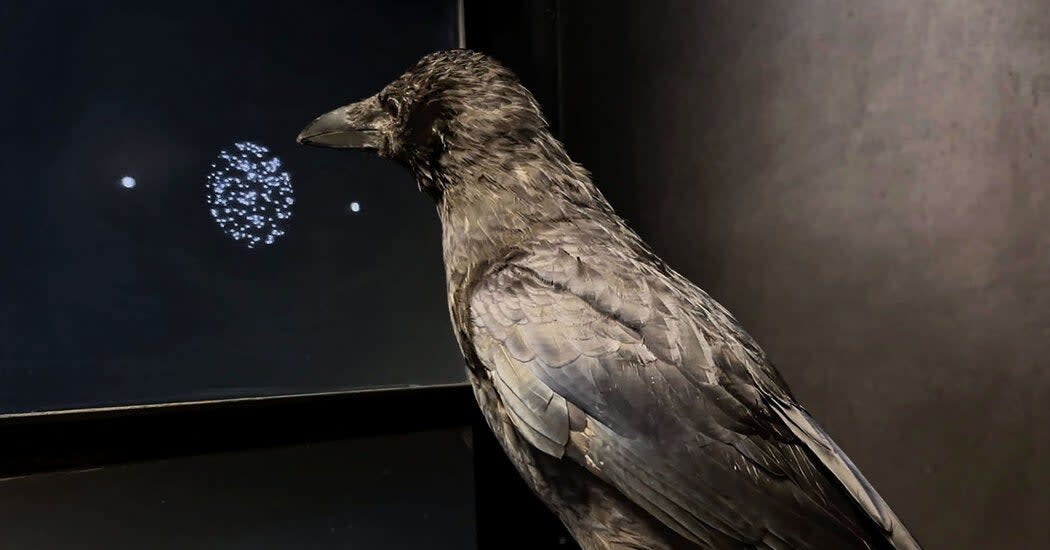
New research published in Science reveals that carrion crows process visual information and make decisions twice as fast as humans and monkeys. This study challenges long-standing misconceptions about avian intelligence and suggests a highly efficient neural architecture.
Rethinking Avian Intelligence: The Speed of Crows
For generations, the term "birdbrain" has been used as a pejorative to describe someone lacking intelligence or cognitive depth. However, groundbreaking research involving two carrion crows, Lemmy and Iggy, has effectively dismantled this outdated stereotype. By participating in complex psychology lab experiments, these birds have demonstrated that their cognitive abilities extend far beyond simple instinct, moving into the realm of complex tool use, numerical reasoning, and now, rapid decision-making.
Quantifying Neural Speed
The study, recently published in the journal Science, marks a pivotal moment in neurobiology by quantifying the speed of avian decision-making for the first time. Researchers tasked the crows with responding to specific visual cues, measuring the latency between the stimulus and the bird's reaction. The results were striking: the crows were able to process and respond to these visual inputs at twice the speed of both humans and nonhuman primates. This discovery provides empirical evidence that bird brains are not merely small, but are instead highly optimized for rapid information processing.
The Evolutionary Advantage of Speed
Why would a crow need to make decisions faster than a primate? From an evolutionary perspective, the ability to process environmental cues at high speeds offers a significant survival advantage. Carrion crows, known for their opportunistic foraging habits and complex social structures, must often navigate dynamic environments where a split-second decision can mean the difference between securing a resource or missing an opportunity. This rapid neural processing likely evolved as a specialized adaptation to the specific challenges of their ecological niche.
Challenging the Primate-Centric View
Historically, cognitive studies have been heavily skewed toward primate subjects, leading to a "primate-centric" understanding of intelligence. By demonstrating that birds can outperform monkeys and humans in decision-making speed, this research forces the scientific community to reconsider the evolutionary path of intelligence. It suggests that complex cognition is not a linear progression culminating in primates, but rather a versatile trait that can manifest through different neural architectures.
Future Implications for Neuroscience
This study opens the door to deeper investigations into how avian brains achieve such high-speed computation. Understanding the neural circuitry that allows crows to process visual data so efficiently could have broader implications for fields ranging from comparative psychology to the development of artificial intelligence. If we can map the mechanisms behind this speed, we may gain new insights into the fundamental principles of neural efficiency that transcend taxonomic boundaries.
Conclusion: Beyond the 'Birdbrain' Myth
The findings regarding Lemmy and Iggy serve as a final, decisive blow to the notion that avian intelligence is inferior. As we continue to study these animals, it becomes increasingly clear that our own cognitive biases have long clouded our understanding of the natural world. By recognizing that birds can process information faster than the "awesome" human species, we take a necessary step toward a more objective and nuanced appreciation of cognitive diversity in the animal kingdom.