India to renew commitment to Italy’s Elettra facilities
Source Entity
India Latest News: Top National Headlines Today & Breaking News | The Hindu
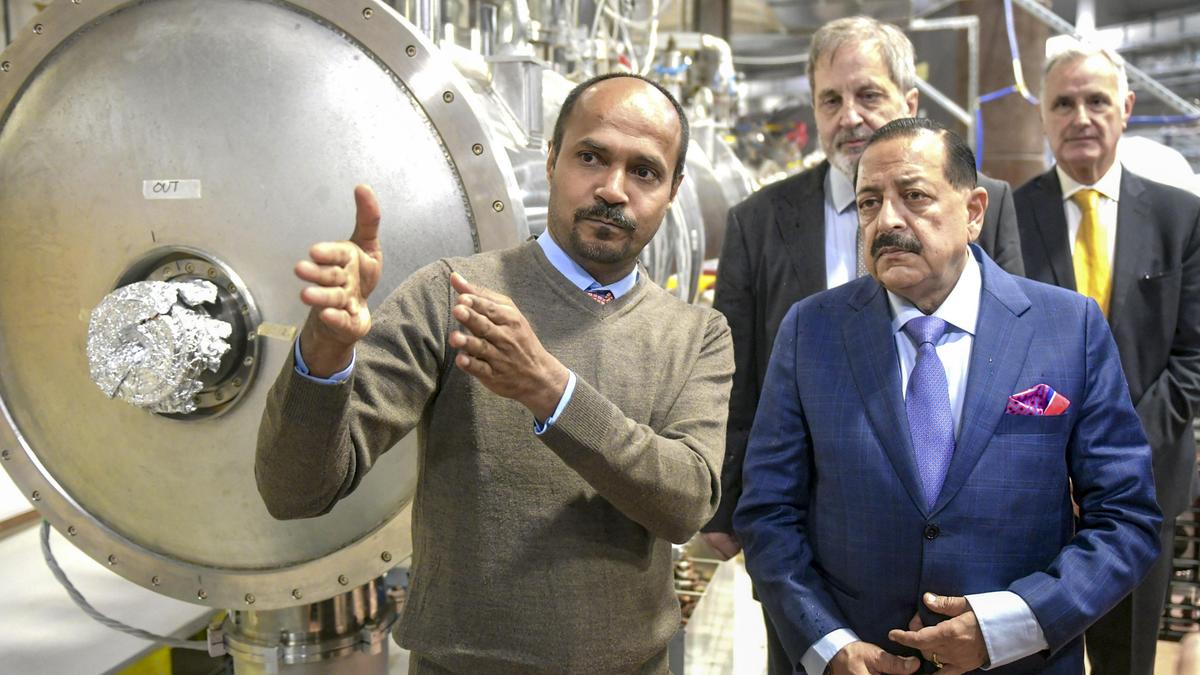
India has pledged €7 million over five years to support Italy's Elettra 2.0 synchrotron research facility. This collaboration aims to advance atomic-scale research in fields ranging from nanotechnology to medicine.
India and Italy Forge Advanced Scientific Partnership
India has officially reaffirmed its commitment to international scientific cooperation by pledging at least €7 million (approximately ₹73 crore) to the Elettra 2.0 programme in Trieste, Italy. Announced by Union Science Minister Jitendra Singh on November 14, 2026, this financial commitment, which is set to begin in the 2026-27 financial year and span five years, signals a deepening of the bilateral relationship between New Delhi and Rome in the high-stakes domain of frontier research.
The Significance of Elettra Sincrotrone
At the heart of this partnership is the Elettra Sincrotrone Trieste, a world-class research facility that serves as a cornerstone for European and international scientific inquiry. The facility operates a synchrotron light source, an sophisticated apparatus that accelerates electrons to near-relativistic speeds. By forcing these electrons to emit high-intensity X-rays and electromagnetic radiation, the facility provides scientists with a unique 'microscope' to observe the fundamental building blocks of matter.
Applications at the Atomic Scale
This technology is not merely academic; it is transformative across multiple industrial and social sectors. By allowing researchers to map the structure and properties of matter at the atomic and molecular levels, the Elettra 2.0 programme facilitates breakthroughs in nanotechnology, advanced materials science, and drug discovery. The ability to visualize the mechanics of molecules in real-time is essential for modern medicine and the development of next-generation materials.
Bridging Heritage and Innovation
Beyond the hard sciences, the capabilities of synchrotron radiation extend into cultural heritage and archaeology. The non-destructive nature of these X-ray beams allows researchers to analyze delicate historical artifacts, providing insights into their composition and preservation without causing damage. This cross-disciplinary utility underscores why India’s investment is strategically significant, as it touches upon both the preservation of history and the advancement of future technologies.
Strategic Implications for Global Research
India's decision to invest €7 million in an Italian facility highlights a strategic shift toward globalized research infrastructure. By participating in Elettra 2.0, Indian scientists gain access to cutting-edge equipment that would be prohibitively expensive to replicate domestically. This 'big science' approach encourages knowledge exchange, fosters international networking, and elevates India’s standing in the global scientific community.
Future Trends and Outlook
Looking ahead, this five-year investment is likely to serve as a blueprint for future international scientific collaborations. As the Elettra 2.0 programme evolves, the data generated will likely fuel innovations in sustainability and healthcare that will benefit both Italy and India. This commitment serves as a testament to the power of multilateral research, ensuring that both nations remain at the forefront of the technological race in the coming decade.
Verification Required?