Axiom was practice, my real mission is to see Tricolour on Moon by 2040: Captain Shubhanshu Shukla
Source Entity
The Indian Express
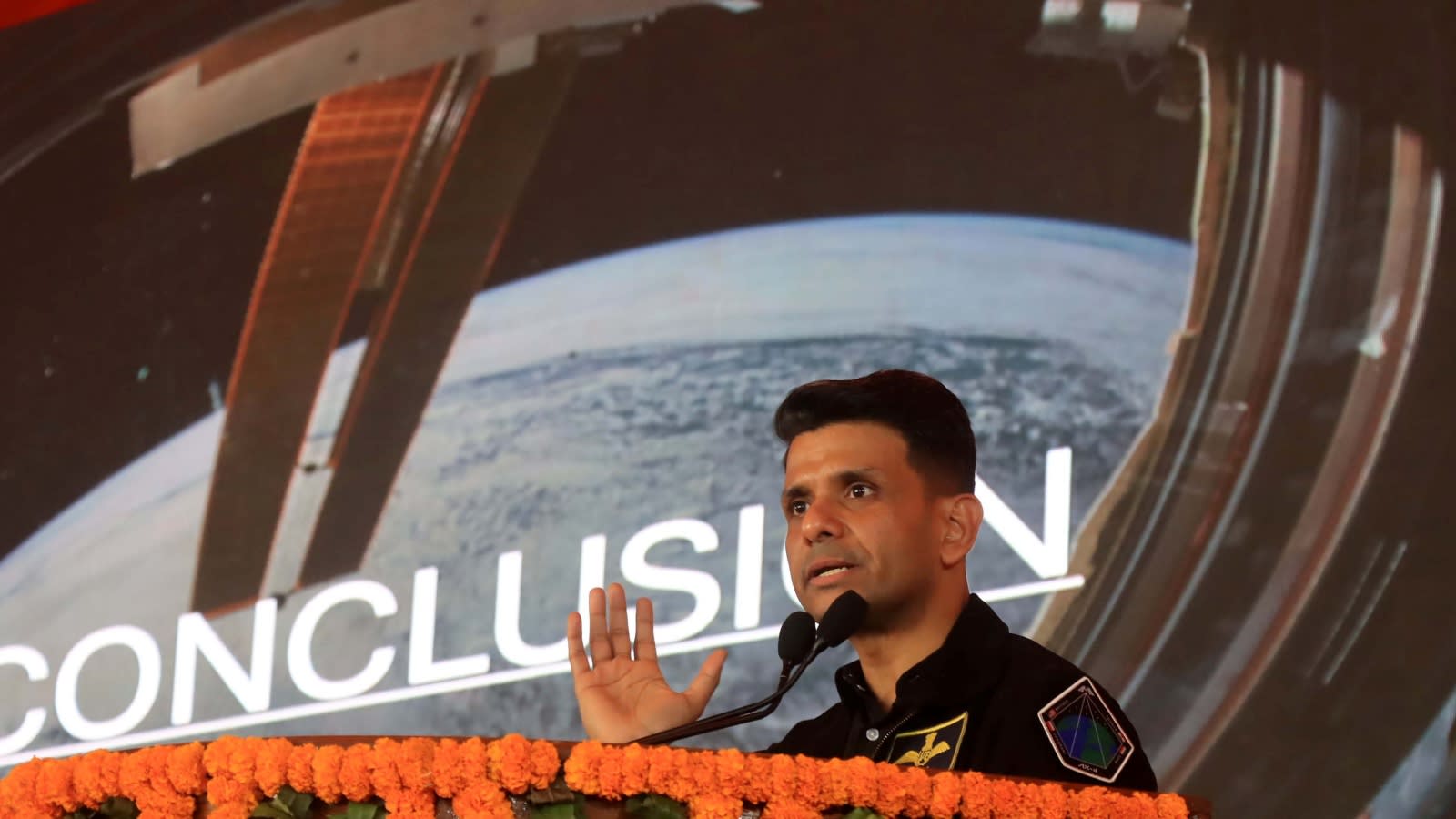
Captain Shubhanshu Shukla, India's first ISS astronaut, has shifted his focus to the Gaganyaan mission following his Axiom-4 experience. He aims to support India's national goal of landing an Indian astronaut on the Moon by 2040.
The New Frontier: Captain Shubhanshu Shukla’s Vision for India’s Space Future
Captain Shubhanshu Shukla, who etched his name in history as the first Indian astronaut to visit the International Space Station (ISS), has recently articulated a bold vision for the future of India’s space program. Speaking at the 10th Military Literature Festival, Captain Shukla reflected on his experience during the Axiom Mission 4 in June 2025, emphasizing that his journey was not merely a personal achievement but a collective national effort. His comments highlight a pivotal transition from initial international collaboration to a dedicated focus on indigenous space exploration.
From Axiom to Gaganyaan: A Strategic Evolution
The Axiom Mission 4 served as a critical foundational experience for Captain Shukla, providing him with 20 days and 3 hours of real-world exposure to orbital operations. By participating in this mission, Shukla gained invaluable insights into the complexities of life in microgravity and the operational requirements of long-duration spaceflight. He is now utilizing this expertise to bolster the Gaganyaan mission, India’s flagship human spaceflight program, ensuring that the lessons learned from global partnerships are effectively integrated into national systems.
The 2040 Lunar Ambition
Perhaps the most significant aspect of Shukla’s vision is the explicit alignment with the government's long-term goal: landing an Indian astronaut on the Moon by 2040. This objective represents a massive scaling up of India’s space ambitions, moving beyond Earth-orbit missions toward deep-space exploration. By framing the 'Tricolour on the Moon' as his 'real mission,' Shukla underscores the importance of human-centric spaceflight as a catalyst for national growth and technological sovereignty.
The Role of Human Spaceflight in National Power
During his session, titled 'From Fighter Cockpit to Spacecraft: India’s New Frontier in Air and Space Power,' Shukla drew direct parallels between the precision required for military aviation and the rigors of space exploration. This narrative suggests that India is viewing its space program not just through a scientific lens, but as a core component of its strategic and technological power. The integration of military-trained personnel into space missions highlights the high level of discipline and operational readiness required for future lunar endeavors.
Overcoming Technical and Logistical Challenges
Achieving a lunar landing by 2040 requires sustained investment, advancements in heavy-lift launch vehicles, and the development of sophisticated life-support systems. Shukla’s active engagement in the Gaganyaan program is a crucial step in building the human capital necessary to navigate these challenges. His experience serves as a bridge, helping the Indian space sector transition from uncrewed robotic missions, like the Chandrayaan series, to the more complex requirements of sustaining human life on the lunar surface.
Conclusion: A Legacy of Exploration
Captain Shubhanshu Shukla’s trajectory from a fighter pilot to an astronaut and now a key contributor to India’s space mission reflects the country’s rapidly evolving capabilities. As India marches toward its 2040 lunar goal, the insights provided by pioneers like Shukla will be fundamental in shaping the roadmap for future generations. The sentiment that 'the whole nation was part of the mission' remains the driving force behind this national endeavor, signaling a future where India is a permanent fixture in the global lunar exploration landscape.