Two Supermoons are arriving before Christmas 2026: Here's when and how to watch in the US
Source Entity
Latest News: Todays Latest News Headlines from India & World | Hindustan Times
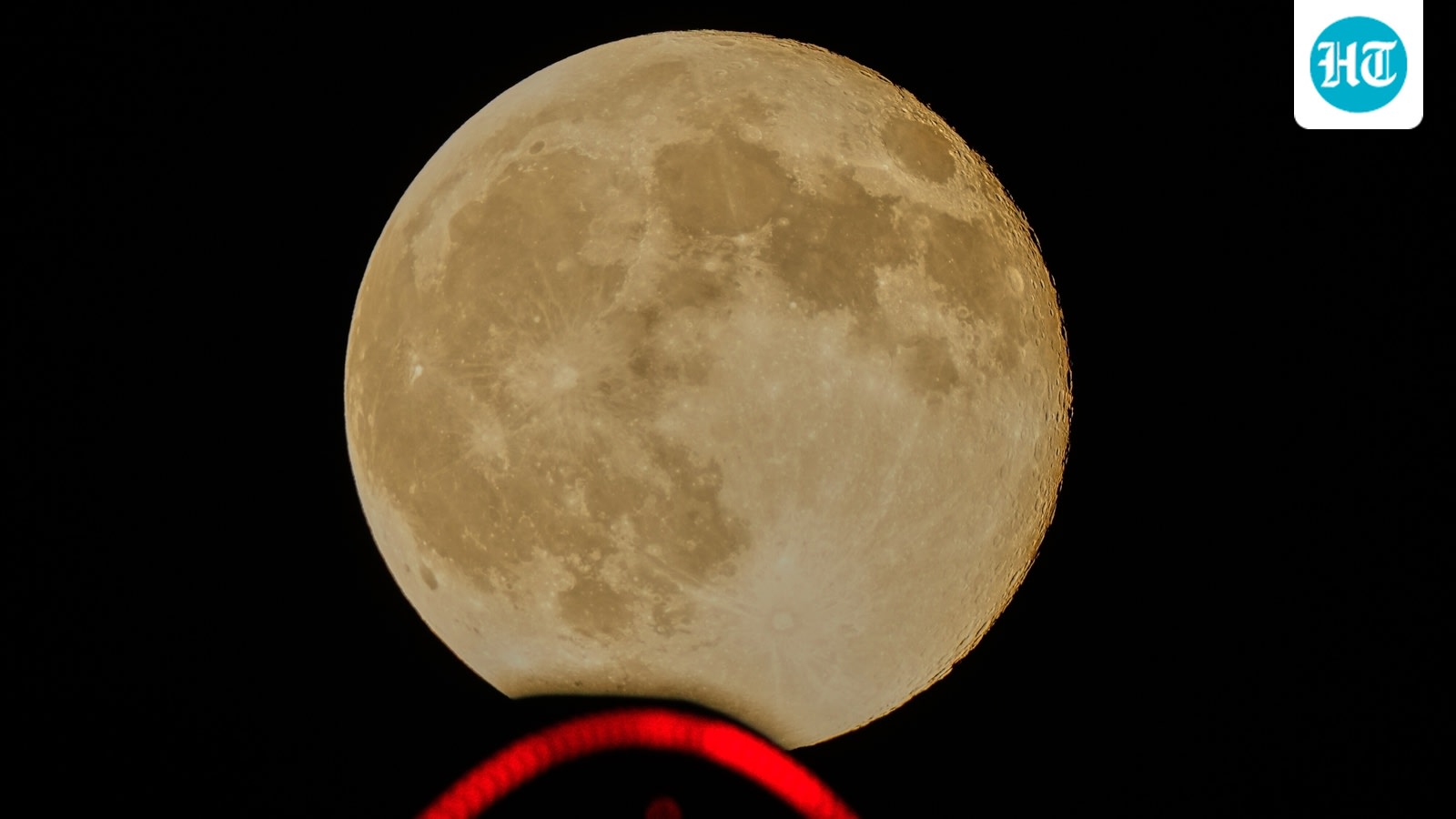
Two consecutive supermoons are scheduled to light up the night sky in the United States before Christmas 2026. The series begins with the Beaver Moon in November and concludes with the Cold Moon in December, which will be the closest full moon of the year.
The Celestial Finale of 2026: A Supermoon Double Feature
As the year 2026 draws to a close, skywatchers across the United States are set to witness a rare and captivating astronomical phenomenon. Two consecutive supermoons are scheduled to occur in the final months of the year, providing a dramatic celestial backdrop just before the Christmas holiday season. This sequence, beginning in November and culminating in late December, offers a unique opportunity for both casual observers and astronomy enthusiasts to engage with the night sky.
Understanding the Supermoon Phenomenon
A supermoon occurs when a full moon coincides with the moon's perigee—the point in its elliptical orbit when it is closest to Earth. This proximity makes the moon appear significantly larger and brighter than a typical full moon. The upcoming series starting on November 24, 2026, with the 'Beaver Moon,' marks the beginning of a sequence of three consecutive supermoons, highlighting the rhythmic nature of lunar orbits.
The Significance of the December Cold Moon
The most anticipated event in this series is the 'Cold Moon' occurring on December 23, 2026. Taking place just two days after the winter solstice, this event is particularly notable as it will be the closest full moon of the entire year. The timing near the winter solstice—the longest night of the year in the Northern Hemisphere—ensures that the moon remains visible for an extended duration, casting its enhanced brilliance over the landscape during the peak of winter.
Astronomical and Cultural Implications
Beyond the scientific spectacle, these events often hold cultural and historical significance. The names 'Beaver Moon' and 'Cold Moon' are traditional monikers rooted in seasonal changes and historical agricultural cycles. While these labels serve as markers of time, the 2026 supermoons serve as a reminder of the consistent, predictable mechanics of our solar system, drawing public interest toward space science and celestial observation.
Expert Guidance for Observers
For those in the United States looking to view these events, minimal equipment is required, though clear skies are essential. Because supermoons are brighter than average full moons, they are easily observable with the naked eye even in areas with moderate light pollution. As the December event approaches, experts suggest looking toward the horizon shortly after moonrise to take advantage of the 'moon illusion,' where the moon appears larger when positioned near terrestrial objects.
Conclusion: A Year-End Spectacle
The arrival of these two supermoons provides a fitting end to the 2026 calendar year. By bridging the gap between late autumn and the winter holidays, these events encourage a deeper appreciation for planetary science and the beauty of the cosmos. Whether viewed for scientific curiosity or simply for the aesthetic experience, the November and December supermoons stand as highlights of the 2026 astronomical calendar.
Verification Required?