Astronomers redefine star cluster in a new study
Source Entity
India Latest News: Top National Headlines Today & Breaking News | The Hindu
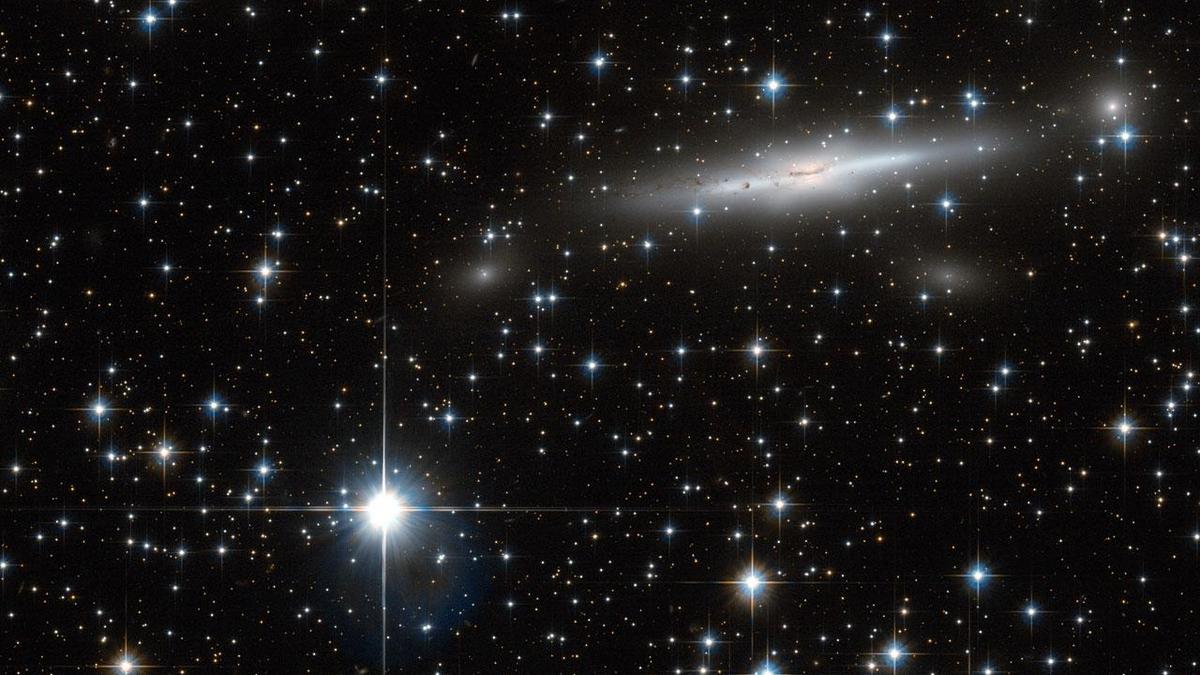
Astronomers have discovered that the star cluster UBC 63 is actually composed of two distinct clusters rather than one. This rare finding provides unique insights into the dynamical evolution of stellar systems and the aftermath of galactic flybys.
A New Perspective on UBC 63
Recent astronomical research has fundamentally altered our understanding of UBC 63, a galactic open cluster previously thought to be a single, cohesive entity. By leveraging high-precision data from the European Space Agency’s (ESA) Gaia mission, an international team of researchers—including scientists from Gauhati University and the Indian Institute of Astrophysics (IIA)—has determined that UBC 63 is actually composed of two separate star clusters. This discovery highlights the immense value of the Gaia mission in providing the astrometric precision necessary to peel back the layers of our galaxy’s complex stellar structures.
The Nature of Open Clusters
Open clusters are loosely bound groups of stars that form from the same giant molecular cloud. Located approximately 4,892 light-years from Earth, UBC 63 represents a classic example of these galactic building blocks. Because they are held together by relatively weak gravitational forces, they are highly susceptible to external influences, such as the tidal forces of the Milky Way or interactions with passing stellar systems. The revelation that UBC 63 is a binary system of clusters provides a rare, tangible case study of how these structures interact over cosmic timescales.
Analyzing Galactic Flybys
This study represents a rare opportunity to observe the aftermath of a close flyby between two distinct stellar systems. In the dense environment of the Milky Way, star clusters occasionally pass near one another. These encounters can significantly alter the dynamical evolution of the involved clusters, potentially leading to tidal stripping or even structural transformation. By identifying that UBC 63 is, in fact, two clusters, researchers can now model the gravitational dance that brought them together and assess how such interactions influence the long-term stability of open clusters.
The Role of International Collaboration
This discovery was spearheaded by a Department of Science and Technology (DST) INSPIRE Senior Research Fellow (SRF) at Gauhati University, working in tandem with global experts. This level of international cooperation is essential in modern astrophysics, where the synthesis of large-scale survey data requires diverse expertise. By combining localized research efforts with global data sets, the team has successfully redefined a portion of our galactic map, demonstrating the effectiveness of the INSPIRE program in fostering high-impact research.
Implications for Galactic Evolution
Understanding the lifecycle of star clusters is vital to understanding the history of the Milky Way. Since star clusters serve as the 'building blocks' of our galaxy, identifying misclassifications like UBC 63 is not merely an academic exercise; it is a necessary step in refining our galactic models. As researchers continue to analyze the dynamical evolution of these two distinct clusters, the findings will likely inform future studies regarding how clusters disperse, how they interact with the galactic disk, and how they contribute to the broader chemical and structural evolution of the galaxy.
Future Trends in Stellar Mapping
Moving forward, the discovery in UBC 63 sets a precedent for re-evaluating other 'poorly populated' clusters identified in earlier surveys. As more data from the Gaia mission and future observatories becomes available, it is probable that other supposed single clusters will be revealed as complex, multi-component systems. This trend toward high-resolution structural analysis will ultimately lead to a much more granular and accurate census of the stars in our immediate neighborhood, providing a clearer picture of the dynamic and changing nature of the Milky Way.
Verification Required?