The Evolving Story of How Chemistry Became Biology
Source Entity
Hacker News
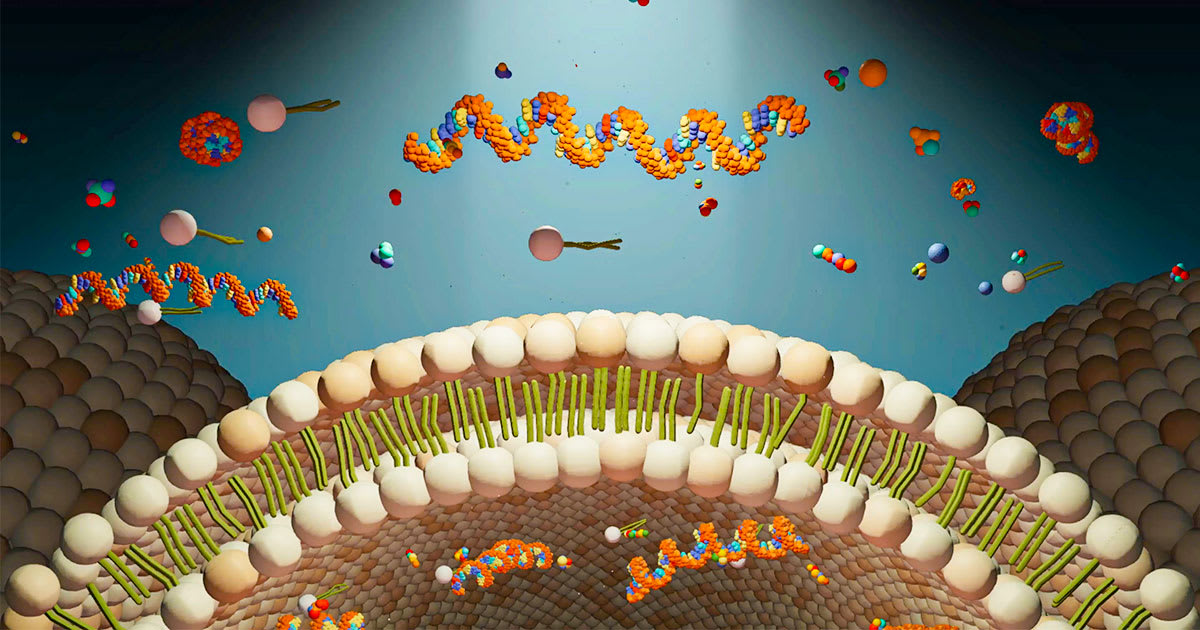
Researchers are investigating the chemical origins of life by testing if a reduced alphabet of 10 amino acids could sustain early protein structures. This work in synthetic biology aims to determine if life's evolution was inevitable or if alternative biological pathways were possible.
The Chemical Foundations of Life
Recent scientific inquiries into the origins of life are challenging our fundamental understanding of evolutionary biology. By focusing on the transition from simple chemistry to complex biological structures, researchers like Kateřina Hlouchová are re-examining the constraints that governed the earliest forms of existence. The core of this research involves testing whether a 'reduced alphabet' of just 10 amino acids—a significant departure from the 20 standard amino acids used in modern life—could have supported the robust protein folds necessary for early biological development.
Probing the Pre-LUCA Era
The Last Universal Common Ancestor (LUCA) serves as the biological benchmark for the tree of life, yet the chemical processes preceding it remain largely speculative. By utilizing biology as a guiding framework and chemistry as a 'parts list,' Hlouchová’s team is attempting to reconstruct the conditions that existed before LUCA. This experimental approach seeks to identify the most stable and functional protein structures that might have served as the precursors to modern biological machinery, providing a window into the primordial soup that birthed life on Earth.
The Potential of Synthetic Biology
Synthetic biology has emerged as a transformative tool in this investigation, allowing scientists to move beyond the limitations of extant organisms. As Hlouchová notes, this field enables researchers to explore hypothetical biological systems that do not rely on the life forms observed today. By experimenting with 'totally different' sets of amino acids, the team is effectively stress-testing the universality of our current biological template. This work suggests that the chemistry of life may be more flexible than previously assumed, potentially expanding our search for life beyond terrestrial boundaries.
Evolutionary Determinism vs. Contingency
One of the most profound implications of this research is the question of evolutionary inevitability. If a reduced set of amino acids can successfully support complex protein folds, it raises the possibility that life might have occurred in vastly different ways than what we currently recognize. This challenges the notion that the evolution of life was a strictly deterministic process, suggesting instead that biological structures could have emerged through diverse chemical pathways. If alternative chemistries are viable, the definition of 'life' itself may need to be expanded to include systems that operate outside the standard genetic code.
Future Trends in Origin Research
As these experiments continue, the field is moving toward a more comprehensive understanding of chemical potentiality. Future research will likely focus on the stability of these 'non-standard' protein folds and their ability to facilitate metabolic processes in simulated prebiotic environments. By systematically stripping away the complexities of modern biology, scientists are inching closer to identifying the minimal requirements for life. This ongoing work not only deepens our historical understanding of Earth’s origins but also provides a critical foundation for synthetic biology applications in medicine, materials science, and astrobiology.