Star Axis
Source Entity
Hacker News
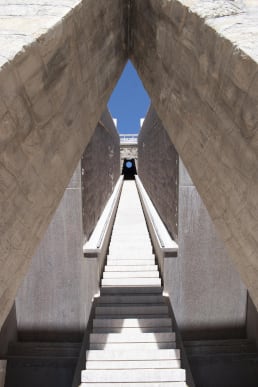
Charles Ross is a renowned artist whose career bridges the gap between physics, mathematics, and land art. His magnum opus, Star Axis, represents a lifelong culmination of his work with light, geometry, and astronomical cycles, sustained by his long-standing partnership with Virginia Dwan.
The Intersection of Science and Sculpture: Charles Ross and Star Axis
Charles Ross, born in 1937, occupies a unique position in the contemporary art world, functioning as both a sculptor and a keen observer of natural phenomena. His transition from academic studies in physics and mathematics to the realm of conceptual art allowed him to develop a practice that treats the cosmos as his primary medium. By harnessing planetary motion and natural light, Ross creates works that do not merely represent the world, but actively record the optical and astronomical processes that define our existence.
The Dwan Gallery Connection and Minimalist Roots
Ross’s trajectory is inextricably linked to the broader historical movement of land art, minimalism, and conceptual art that defined the late 1960s. Central to this evolution was his professional alliance with Virginia Dwan and the legendary Dwan Gallery. Beginning in 1967, this partnership provided the critical infrastructure for Ross to exhibit his experimental works. The closure of the gallery in 1971 did not mark an end to this collaboration, but rather a transition into more ambitious, long-term projects that challenged the traditional constraints of the art market.
Star Axis: A Monument to Time and Geometry
At the heart of Ross's career stands Star Axis, a massive, ongoing project that serves as a terrestrial observatory. This work embodies his philosophy of integrating geometry and scientific inquiry into the physical landscape. By aligning the structure with the earth’s axis and the movement of the stars, Ross transforms the viewer’s perception of space and time. It is a testament to his ability to translate abstract mathematical concepts into a tangible, immersive experience that reveals the hidden mechanisms of our solar system.
The Enduring Partnership with Virginia Dwan
The relationship between Ross and Virginia Dwan is a rare example of sustained patronage and creative synergy. Beyond the initial exhibition period of 1968–1971, Dwan remained a cornerstone of Ross’s career, culminating in the 1996 creation of the Dwan Light Sanctuary. This collaborative project further solidified their shared interest in light as a spiritual and physical force. Dwan’s long-standing financial support for Star Axis has been essential in allowing such a complex, time-intensive project to reach fruition, highlighting the importance of deep, long-term artistic relationships.
Broader Implications and Future Trends
Ross’s work serves as a bridge between the clinical precision of physics and the subjective experience of art. As climate change and environmental awareness become central themes in global discourse, the land art movement—and specifically the work of Ross—offers a new framework for understanding our place within the natural world. His focus on astronomical phenomena reminds us of the vast, indifferent cycles of the universe, providing a necessary perspective on human fragility and our environmental footprint.
Conclusion
Charles Ross remains a pivotal figure whose work continues to challenge the boundaries of how we perceive the intersection of geometry, light, and the environment. Through his lifelong commitment to projects like Star Axis and his enduring collaboration with Virginia Dwan, he has created a legacy that transcends the conventional art gallery space. His career remains a masterclass in how scientific rigor can be synthesized with conceptual artistry to create profound, lasting contributions to human knowledge and aesthetic experience.