An old patent inspired the new "Y-zipper", a three-sided fastener
Source Entity
Hacker News
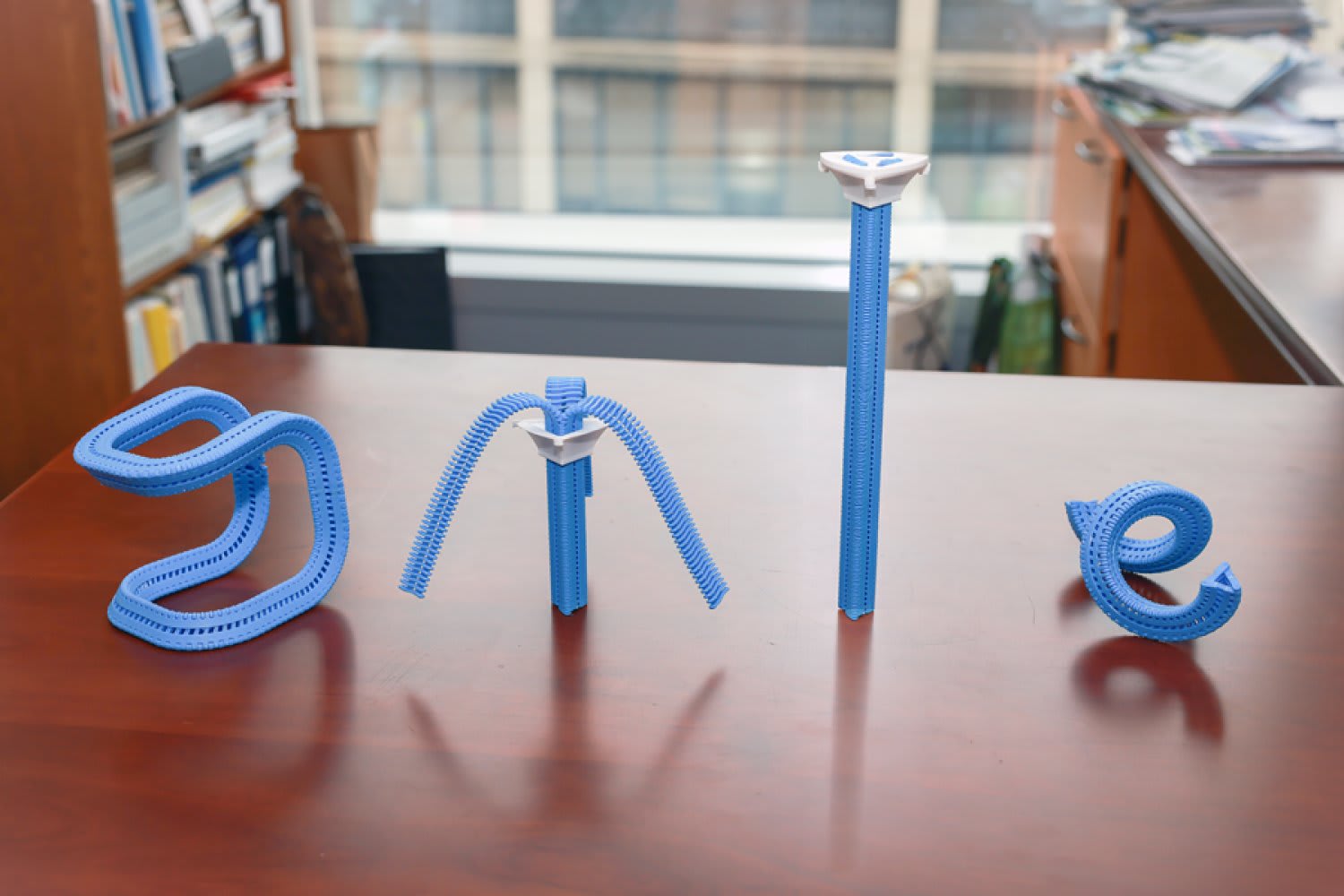
Researchers at CSAIL have developed a 'Y-zipper' inspired by old patents, allowing for customizable, shape-shifting fasteners. This innovation enables structures to transition between sprawling, tentacle-like forms and compact shapes, offering significant efficiency improvements for portable equipment like tents.
The Innovation of the Y-Zipper: Reimagining Fastening Technology
Recent developments from the MIT Computer Science and Artificial Intelligence Laboratory (CSAIL) have introduced a novel approach to mechanical fasteners: the Y-zipper. By revisiting and modernizing an older patent, researchers have engineered a three-sided zipper system that transcends the limitations of traditional, linear fastening mechanisms. This innovation represents a significant leap in material science and engineering, moving beyond simple closure to active structural transformation.
Customization Through Advanced Software
At the core of this technology is a sophisticated software program that grants users unprecedented control over the fastener's geometry. Users are not merely selecting a zipper; they are designing a structural component. By defining the length, angle, and direction of each strip, the software allows for the creation of complex, customized mechanical interfaces. The inclusion of four specific motion “primitives”—straight, bent, coiled, and twisted—enables the zipper to dictate the physical form of the object it binds.
The Mechanics of Shape-Shifting
The most striking feature of the Y-zipper is its ability to 'shape-shift' in the physical world. When in an unzipped state, the mechanism mimics a squid-like form with three sprawling tentacles, maximizing surface area and flexibility. Once closed, the device exerts structural force to pull these disparate parts into a unified, compact shape, such as a rod. This transition is not merely cosmetic; it is a fundamental shift in the object's spatial footprint.
Practical Applications and Efficiency
The implications for this technology are vast, particularly in the realm of portable infrastructure and consumer goods. Consider the process of pitching a tent, a task often cumbersome and time-consuming, typically taking up to six minutes of manual labor. The Y-zipper could potentially revolutionize this experience by allowing large, sprawling fabric components to be zipped into rigid, stable support structures instantly. By reducing the complexity of assembly, such innovations could significantly lower the barrier for rapid deployment of modular shelters.
Future Trends in Adaptive Materials
As we look toward the future, the integration of programmable fasteners like the Y-zipper suggests a movement toward 'smart' textiles and adaptive architectures. The ability to transition between high-surface-area states and compact storage states is a design challenge that has persisted in engineering for decades. By leveraging historical patent knowledge and modern computational design, CSAIL has provided a blueprint for how we might interact with everyday objects in the future, prioritizing efficiency, speed, and spatial optimization.
Conclusion
In summary, the Y-zipper is more than just a fastener; it is a bridge between digital design and physical reality. By synthesizing old concepts with new computational tools, the researchers have created a versatile, shape-shifting mechanism that holds the potential to simplify complex manual tasks. As this technology matures, we can expect to see its influence grow across industries ranging from camping equipment to advanced robotics and aerospace components.