I wanted a clock that never needed setting. Things escalated.
Source Entity
Lee Hutchinson
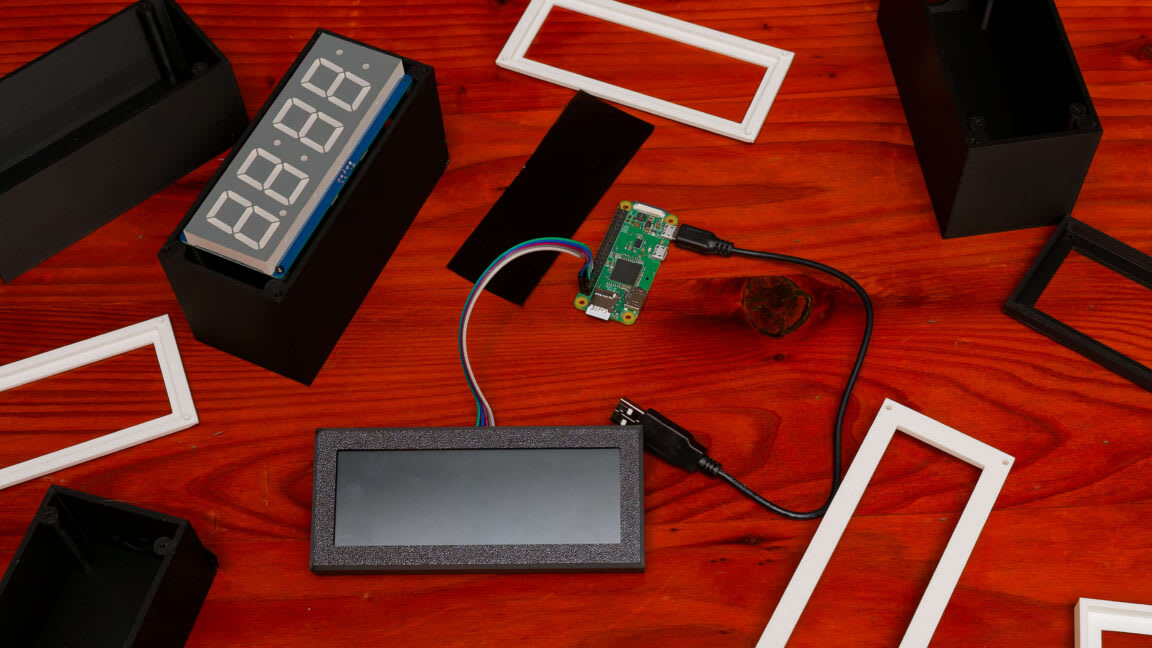
A technology enthusiast details the development of a custom, self-setting clock designed to eliminate manual adjustments. The project leverages modern software deployment pipelines to ensure precise timekeeping and automated DST synchronization.
The Quest for Temporal Perfection
The frustration of manual timekeeping is a relic of the past that many consumers still endure. The author’s journey began with the simple, utilitarian seven-segment LED clocks found in big-box retailers. While these devices are durable, they suffer from a fundamental design flaw: the inability to maintain accurate time during power fluctuations or seasonal shifts in Daylight Saving Time. This reliance on manual intervention—the repetitive mashing of buttons—highlights a broader disconnect between 21st-century technological capabilities and the stagnant design of common household appliances.
Moving Beyond Static Hardware
The core of this project is the rejection of 'set-it-and-forget-it' hardware in favor of a dynamic, software-defined solution. By implementing a deployment pipeline for a bedside clock, the author has transformed a passive object into an active, connected device. This shift represents a wider trend in home automation where users are increasingly dissatisfied with proprietary, closed-loop devices and are opting for custom hardware that can be maintained and updated via code.
The Role of Connectivity and Drift Management
To solve the issue of time drift—the inherent tendency of quartz oscillators to lose or gain time—the author’s design utilizes network synchronization. By connecting to time servers, the clock ensures sub-second accuracy. This is not merely a convenience; it is an application of Internet of Things (IoT) principles to solve a legacy annoyance. The technical architecture allows for automated Daylight Saving Time adjustments, effectively future-proofing the device against legislative changes that might alter or abolish seasonal clock shifts.
Implications for Personal Computing
The decision to apply a professional software deployment pipeline to a bedside clock is a testament to the democratization of engineering tools. What began as a reaction to a flickering power grid evolved into a comprehensive systems engineering challenge. This project illustrates how individual developers can now bridge the gap between abstract software concepts and physical, real-world utility, creating custom solutions that legacy manufacturers have failed to provide.
Future Trends in Household Infrastructure
As we progress further into the 21st century, the demand for 'smart' infrastructure will continue to rise. We can expect to see more projects that treat household objects as endpoints in a larger computing network. The author's clock serves as a microcosm for this evolution: a device that is no longer a static piece of plastic on a nightstand, but a responsive node that manages its own lifecycle through continuous integration and deployment.
Conclusion
In summary, the transition from manual, button-mashing clock adjustment to a self-setting, pipeline-managed device is more than just a hobbyist project. It is a fundamental reassessment of how we interact with our environment. By prioritizing accuracy and automation, the author has successfully addressed a persistent annoyance, proving that even the most mundane household tasks can be optimized through modern software practices.