Javokhir Sindarov is playing everywhere. Gukesh has gone silent. Who’s got it right?
Source Entity
Mayank Chaudhary, Amit Kamath
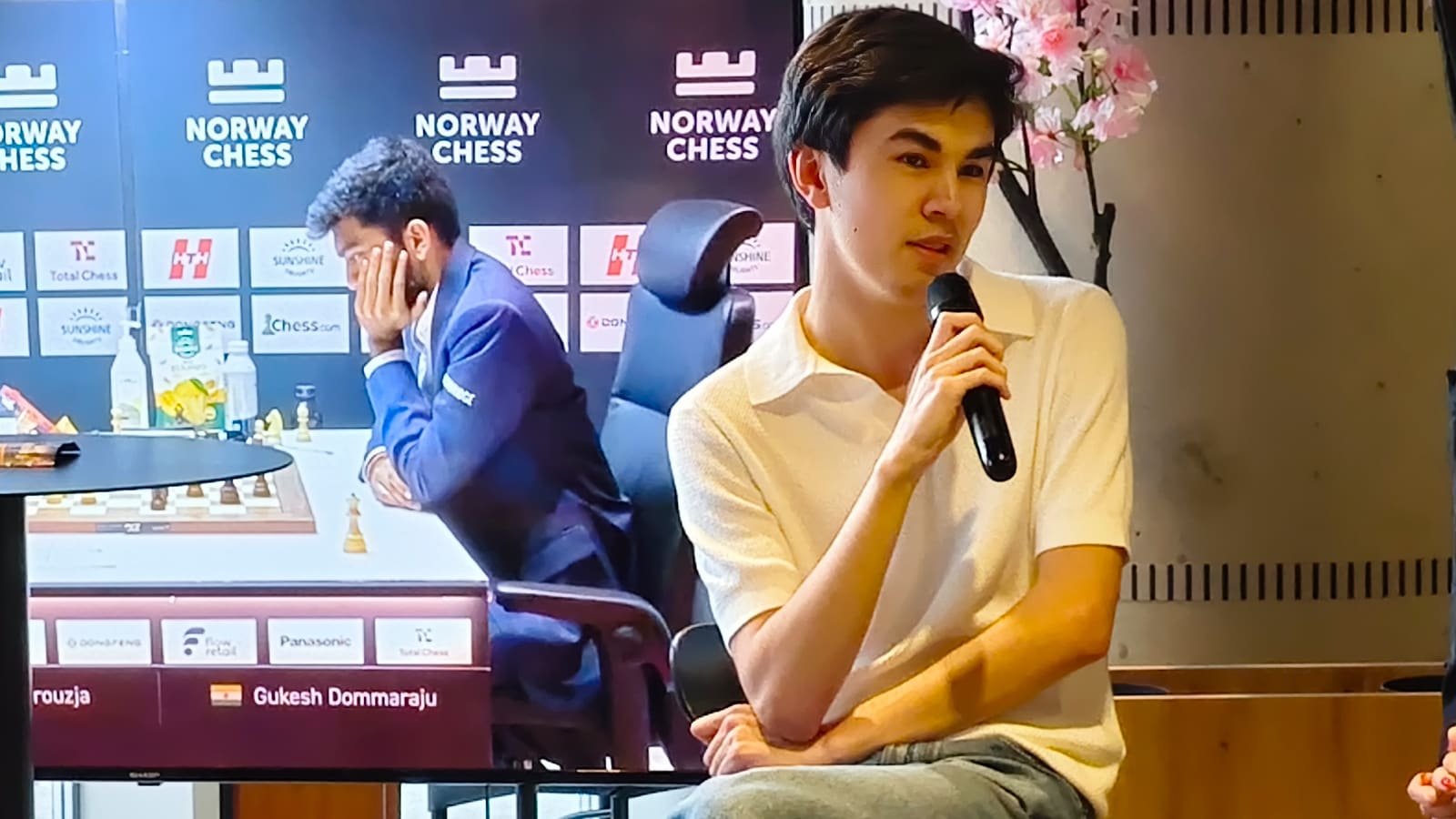
The chess world is witnessing a contrast in preparation styles between challenger Javokhir Sindarov and world champion D Gukesh ahead of their historic title match. Simultaneously, India celebrates rising talents Mayank Chakraborty and Pratitee Bordoloi, who recently secured titles at the Asian Junior Chess Championships.
The Strategic Divergence in Modern Chess
The upcoming World Championship match between D Gukesh and Javokhir Sindarov represents more than just a clash of talent; it is a fundamental debate on preparation philosophy. Gukesh, the youngest world champion in history, has adopted a monastic approach. By stepping away from high-profile circuits like the Global Chess League and the Grand Chess Tour, he is prioritizing deep, uninterrupted study. This 'bunker' mentality is a classic approach to title defenses, designed to minimize external variables and maximize focus on complex theoretical preparation.
The 'Active' Challenger: Sindarov’s Path
Conversely, 20-year-old Javokhir Sindarov is charting a markedly different course. His strategy relies on high-volume competition, maintaining a rigorous schedule that includes the FIDE World Rapid and Blitz Team Championship, the Tata Steel Masters, and the Sinquefield Cup. Sindarov argues that this relentless tournament pace keeps his competitive instincts sharp. By constantly testing his mettle in diverse environments, he is attempting to bridge the gap to Gukesh by refining his intuition through real-time pressure rather than abstract study.
Historical Significance of the Match
The Gukesh-Sindarov showdown is already cemented in history as the youngest World Championship match ever held. This youth-driven narrative underscores a generational shift in the sport, where players are reaching professional maturity at an accelerated rate. The tension between Gukesh’s silence and Sindarov’s visibility serves as a litmus test for which pedagogical and training model will define the next era of professional chess.
Emergence of New Indian Talent
Beyond the championship narrative, the Indian chess landscape is diversifying rapidly. The recent success of Mayank Chakraborty and Pratitee Bordoloi at the Asian Junior Chess Championships in Mumbai highlights this upward trajectory. Mayank, India’s 94th Grandmaster and the first from the Northeast, is balancing his own competitive ascent with the responsibilities of a mentor. His victory, alongside his 13-year-old pupil Pratitee Bordoloi, illustrates a burgeoning ecosystem where junior players are not only competing but contributing to the development of the next generation.
Future Trends and Synthesis
The success of these young players, particularly in the Northeast region, signals a democratization of chess talent in India. As Mayank continues to navigate the transition from prodigy to established professional, his dual role as a player and coach reflects a broader trend of knowledge transfer within the sport. When viewed alongside the Gukesh-Sindarov rivalry, it becomes clear that the chess world is currently defined by a high-stakes blend of intense individual specialization and a collective, grassroots-led expansion of talent.
Conclusion
Ultimately, the divergence in preparation between Gukesh and Sindarov provides a fascinating subtext to their upcoming match. Whether the 'bunker' approach or the 'constant-play' model proves superior remains to be seen. However, combined with the emergence of regional talents like Chakraborty and Bordoloi, these events confirm that chess is experiencing a period of unprecedented dynamism and global participation.
Multiple Citing Sources