'Not AI, this is Yamuna': AAP, BJP lock horns over Chhath celebrations in Delhi
Source Entity
ABHISHEK MISHRA
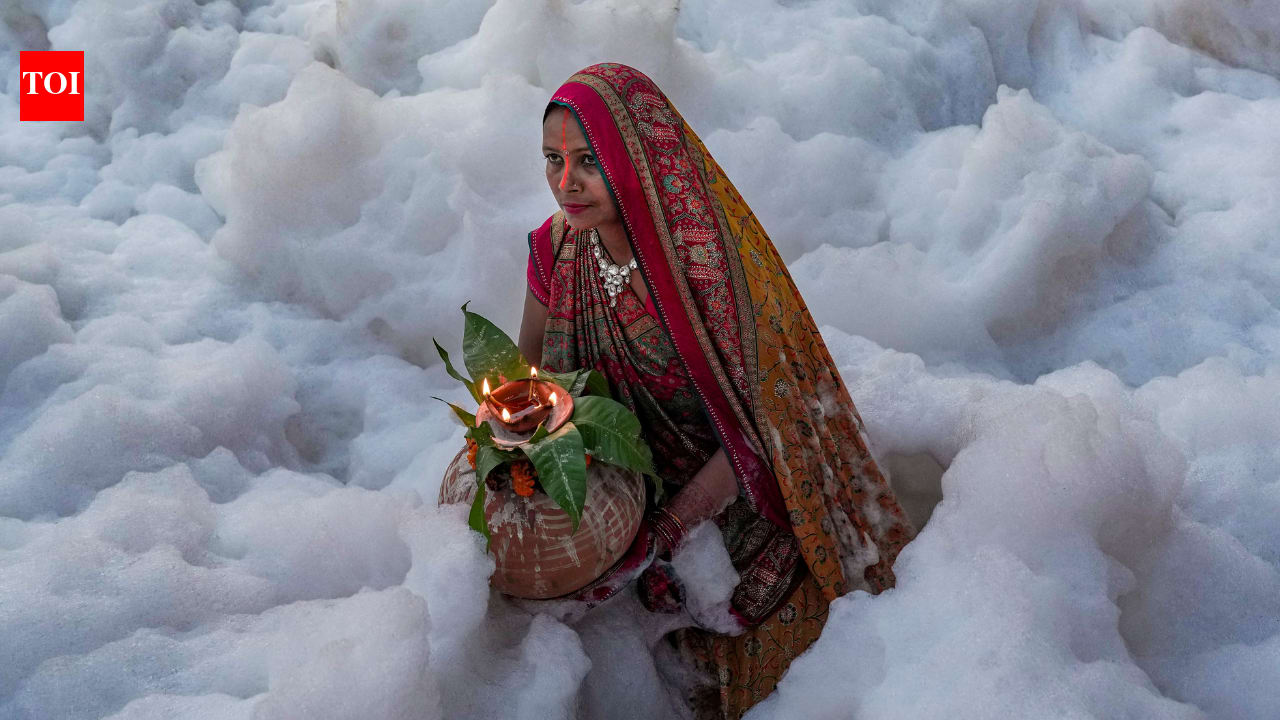
Chhath Puja celebrations have sparked significant political friction across India, with AAP and BJP clashing over Yamuna pollution in Delhi and a TMC MP igniting controversy over regional identity in West Bengal. Leaders from across the political spectrum participated in festivities while trading accusations regarding governance and cultural representation.
Political Tensions Rise During Chhath Puja Celebrations
The Yamuna Pollution Debate in Delhi
As devotees gathered to observe Chhath Puja, the banks of the Yamuna River became a focal point for intense political maneuvering between the Aam Aadmi Party (AAP) and the Bharatiya Janata Party (BJP). The emergence of thick, toxic foam on the river surface served as a visual catalyst for the AAP to launch a scathing attack against the BJP-led Delhi government. The AAP alleges that claims regarding the river's purification are performative, contrasting the spiritual purity of the festival with the environmental reality of the polluted water.
BJP Leadership and Public Engagement
In response to the criticism, prominent BJP figures, including Delhi Chief Minister Rekha Gupta and MPs Manoj Tiwari and Ravi Kishan, actively participated in the rituals to demonstrate their commitment to the community. By joining devotees at ghats like ITO and Sonia Vihar, the BJP aims to solidify its connection with the Purvanchali electorate. This strategy is mirrored nationally, with leaders like Uttarakhand CM Pushkar Singh Dhami and Haryana CM Nayab Singh Saini engaging in local celebrations, positioning the party as the primary patron of the festival.
Cultural Identity Controversies in West Bengal
Beyond the capital, the festival has surfaced underlying tensions regarding regional identity and political rhetoric. A significant row erupted following remarks by TMC MP Kalyan Banerjee, who questioned the dominance of non-Bengali populations in West Bengal. His comments have been met with sharp rebukes from BJP leaders like Suvendu Adhikari and minister Indranil Khan, who framed the statements as an attack on the inclusive nature of the festival and a misunderstanding of the state's cultural tapestry.
The Intersection of Ritual and Governance
These incidents highlight the increasing role of religious and cultural festivals as battlegrounds for political legitimacy in India. The Chhath Puja, which holds immense significance for the Purvanchali community, has become a litmus test for political parties to prove their administrative efficiency and cultural empathy. Whether it is the physical state of the riverbanks or the demographic rhetoric used by political representatives, the festival is being used as an instrument to challenge opponents' records.
Future Implications for Regional Politics
As these narratives continue to unfold, the political discourse surrounding festivals is likely to intensify. The tension between the AAP's focus on environmental accountability and the BJP's emphasis on traditional leadership creates a polarized environment for voters. Similarly, the debate in West Bengal signals a long-term struggle over identity politics, where cultural festivals are increasingly framed through the lens of nationalist versus regionalist ideologies. Ultimately, these events underscore the volatile intersection of faith, governance, and identity in contemporary Indian politics.
Multiple Citing Sources