Yamuna Water Quality Deteriorates At 3 Key Locations In Delhi In September: Report
Source Entity
NDTV News Search Records Found 1000
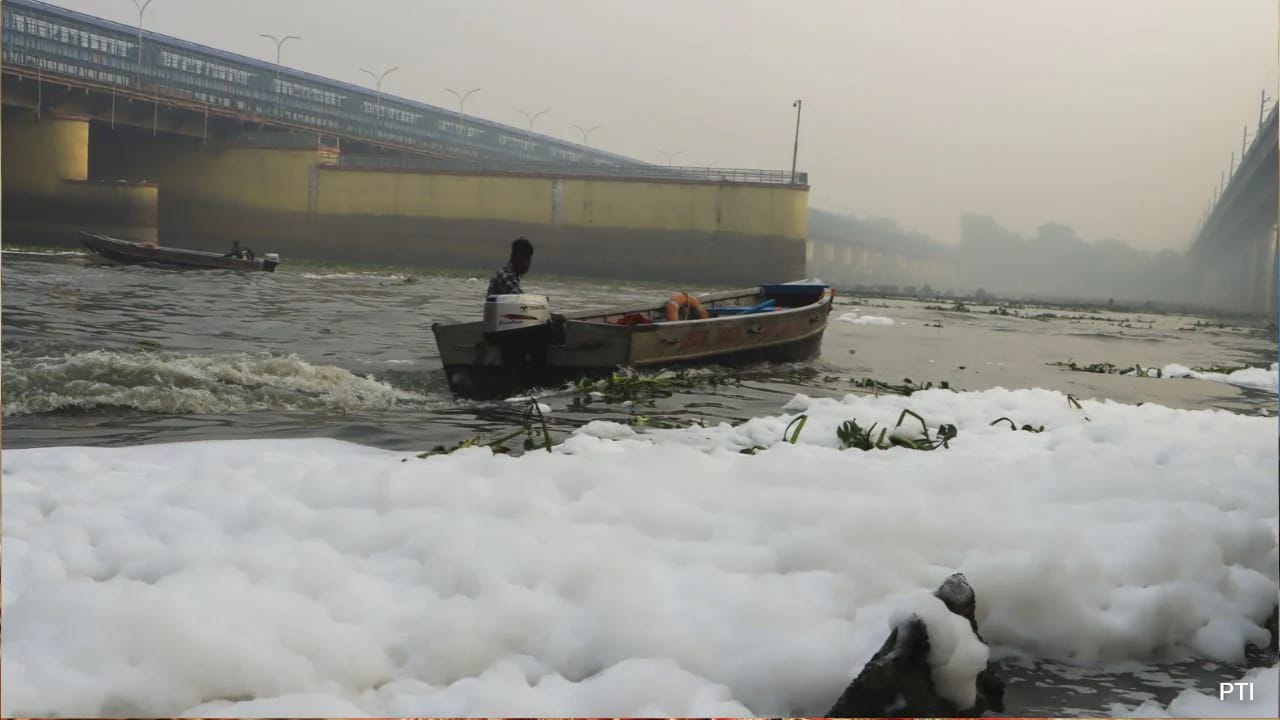
Chhath Puja has sparked political tensions across India, with TMC's Kalyan Banerjee drawing controversy over anti-migrant rhetoric in Bengal. Meanwhile, BJP and AAP are trading barbs over the environmental state of the Yamuna River during the festivities.
Political Tensions Rise During Chhath Puja
The celebration of Chhath Puja, a significant festival dedicated to the Sun God, has transformed into a flashpoint for political discourse across India. While the festival is intended to be a time of devotion and communal harmony, recent events in West Bengal and Delhi have underscored the deep-seated ideological fractures currently shaping the national political landscape. The intersection of identity politics, environmental governance, and religious sentiment has created a volatile environment for political actors.
The Controversy in West Bengal
In West Bengal, the discourse took a divisive turn when Trinamool Congress (TMC) MP Kalyan Banerjee questioned the inclusivity of the state's cultural identity. His remarks, which queried whether Bengal belongs to "Bengalis or rogue Biharis," have sparked a fierce debate regarding regionalism versus national integration. By framing the presence of non-Bengali communities during Chhath Puja as an encroachment on local culture, the MP has invited significant backlash from political opponents who view such rhetoric as exclusionary and inflammatory.
Environmental Challenges and Political Blame
Simultaneously, the capital city of Delhi has become the theater for a different kind of confrontation. The presence of toxic foam on the Yamuna River has become a central point of contention between the Aam Aadmi Party (AAP) and the Bharatiya Janata Party (BJP). As Delhi Chief Minister Rekha Gupta and other leaders participated in the rituals, the visual degradation of the river served as a catalyst for mutual accusations of negligence. The AAP has explicitly held the BJP-led central agencies accountable for the failure to clean the river, highlighting the persistent public health crisis that accompanies the festival.
Symbolic Actions and Allegations of Disrespect
The political theater extended to the conduct of individual leaders during the rituals. The BJP has utilized social media to highlight an incident involving Congress leader Devendra Yadav, who was filmed disposing of a plastic bottle into the Yamuna. By framing this act as an "insult to faith," the BJP is attempting to consolidate its position as the defender of traditional values, further complicating the narrative surrounding the festival's environmental challenges.
Broad Implications for Future Governance
These incidents reflect a broader trend where major religious festivals are increasingly utilized as platforms for political signaling. The juxtaposition of high-level BJP leaders—such as Chief Ministers Pushkar Singh Dhami and Nayab Singh Saini—participating in celebrations across the country, against the backdrop of toxic rivers and exclusionary rhetoric, indicates that the battle for the "cultural vote" is intensifying. As political parties continue to weaponize these events, the focus on substantive issues like river rejuvenation and social cohesion remains secondary to the pursuit of electoral optics.
Conclusion
The convergence of these localized controversies points toward a high-stakes political future where cultural and environmental issues are inextricably linked. The challenge for Indian governance lies in balancing the deep religious significance of events like Chhath Puja with the urgent need for environmental stewardship and the maintenance of a unified national identity. Until political discourse moves beyond reactionary finger-pointing, the sanctity of such festivals may continue to be overshadowed by partisan strife.
Multiple Citing Sources
Verification Required?