US Slams "Dangerous" China Action In Sea Clash With Philippines Navy
Source Entity
NDTV News Search Records Found 1000
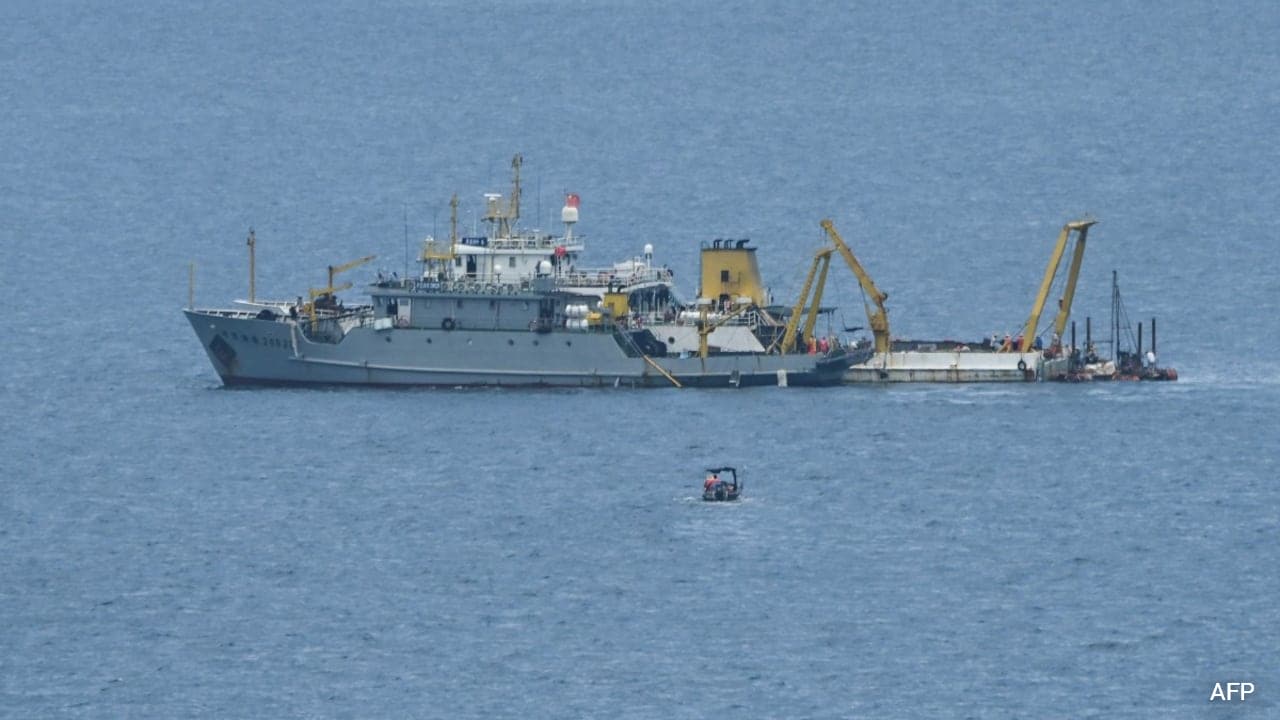
Tensions in the South China Sea have escalated following a violent confrontation where the China Coast Guard allegedly struck a Filipino sailor with a baton. The United States has condemned the action as dangerous, highlighting the ongoing maritime disputes in the region.
Escalating Maritime Tensions in the South China Sea
Recent reports indicating that the China Coast Guard physically assaulted a Filipino sailor with a baton during a maritime confrontation represent a significant and worrying escalation in the South China Sea. This incident, characterized by the Philippine military as a dangerous act of aggression, underscores the volatile nature of the territorial disputes currently plaguing one of the world's most critical shipping lanes. By moving from non-kinetic maneuvering to direct physical violence, the tactical landscape of these encounters has shifted, raising concerns about the potential for accidental or intentional military escalation.
The Geopolitical Stakes of the Conflict
The South China Sea is not merely a regional maritime boundary; it is a vital artery for global trade and a focal point for overlapping territorial claims. China’s expansive 'nine-dash line' claim clashes directly with the internationally recognized Exclusive Economic Zones (EEZ) of the Philippines and other Southeast Asian nations. The use of physical force—specifically the deployment of clubs against personnel—suggests a more assertive posture by the China Coast Guard, which typically relies on water cannons and dangerous maneuvers to deter Philippine resupply missions to remote outposts like the Second Thomas Shoal.
United States Involvement and Defensive Pacts
The United States has formally condemned the action, labeling it as 'dangerous' and a threat to regional stability. This response is rooted in the long-standing Mutual Defense Treaty between the U.S. and the Philippines. Washington’s explicit support for Manila serves as a strategic deterrent, yet it also positions the U.S. directly in the crosshairs of a potential confrontation with Beijing. The U.S. administration must now navigate a delicate balance: providing robust support to its ally while preventing a localized skirmish from spiraling into a broader geopolitical conflict.
Historical Context of the Dispute
To understand the gravity of this baton attack, one must look at the history of the region, which has been marked by decades of legal and physical posturing. In 2016, the Permanent Court of Arbitration in The Hague ruled that China’s historical claims had no legal basis under the United Nations Convention on the Law of the Sea (UNCLOS). Beijing’s refusal to recognize this ruling has left the region in a state of 'grey zone' warfare, where state actors utilize coast guard vessels and maritime militias to project power without technically crossing the threshold of conventional warfare.
Future Trends and Regional Stability
Looking ahead, the trend of increasing aggression points toward a more precarious future for the South China Sea. As the China Coast Guard increases its reliance on physical force, the Philippine military will likely be compelled to enhance its defensive capabilities or seek deeper security integrations with international partners. This cycle of escalation threatens to destabilize regional trade routes and forces smaller ASEAN nations to choose sides in a deepening power struggle between Washington and Beijing.
Concluding Assessment
The incident involving the Filipino sailor is a stark reminder that international waters are becoming increasingly dangerous due to unresolved sovereignty disputes. If the current trajectory of utilizing physical force continues, the risk of miscalculation grows exponentially. Diplomatic channels must be prioritized to establish rules of engagement; however, as long as the fundamental territorial disagreements remain, incidents of this nature are likely to persist, keeping the Indo-Pacific in a state of high alert.
Multiple Citing Sources
Verification Required?