Chinese Rocket With Pak Astronaut Aboard Takes Off To Tiangong Space Station
Source Entity
NDTV News Search Records Found 1000
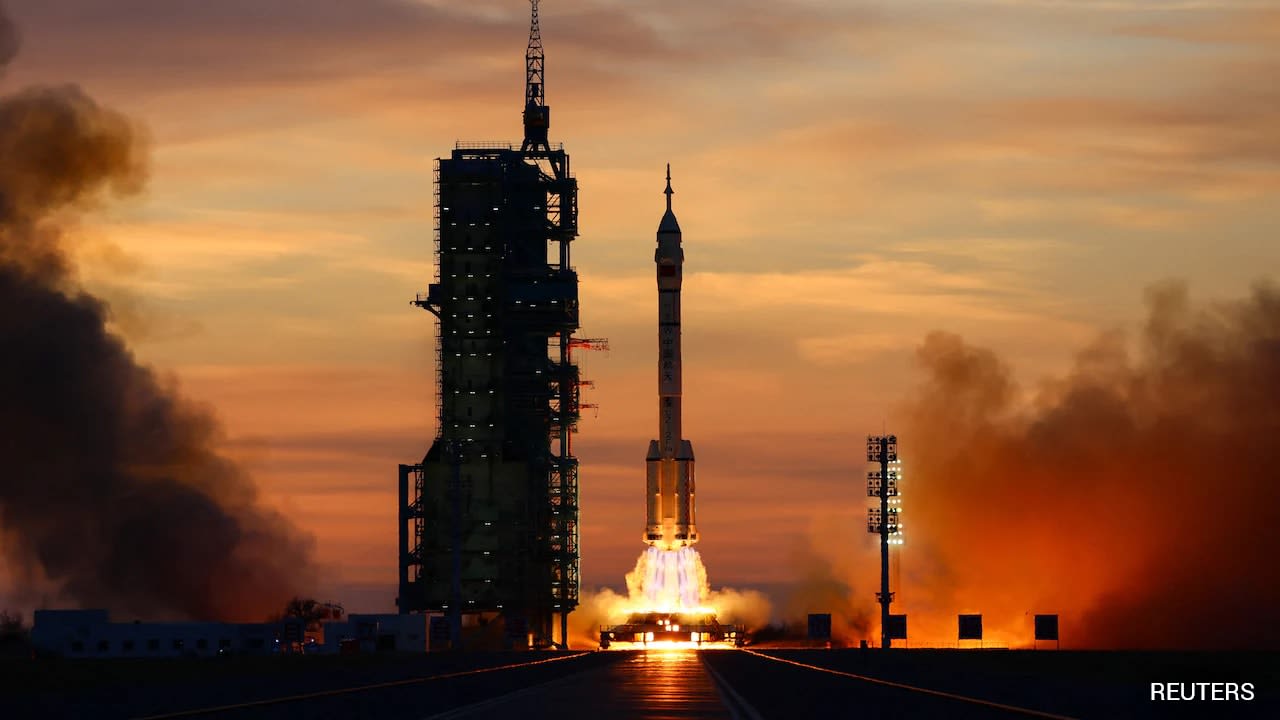
China has successfully launched the Shenzhou-24 mission from the Jiuquan Satellite Launch Center, carrying Pakistan's Muhammad Zeeshan Ali to the Tiangong space station. This historic flight marks the first time a foreign astronaut has joined a Chinese crewed space mission.
A Historic Milestone in Sino-Pakistani Space Cooperation
On Wednesday, China marked a significant evolution in its crewed space program by launching the Shenzhou-24 spacecraft from the Jiuquan Satellite Launch Center in the Gobi Desert. A Long March-2F Y24 rocket successfully propelled the vessel into its planned orbit, carrying a three-person crew. Notably, this mission represents the first time a foreign astronaut, Pakistan’s Muhammad Zeeshan Ali, has traveled aboard a Chinese spacecraft to the Tiangong space station.
The Mission Composition
The crew consists of 40-year-old Muhammad Zeeshan Ali, who is joined by veteran Chinese astronauts Tang Hongbo, aged 51, serving as the mission commander, and 39-year-old flight engineer Wu Yi. The integration of a Pakistani national into a mission primarily dominated by Chinese personnel underscores the deepening strategic ties between Beijing and Islamabad. The Beijing Aerospace Control Centre confirmed that the spacecraft successfully entered its trajectory, signaling a smooth start to the mission.
Expanding the Tiangong Research Capacity
The Tiangong space station serves as the centerpiece of China’s long-term orbital ambitions. With the arrival of the Shenzhou-24 crew, the station is poised to host more than 90 scientific experiments. These endeavors are critical for China’s broader aerospace roadmap, which includes developing technologies for long-duration space habitation, materials science, and biological research in microgravity environments.
Broader Implications for Global Space Diplomacy
By inviting an international partner to its space station, China is signaling a shift toward a more collaborative international space framework. While the United States and its partners operate the International Space Station (ISS), the Tiangong station has increasingly become a focal point for nations seeking to participate in space exploration outside of the Western-led bloc. This mission serves as a clear demonstration of China’s growing influence as a reliable partner for emerging spacefaring nations.
Future Trends and Lunar Aspirations
The Shenzhou-24 mission is not merely an isolated event but a stepping stone for China’s future extraterrestrial goals. Beijing has publicly stated its target of achieving a crewed Moon landing by 2030. Success in these current low-Earth orbit (LEO) missions is essential for refining docking procedures, life support systems, and crew health management, all of which are prerequisites for the complex challenges of lunar exploration.
Conclusion
The successful launch of Muhammad Zeeshan Ali alongside his Chinese counterparts marks a turning point in international space cooperation. As China continues to solidify its presence in orbit, the integration of foreign astronauts suggests that Tiangong will become a hub for diverse scientific collaboration. This mission effectively bridges the gap between China’s current orbital capabilities and its ambitious lunar future, cementing its status as a leading global space power.
Verification Required?