Could China and Russia really destroy Starlink? Only with a boomerang.
Source Entity
Stephen Clark
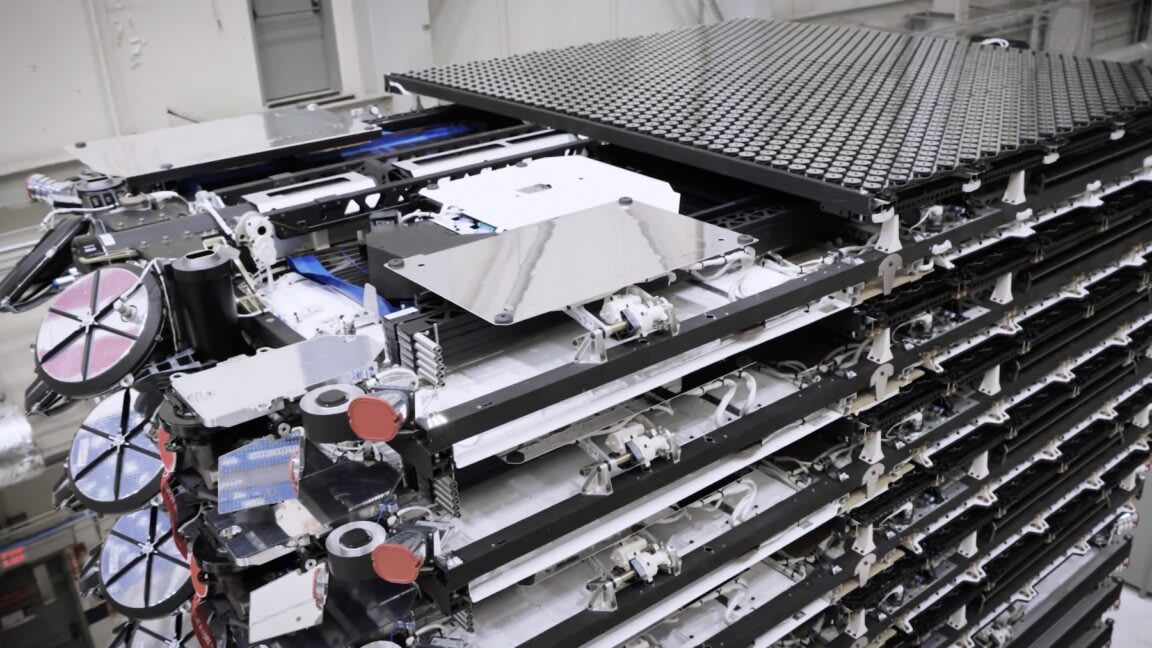
An analysis of the strategic impossibility of destroying the Starlink satellite constellation and the geopolitical implications of China developing its own competing LEO network.
The Strategic Impossibility of Neutralizing Mega-Constellations
The provocative headline suggesting that China and Russia could only destroy Starlink with a "boomerang" serves as a sharp critique of the current state of anti-satellite (ASAT) warfare. At its core, the discussion highlights the fundamental shift in space architecture from a few high-value, monolithic satellites to distributed "mega-constellations" consisting of thousands of small, interconnected units. This transition has fundamentally altered the cost-benefit analysis for any adversary attempting to disrupt global satellite communications.
The Architecture of Resilience
Traditional satellite warfare focused on "high-value targets"—massive, expensive satellites positioned in Geostationary Orbit (GEO) that provided critical communications or intelligence for entire regions. Destroying one such satellite could blind an adversary. However, Starlink operates in Low Earth Orbit (LEO) with a distributed mesh network. Because the system relies on thousands of redundant nodes, the loss of a few dozen—or even hundreds—of satellites would not result in a total system failure. For Russia or China to effectively "destroy" Starlink, they would need to launch thousands of interceptors simultaneously, a feat that is logistically and financially impossible.
The Boomerang Effect: The Kessler Syndrome
The reference to a "boomerang" is a sophisticated nod to the Kessler Syndrome, a theoretical scenario where the density of objects in LEO is high enough that a single collision could set off a cascade of debris. If Russia or China were to utilize kinetic kill vehicles to destroy a significant portion of the Starlink constellation, they would create millions of pieces of high-velocity shrapnel. Because LEO is a shared environment, this debris cloud would not remain localized; it would orbit the Earth, indiscriminately destroying other satellites, including those belonging to the attacker. In this sense, an attack on Starlink would inevitably "boomerang" back to destroy the attacker's own space assets.
China's Strategic Pivot to Replication
Recognizing the futility of kinetic destruction, the provided context notes that China is fielding its own "Starlink-like constellation." This represents a strategic shift from offensive neutralization to competitive replication. By building its own mega-constellation, China aims to ensure its own communication resilience and provide a counter-weight to U.S. technological dominance in space. This "space race 2.0" is not about who can destroy the other's assets, but who can maintain the most robust, redundant, and scalable network to ensure global connectivity and military command-and-control.
Broader Geopolitical Implications
This shift in space capabilities has profound implications for modern warfare and diplomacy. The ability to provide near-instantaneous, jam-resistant internet across a theater of war has already proven decisive in recent conflicts. As China deploys its own constellation, we will likely see a mirrored set of concerns regarding signal interference, orbital slot competition, and the potential for "space traffic jams." The focus of international security is shifting from the prevention of a single "big bang" in space to the management of a crowded, contested, and competitive orbital environment.
Conclusion: A New Paradigm of Space Security
In summary, the notion of "destroying" a system like Starlink is a relic of old-school military thinking. The distributed nature of LEO constellations, combined with the catastrophic risk of orbital debris, makes kinetic attacks a suicidal strategy. The future of space conflict will not be characterized by the physical destruction of hardware, but by cyber warfare, electronic jamming, and the race to deploy the most comprehensive network. As China fields its own constellation, the world enters an era of orbital interdependence where the cost of aggression is too high for any single nation to bear.