China viewed more positively than US globally, but not in India: Report
Source Entity
Latest News: Today's Latest News Headlines from India & World | Hindustan Times | Hindustan Times
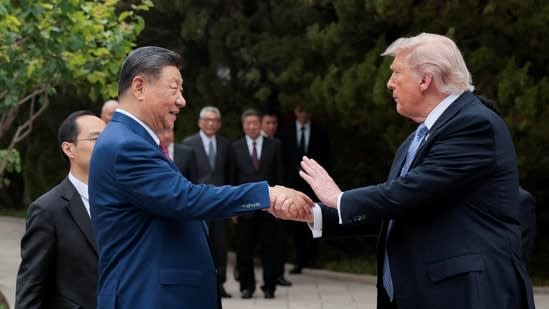
A survey of 36 countries reveals that China is perceived more favorably than the United States on a global scale, though India stands as a significant outlier where this trend is reversed.
Global Perception Shift: China's Rising Favorability vs. US Influence
Recent data from a comprehensive survey spanning 36 countries indicates a significant shift in the global landscape of soft power. According to the report, China is now viewed more positively than the United States in a majority of the surveyed nations. This finding suggests a pivot in how the international community perceives the two reigning superpowers, reflecting a complex interplay of economic diplomacy, geopolitical strategy, and the perceived stability of internal governance.
The Engine of China's Global Appeal
The positive perception of China in most of the 36 surveyed countries can be largely attributed to its aggressive and strategic economic expansion. Through initiatives like the Belt and Road Initiative (BRI), China has positioned itself as a primary provider of infrastructure and development loans to the Global South. By focusing on tangible assets—such as ports, railways, and telecommunications—China has cultivated an image of a pragmatic partner focused on growth rather than one that imposes political conditions or democratic reforms. This 'no-strings-attached' approach to development often resonates more strongly in developing economies than the traditional aid models employed by Western powers.
Analyzing the Decline of US Favorability
Conversely, the report highlights a relative decline in the positive perception of the United States. This trend may be linked to a perceived inconsistency in US foreign policy and a series of high-profile domestic instabilities that have been broadcast globally. For many nations, the US is often viewed through the lens of military interventionism and a 'policing' role in global affairs, which can alienate populations in regions that prioritize sovereignty and non-interference. As the US navigates internal political polarization, its image as a stable beacon of democratic leadership has faced unprecedented challenges, allowing competitors to fill the vacuum of influence.
The India Exception: A Case of Strategic Rivalry
One of the most striking revelations of the report is that India stands as a notable exception to the global trend, viewing China far less positively than the US. This divergence is not accidental but is rooted in deep-seated territorial disputes and strategic competition. The ongoing tensions along the Line of Actual Control (LAC) and the memory of violent border skirmishes have fostered a climate of mistrust. Furthermore, India's strategic alignment with the Quad (comprising the US, Japan, and Australia) emphasizes a shared vision of a 'Free and Open Indo-Pacific,' which directly counters China's regional ambitions. In the Indian context, the US is viewed as a critical security partner, whereas China is perceived as a primary geopolitical adversary.
Implications for Soft Power and Diplomacy
This survey underscores the evolving nature of 'soft power'—the ability to influence others through attraction rather than coercion. The fact that China is winning the perception battle in a majority of countries suggests that economic utility is currently outweighing ideological appeal. However, the stark contrast in India's view proves that bilateral security threats can completely override global trends. For the US, these findings serve as a wake-up call to modernize its diplomatic engagement; for China, the results validate its current strategy of economic statecraft, though the hostility in India remains a significant regional hurdle.
Conclusion: A Fragmented Global Sentiment
In summary, the report paints a picture of a world divided by differing priorities. While much of the globe views China's rise with optimism or approval—likely driven by economic opportunities—India's perspective remains firmly rooted in national security and territorial integrity. This dichotomy illustrates that while global trends may lean toward China, regional realities and historical grievances continue to play a decisive role in shaping international relations. Moving forward, the ability of either superpower to sustain this favorability will depend on their capacity to balance economic ambition with genuine diplomatic respect.
Verification Required?